 书单
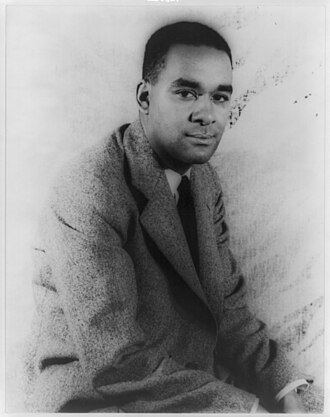
理查德·赖特
- 生卒
- 1908 – 1960
- 国籍
- 美国
- 外文名
- Richard Wright
照片:Carl Van Vechten,公有领域,来自维基共享资源「Richard Wright.jpg」(经缩小)。
生平与创作
理查德·纳撒尼尔·赖特(英语:Richard Nathaniel Wright,1908年9月4日—1960年11月28日),非裔美国人作家,哈莱姆文艺复兴肇始者之一。他的代表作《土生子》对后来的非裔美国人文学产生了很大的影响。
以上文字摘自维基百科「理查德·赖特 (作家)」(去掉了参考文献等尾部小节),按 CC BY-SA 4.0 使用,作者为维基百科的各位编者。
中文维基百科的条目比较短,下面附上英文维基百科的内容(英文原文):
Richard Nathaniel Wright (September 4, 1908 – November 28, 1960) was an American author of novels, short stories, poems, and non-fiction. Much of his literature concerns racial themes, especially related to the plight of African Americans during the late 19th to mid 20th centuries suffering discrimination and violence. His best known works include the novella collection Uncle Tom's Children (1938), the novel Native Son (1940), and the memoir Black Boy (1945). Literary critics believe his work helped change race relations in the United States in the mid-20th century.
Early life and education
Childhood in the US South
Richard Nathaniel Wright was born on September 4, 1908, at Rucker's Plantation, between the train town of Roxie and the larger river city of Natchez, Mississippi. He was the son of Nathan Wright, a sharecropper, and Ella (Wilson), a schoolteacher. His parents were born free after the Civil War; both sets of his grandparents had been born into slavery and freed as a result of the war. Each of his grandfathers had taken part in the U.S. Civil War and gained freedom through service: his paternal grandfather, Nathan Wright, had served in the 28th United States Colored Troops; his maternal grandfather, Richard Wilson, escaped from slavery in the South to serve in the U.S. Navy as a Landsman in April 1865.
Richard's father left the family when Richard was six years old, and he did not see Richard for 25 years. In 1911 or 1912, Ella moved to Natchez, Mississippi, to be with her parents. While living in his grandparents' home, he accidentally set the house on fire. Wright's mother was so angry that she beat him until he was unconscious. In 1915, Ella put her sons in Settlement House, a Methodist orphanage, for a short time. He was enrolled at Howe Institute in Memphis, Tennessee, from 1915 to 1916. In 1916, his mother moved with Richard and his younger brother to live with her sister Maggie (Wilson) and Maggie's husband Silas Hoskins (born 1882) in Elaine, Arkansas. This part of Arkansas was in the Mississippi Delta, where former cotton plantations had been. The Wrights were forced to flee after Silas Hoskins "disappeared", reportedly killed by a white man who coveted his successful saloon business. After his mother became incapacitated by a stroke, Richard was separated from his younger brother and lived briefly with his uncle Clark Wilson and aunt Jodie in Greenwood, Mississippi. At the age of 12, Richard had not yet had a single complete year of schooling.
Soon Richard with his younger brother and mother returned to the home of his maternal grandmother, which was now in the state capital, Jackson, Mississippi, where he lived from early 1920 until late 1925. His grandparents, still angry at him for destroying their house, repeatedly beat Wright and his brother. But while he lived there, he was finally able to attend school regularly. He attended the local Seventh-day Adventist school from 1920 to 1921, with his aunt Addie as his teacher. After a year, at the age of 13 he entered the Jim Hill public school in 1921, where he was promoted to sixth grade after only two weeks.
In his grandparents' Seventh-day Adventist home, Richard was miserable, largely because his controlling aunt and grandmother tried to force him to pray so he might build a relationship with God. Wright later threatened to move out of his grandmother's home when she would not allow him to work on the Adventist Sabbath, Saturday. His aunt's and grandparents' overbearing attempts to control him caused him to carry over hostility towards Biblical and Christian teachings to solve life's problems. This theme would weave through his writings throughout his life.
At the age of 15, while in eighth grade, Wright published his first story, "The Voodoo of Hell's Half-Acre", in the local Black newspaper Southern Register. No copies survive. In Chapter 7 of Black Boy, he described the story as about a villain who sought a widow's home.
以上文字摘自英文维基百科「Richard Wright (author)」(有删节,去掉了参考文献等尾部小节),按 CC BY-SA 4.0 使用,作者为维基百科的各位编者。
资料卡
- 本名
- Richard Nathaniel Wright
- 出生
- 1908 年 9 月 4 日
- 出生地
- 纳奇兹 等 2 项
- 逝世
- 1960 年 11 月 28 日
- 逝世地
- 巴黎
- 职业
- 诗人、小说家、自传作者、短篇故事作家、作家、剧作家
- 使用语言
- 英语
- 写作语言
- 英语
- 就读学校
- Lanier High School
- 创作体裁
- 自传
- 领域
- 散文、短篇小说、诗歌、非虚构文学
- 配偶
- Ellen Poplar Wright
- 受谁影响
- 格特鲁德·斯泰因、辛克莱·刘易斯
- 代表作
- Uncle Tom's Children、土生子、黑孩子、The Outsider
- 获奖
- 斯冰格奖章(1941)、古根海姆学者奖(1938)
资料卡来自 Wikidata Q319820(CC0),众包数据,个别字段可能不全。
本站收录的作品(1)
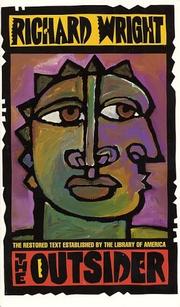
作品年表(8 本)
本站书库里署名理查德·赖特的书(Open Library 上至少 10 人加过书架的才收),按首版年份排(有本站书页的用 Wikidata 记的首版年,其余用 Open Library 的);年份偶尔记成后来的版本或译本,以原书为准。全部作品见 Open Library。
- 1938Uncle Tom's Children书架 32
- 1940Native Son书架 269
- 1941Twelve million black voices书架 10
- 1945Black Boy书架 266
- 1953The Outsider书架 29
- 1956The colour curtain, a report on the Bandung Conference书架 19
- 1963Lawd Today书架 12
- 1994Rite of passage书架 16