 书单
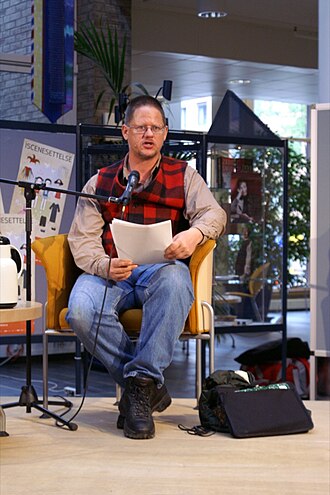
威廉·沃尔曼
- 生卒
- 1959 –
- 国籍
- 美国
- 外文名
- William T. Vollmann
照片:Øystein Vidnes,CC BY-SA 2.0,来自维基共享资源「William T. Vollmann 2006.jpg」(经缩小)。
生平与创作
威廉·坦纳·沃尔曼(William Tanner Vollmann,1959年7月28日-)是美国小说家、记者、战地记者、短篇小说作家和散文家。
沃尔曼曾就读于深泉学院,后来在康奈尔大学获得比较文学学士学位。
后来沃尔曼来到加州大学柏克莱分校攻读比较文学博士学位。 但在该校学习一年后他就退学了。
沃尔曼一度做过零工,曾经在一家保险公司担任秘书,最后他攒下了足够的钱,于1982年前往阿富汗。当时正值苏阿战争期间,他与反苏联武装一起作战,后来他患上了痢疾。
回到美国后,尽管他几乎没有任何计算机经验,但他还是成为一名计算机程序员。
以上文字摘自维基百科「威廉·沃尔曼」(去掉了参考文献等尾部小节),按 CC BY-SA 4.0 使用,作者为维基百科的各位编者。
中文维基百科的条目比较短,下面附上英文维基百科的内容(英文原文):
William Tanner Vollmann (born July 28, 1959) is an American novelist, journalist, war correspondent, short story writer and essayist. He won the 2005 National Book Award for Fiction with the novel Europe Central.
Biography
Vollmann was born in Los Angeles and lived there for five years. He attended public high school in Bloomington, Indiana, and has also lived in New Hampshire, New York, and the San Francisco Bay Area. His father was Thomas E. Vollmann, a business professor at Indiana University. When he was nine years old, Vollmann's six-year-old sister drowned in a pond while under his supervision, and he felt responsible for her death. According to him, this loss has influenced much of his work.
Vollmann studied at Deep Springs College, and completed a BA, summa cum laude, in comparative literature at Cornell University, where he lived at the Telluride House.
After graduation, Vollmann went on to the University of California, Berkeley, on a fellowship for a doctoral program in comparative literature. He dropped out after one year.
Vollmann lives in Sacramento, California, with his wife, who is a radiation oncologist. In 2022, Vollmann's daughter Lisa died of complications from alcoholism.
Career
Vollmann worked odd jobs, including a post as a secretary at an insurance company and saved up enough money to go to Afghanistan in 1982. During this trip, he sought to gather information and images that could determine the most deserving candidates for American aid. He eventually embedded himself in a group of mujahideen heading for the front lines. He saw battle with the soldiers, who were fighting the Soviet Union, before he came down with dysentery and had to be dragged through the Hindu Kush mountains. His experiences on this trip inspired his first non-fiction book, An Afghanistan Picture Show, or, How I Saved the World, which was not published until 1992.
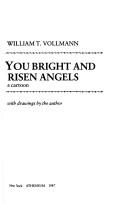
Upon his return to the US, Vollmann started work as a computer programmer, even though he had virtually no experience with computers. According to a New York Times Magazine profile by the novelist Madison Smartt Bell, for a year Vollmann wrote much of his first novel, You Bright and Risen Angels, after hours on office computers, subsisting on candy bars from vending machines and hiding from the janitorial staff.
His writing influences include Ernest Hemingway, Comte de Lautréamont, Louis-Ferdinand Celine, Yukio Mishima, Yasunari Kawabata and Leo Tolstoy.
In addition to full-length books, Vollmann has written articles and had stories published in Harper's, Playboy, Conjunctions, Spin Magazine, Esquire, The New Yorker, Gear and Granta. He has also contributed to The New York Times Book Review. Vollmann identifies as a "hack journalist"; he often does travel writing and reportage while doing research for his larger fiction or non-fiction projects.
In November 2003 (after many delays), his book Rising Up and Rising Down was published. It is a 3,300-page, heavily illustrated, seven-volume treatise on violence. It was nominated for the National Book Critics Circle Award. A single-volume condensed version was published at the end of the following year by Ecco Press. Vollmann's sole justification for the abridgment was that he "did it for the money." Rising Up and Rising Down represents more than 20 years of work in which he tries to establish a moral calculus to consider the causes, effects and ethics of violence. Vollmann based it on his reporting from places of warfare, including Cambodia, Somalia and Iraq.
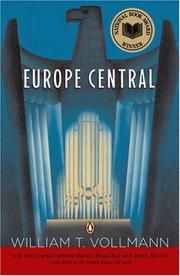
Vollmann's other works often deal with the settlement of North America (as in Seven Dreams: A Book of North American Landscapes, a cycle of seven novels); or stories of people (often prostitutes) on the margins of war, poverty and hope. His novel Europe Central (2005) follows the trajectories of a wide range of characters (including the Russian composer Dmitri Shostakovich) caught up in the fighting between Germany and the Soviet Union. It won the 2005 National Book Award for Fiction.
以上文字摘自英文维基百科「William T. Vollmann」(有删节,去掉了参考文献等尾部小节),按 CC BY-SA 4.0 使用,作者为维基百科的各位编者。
资料卡
- 出生
- 1959 年 7 月 28 日
- 出生地
- 洛杉矶
- 职业
- 小说家、散文家、战地记者、短篇故事作家、作家、新闻工作者、摄影师
- 使用语言
- 英语
- 就读学校
- 康奈尔大学、深泉学院
- 代表作
- 欧洲中部
- 获奖
- 美国国家图书奖(2005)
资料卡来自 Wikidata Q29344(CC0),众包数据,个别字段可能不全。
本站收录的作品(2)
作品年表(4 本)
本站书库里署名威廉·沃尔曼的书(Open Library 上至少 10 人加过书架的才收),按首版年份排(有本站书页的用 Wikidata 记的首版年,其余用 Open Library 的);年份偶尔记成后来的版本或译本,以原书为准。全部作品见 Open Library。
- 1987You bright and risen angels书架 12
- 1989The rainbow stories书架 18
- 2005欧洲中部Europe central书架 28
- 2007Poor People书架 16