 书单
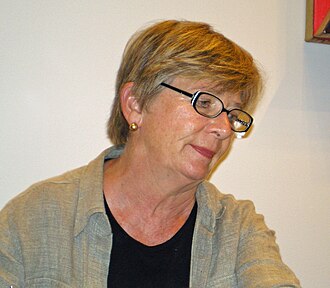
芭芭拉·艾伦瑞克
- 生卒
- 1941 – 2022
- 国籍
- 美国
- 外文名
- Barbara Ehrenreich
照片:David Shankbone,CC BY-SA 2.5,来自维基共享资源「Barbara Ehrenreich 2 by David Shankbone.jpg」(经缩小)。
生平与创作
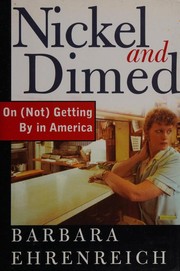
芭芭拉·艾伦瑞克(英语:Barbara Ehrenreich,/ˈɛərənraɪk/ AIR-ən-rike;1941年8月26日—2022年9月1日)是一名美国作家、政治活动家、美国民主社会主义者,以揭发丑闻著称,出版了20多部著作,名作是2001年出版的《我在底层的生活——当专栏作家化身女服务生》(Nickel and Dimed: On (Not) Getting By in America),书中她以最低工资生活了三个月。
生平
她出生于美国蒙大拿州比尤特,家教很严,不信仰任何宗教。其母是一个自由民主党人,经常谈论种族不公问题,其父是一名矿工,后成为吉列公司高管。她曾在里德学院学习物理学,后转学化学,1963年毕业,1968年进入洛克菲勒大学学习理论物理学,后转学细胞免疫学。
毕业后,她没有继续进行科学研究,而是进入纽约市预算局(Bureau of the Budget)和健康政策咨询中心(Health Policy Advisory Center)担任分析师,后成为纽约州立大学老韦斯特伯里分校助理教授。1972年,她开始教授女性健康课程,并投身女性健康相关的社会运动。
以上文字摘自维基百科「芭芭拉·艾伦瑞克」(去掉了参考文献等尾部小节),按 CC BY-SA 4.0 使用,作者为维基百科的各位编者。
中文维基百科的条目比较短,下面附上英文维基百科的内容(英文原文):
Barbara Ehrenreich (AIR-ən-rike; née Alexander; August 26, 1941 – September 1, 2022) was an American author and political activist. During the 1980s and early 1990s, she was a prominent figure in the Democratic Socialists of America. She was a widely read and award-winning columnist and essayist and the author of 21 books.
Ehrenreich is best known for her 2001 book Nickel and Dimed: On (Not) Getting By in America, a memoir of her three-month experiment surviving on a series of minimum-wage jobs. She was a recipient of a Lannan Literary Award and the Erasmus Prize.
Early life
Ehrenreich was born to Isabelle (née Oxley) and Ben Howes Alexander in Butte, Montana, which she describes as then being "a bustling, brawling, blue collar mining town". In an interview on C-SPAN, she characterized her parents as "strong union people" with two family rules: "never cross a picket line and never vote Republican". In a talk she gave in 1999, Ehrenreich called herself a "fourth-generation atheist".
Later in life, she wrote that she rejected "the God of monotheism" because of the philosophical problem of a being that was all good and all powerful, when people were living with "all the misery he allowed or instigated". She had mystical experiences throughout her life, which she identified as belonging to a type of animism rather than theism.
"As a little girl", she told The New York Times in 1993, "I would go to school and have to decide if my parents were the evil people they were talking about, part of the Red Menace we read about in the Weekly Reader, just because my mother was a liberal Democrat who would always talk about racial injustice." Her mother was a deeply unhappy homemaker. Her father was a copper miner who went to the Montana School of Mines (renamed Montana Technological University in 2018) and then to Carnegie Mellon University. A high-functioning alcoholic, he strongly valued intelligence.
After her father graduated from the Montana School of Mines, the family moved to Pittsburgh, New York, and Massachusetts, before settling down in Los Angeles. He eventually became a senior executive at the Gillette Corporation. Her parents later divorced.
Ehrenreich studied physics at Reed College, switched to chemistry, graduating in 1963. Her senior thesis was Electrochemical oscillations of the silicon anode. In 1968, she enrolled in a theoretical physics Ph.D, but changed early on to cellular immunology and received her Ph.D at Rockefeller University.
In 1970, Ehrenreich gave birth to her daughter Rosa in a public clinic in New York. "I was the only white patient at the clinic, and I found out this was the health care women got," she told The Globe and Mail newspaper in 1987, "They induced my labor because it was late in the evening and the doctor wanted to go home. I was enraged. The experience made me a feminist."
Career
After completing her doctorate, Ehrenreich did not pursue a career in science. Instead, she worked first as an analyst with the Bureau of the Budget in New York City and with the Health Policy Advisory Center, and later as an assistant professor at the State University of New York at Old Westbury.
In 1972, Ehrenreich began co-teaching a course on women and health with feminist journalist and academic Deirdre English. Through the rest of the seventies, Ehrenreich worked mostly in health-related research, advocacy and activism, including co-writing, with English, several feminist books and pamphlets on the history and politics of women's health. During this period she began speaking frequently at conferences staged by women's health centers and women's groups, by universities, and by the United States government. She also spoke regularly about socialist feminism and about feminism in general.
Together with her then husband, John Ehrenreich, she coined the term "professional-managerial class" in 1977.
以上文字摘自英文维基百科「Barbara Ehrenreich」(有删节,去掉了参考文献等尾部小节),按 CC BY-SA 4.0 使用,作者为维基百科的各位编者。
资料卡
- 母语名
- Barbara Ehrenreich
- 本名
- Barbara Alexander
- 出生
- 1941 年 8 月 26 日
- 出生地
- 比尤特
- 逝世
- 2022 年 9 月 1 日
- 逝世地
- 亚历山德里亚
- 职业
- 新闻工作者、作家、历史学家、小说家、散文家、反战人士、政治人物、免疫学家 等 14 项
- 使用语言
- 英语
- 就读学校
- 里德学院、洛克菲勒大学
- 领域
- 随笔、新闻学
- 所属团体
- 美国民主社会主义者
- 配偶
- John Ehrenreich(1966)
- 获奖
- 古根海姆学者奖(1998)、四大自由奖之免于匮乏的自由奖、伊拉斯谟奖(2018);另有 3 项只有外文名
资料卡来自 Wikidata Q283659(CC0),众包数据,个别字段可能不全。
本站收录的作品(3)
作品年表(13 本)
本站书库里署名芭芭拉·艾伦瑞克的书(Open Library 上至少 10 人加过书架的才收),按首版年份排(有本站书页的用 Wikidata 记的首版年,其余用 Open Library 的);年份偶尔记成后来的版本或译本,以原书为准。全部作品见 Open Library。
- 1971Witches, midwives, and nurses书架 92
- 1973Complaints and disorders书架 23
- 1978For her own good书架 30
- 1983The hearts of men书架 19
- 1989Fear of falling书架 16
- 1995The Snarling Citizen书架 11
- 1997Blood rites书架 15
- 2001我在底层的生活Nickel and Dimed书架 155
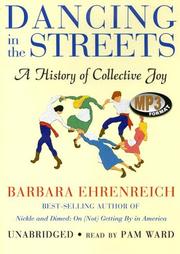
- 2006Dancing in the Streets书架 27
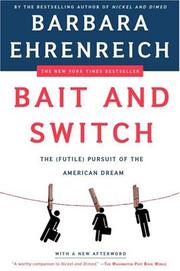
- 2006Bait and Switch书架 17
- 2009Bright-sided书架 34
- 2014Living with a Wild God书架 11
- 2019Maid书架 43