 书单
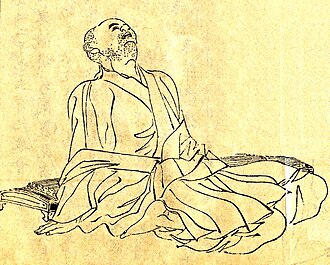
鸭长明
- 生卒
- 1155 – 1216
- 国籍
- 日本
- 外文名
- Kamo no Chōmei
照片:见原图页面,公有领域,来自维基共享资源「Kamo no Chomei.jpg」(经缩小)。
生平与创作
鸭长明(鸭长明,かものちょうめい,1155年—1216年7月26日),是日本平安时代末期至镰仓时代初期的作家与诗人,出生于京都。
作品
《方丈记》
《无名抄》
《发心集》
以上文字摘自维基百科「鴨長明」(去掉了参考文献等尾部小节),按 CC BY-SA 4.0 使用,作者为维基百科的各位编者。
中文维基百科的条目比较短,下面附上英文维基百科的内容(英文原文):
Kamo no Chōmei (鴨 長明; 1153 or 1155–1216) was a Japanese author, poet (in the waka form), and essayist. He witnessed a series of natural and social disasters, and, having lost his political backing, was passed over for promotion within the Shinto shrine associated with his family. He decided to turn his back on society, took Buddhist vows, and became a hermit, living outside the capital. This was somewhat unusual for the time, when those who turned their backs on the world usually joined monasteries. Along with the poet-priest Saigyō he is representative of the literary recluses of his time, and his celebrated essay Hōjōki ("An Account of a Ten-Foot-Square Hut") is representative of the genre known as "recluse literature" (sōan bungaku).
Early life
Born with the name Kamo no Nagaakira, he was the second son of Kamo no Nagatsugu, sho-negi or superintendent, of the Lower Kamo (Shimogamo) shrine. He was also known by the title Kikudaifu. The exact year of his birth is unknown, but thought to be either 1153 or 1155, with 1155 being the generally accepted date. From an early age, he studied poetry and music in a comfortable environment. At the time, the Upper and Lower Kamo Shrines owned large amounts of property around the Kamo River, northeast of the Heian capital (Kyoto), holding great power and prestige among the aristocracy. The Kamo Festival (Aoi Matsuri), occurring in the middle of the fourth month, was considered the most important Shinto event and is vividly depicted in literature of the time, most notably in Chapter Nine of The Tale of Genji. Chōmei was raised under these religious and material conditions.
In 1160, his father was promoted to junior fourth rank, lower grade, which ultimately led the seven-year-old Chōmei to being promoted to fifth rank, junior grade; these were high positions within the Kamo Shrine hierarchy. Ill health and political maneuvering led his father to retire in 1169, however, and in the early 1170s he died. Expecting to fill the vacant role left by his father, Chōmei, then in his late teens, was passed over, and instead his cousin was promoted to this position. In poems in Kamo no Chōmei-shū, Chōmei lamented this development.
When Chōmei was in his twenties, he moved to his paternal grandmother's house. Disinheritance may have been the reason. Since Chōmei's father had been the youngest in the family, he inherited his mother's residence. In his thirties, Chōmei states in Hōjōki that after losing “backing” in his paternal grandmother's house, he was forced out, built a small house near the Kamo River. Chōmei would live here until he became a recluse.
In Hōjōki, Chōmei states that he was able to leave the world behind because he was not attached to society by marriage or offspring.
The Hōjōki is Chōmei's notebook while he lived "in a small hut" in a suburb of the capital Fukuwara. "His work contains, as well as an obviously first-hand description of Fukuwara, a striking account of material conditions in the capital in the years from 1177 to 1182."
以上文字摘自英文维基百科「Kamo no Chōmei」(有删节,去掉了参考文献等尾部小节),按 CC BY-SA 4.0 使用,作者为维基百科的各位编者。
资料卡
- 母语名
- 鴨長明
- 出生
- 1155 年
- 出生地
- 平安京
- 逝世
- 1216 年
- 逝世地
- 富山市 等 2 项
- 职业
- 歌人、散文家、鲁特琴家、神职、文学学者
- 使用语言
- 日语
- 代表作
- 方丈记、无名抄、Hosshinshū
资料卡来自 Wikidata Q291329(CC0),众包数据,个别字段可能不全。
本站收录的作品(1)
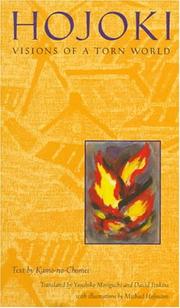
作品年表(1 本)
本站书库里署名鸭长明的书(Open Library 上至少 10 人加过书架的才收),其中 1 本记的年份比作者去世晚 50 年以上或者早于他出生(多半是后世的版本、译本或占位年份),不列年份,按首版年份排(有本站书页的用 Wikidata 记的首版年,其余用 Open Library 的);年份偶尔记成后来的版本或译本,以原书为准。全部作品见 Open Library。
- 年份不详方丈记Hōjōki书架 14