 书单
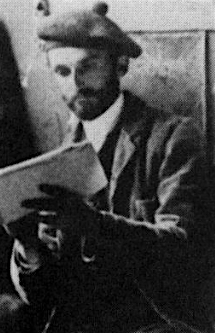
Arthur Wesley Dow
- 生卒
- 1857 – 1922
- 国籍
- 美国
照片:作者不详,公有领域,来自维基共享资源「Arthur Wesley Dow portrait Ipswich Massachusetts circa 1890.png」(经缩小)。
生平与创作
这个词条暂时没有中文维基百科条目,下面是英文维基百科的内容(英文原文):
Arthur Wesley Dow (April 6, 1857 – December 13, 1922) was an American painter, printmaker, photographer and an arts educator.
Early life
Arthur Wesley Dow was born in Ipswich, Massachusetts, in 1857. Dow received his first art training in 1880 from Anna K. Freeland of Worcester, Massachusetts. The following year, Dow continued his studies in Boston with James M. Stone, a former student of Frank Duveneck and Gustave Bouguereau. In 1884, he went to Paris for his early art education, studying at the Académie Julian, under the supervision of the academic artists Gustave Boulanger and Jules Joseph Lefebvre.
Career
In 1893, Dow was appointed assistant curator of the Japanese collection at the Museum of Fine Arts, Boston under Ernest Fenellosa. Fenellosa introduced Dow to ukiyo‑e, the woodblock prints of Japan, which greatly influenced his later works.
He accepted commissions for posters and other commercial work. In 1895, he designed the poster to advertise the Journal of Modern Art and in 1896, he designed the poster for an exhibition of Japanese prints.
Over the course of his career, Dow taught art at a few major American arts training institutions, beginning with the Pratt Institute from 1896 to 1903. He also taught at the New York Art Students League, from 1898 to 1903. In 1900, Dow founded and served as the director of the Ipswich Summer School of Art in Ipswich, Massachusetts. From 1904 to 1922, he was a professor of fine arts at Columbia University Teachers College.
Death and legacy
Dow died on December 13, 1922, in his home in New York City. He was interred in the Old North Burying Ground in Ipswich, Massachusetts. He was survived by his wife Eleanor Pearson, whom he married in 1893.
Influence on others
Dow taught many of America's leading artists and craftspeople, including: Georgia O'Keeffe, Shirley Williamson, Charles Sheeler, Charles J. Martin, two of the Overbeck Sisters, Delle Miller, Charles Burchfield, Isabelle Percy West and Walter King Stone. One of his pupils, the educator and printmaker Pedro Joseph de Lemos, adapted and widely disseminated Dow's theories in dozens of theoretical and instructional publications (1918–1950) for art schools. Early in his career, the young Frank Lloyd Wright was influenced by Dow.
Dow also had influence at the Byrdcliffe Colony.
Ideas on teaching art
His ideas were quite revolutionary for the period; Dow taught that rather than copying nature, individuals should create art through elements of the composition, such as line, mass, and color. He wanted leaders of the public to see art is a living force for all in everyday life, not as a sort of traditional ornament for the few. Dow suggested that the American lack of interest in art would improve if art was presented as a means of self-expression. He wanted people to be able to include personal experience in creating art.
His ideas on art were published in his 1899 book Composition: A Series of Exercises in Art Structure for the Use of Students and Teachers. The following extracts are from the prefatory chapter "Beginnings" to the second edition of this book (1912):
Composition ... expresses the idea upon which the method here presented is founded - the "putting together" of lines, masses and colors to make a harmony. ... Composition, building up of harmony, is the fundamental process in all the fine arts. ... A natural method is of exercises in progressive order, first building up very simple harmonies ... Such a method of study includes all kinds of drawing, design and painting. It offers a means of training for the creative artist, the teacher or one who studies art for the sake of culture.
Collections
The Dow Collection at the Ipswich Museum in Ipswich, Massachusetts is the largest single collection of the artist's works. Art by Dow is also represented in the following collections:
Addison Gallery of American Art
Amon Carter Museum of American Art
Art Institute of Chicago
Brooklyn Museum
Fine Arts Museums of San Francisco
Herbert F. Johnson Museum of Art
Metropolitan Museum of Art
Museum of Fine Arts, Boston
Museum of the American Arts and Crafts Movement
Princeton University Art Museum
San Diego Museum of Art
Smithsonian American Art Museum
Terra Foundation for American Art
Wadsworth Athenaeum
以上文字摘自英文维基百科「Arthur Wesley Dow」(去掉了参考文献等尾部小节),按 CC BY-SA 4.0 使用,作者为维基百科的各位编者。
资料卡
- 母语名
- Arthur Wesley Dow
- 出生
- 1857 年 4 月 6 日
- 出生地
- 马萨诸塞州伊普斯维奇
- 逝世
- 1922 年 12 月 13 日
- 逝世地
- 纽约
- 职业
- 画家、版画家、摄影师、教师
- 使用语言
- 英语
- 就读学校
- 朱利安艺术学校
- 文学运动 / 流派
- 阿凡桥派、艺术与工艺美术运动、日本主义
- 创作体裁
- 风景画
- 领域
- 绘画
资料卡来自 Wikidata Q711974(CC0),众包数据,个别字段可能不全。
作品年表(2 本)
本站书库里署名Arthur Wesley Dow的书(Open Library 上至少 10 人加过书架的才收),按首版年份排(有本站书页的用 Wikidata 记的首版年,其余用 Open Library 的);年份偶尔记成后来的版本或译本,以原书为准。全部作品见 Open Library。
- 1899Composition书架 13
- 1913Composition书架 13