 书单
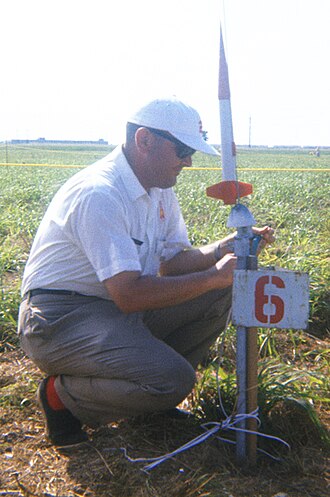
G. Harry Stine
- 生卒
- 1928 – 1997
- 国籍
- 美国
照片:FourGreatCats,CC BY-SA 3.0,来自维基共享资源「StineGHarry.jpg」(经缩小)。
生平与创作
这个词条暂时没有中文维基百科条目,下面是英文维基百科的内容(英文原文):
George Harry Stine (March 26, 1928 – November 2, 1997) was one of the founding figures of model rocketry, a science and technology writer, and (under the name Lee Correy) a science fiction author.
Education and early career
Stine grew up in Colorado Springs and attended New Mexico Military Institute and Colorado College in Colorado Springs, majoring in physics. Upon his graduation he went to work at White Sands Proving Grounds, first as a civilian scientist and then, from 1955 to 1957, at the U.S. Naval Ordnance Missile Test Facility as head of the Range Operations Division.
Stine and his wife Barbara were friends of author Robert A. Heinlein, who sponsored their wedding, as Harry's parents were dead and Barbara's mother too ill to travel. Several of Heinlein's books are dedicated to one or both of them, most particularly Have Space Suit—Will Travel. Stine wrote science fiction under the pen name "Lee Correy" in the mid-1950s and under his own name in the 1980s and 1990s, as well as writing science articles for Popular Mechanics.
After White Sands, Stine was employed at several other aerospace companies, finally ending up at Martin working on the Titan project. This job was short-lived: he was abruptly fired in 1957 when United Press called him for a reaction to the launch of Sputnik 1, and he repeated to them a passage from his just-published book Earth Satellites and the Race for Space Superiority, in which he wrote, "For the first time since the dawn of history, the Earth is going to have more than one moon. This is due to happen within the next few months—or it may have already happened even at the time you are reading this." The next day he was told to clear out his desk. In his "The Formative Years of Model Rocketry, 1957–1962; A Personal Memoir" (International Astronautical Federation, IAF XXVIIth Congress, Anaheim, CA, October 10–16, 1976 (76-241), he wrote "I was fired by the Martin Company on October 5, 1957, for telling United Press that the Soviets had used their ICBM as a launch vehicle (which they had), that Sputnik meant that the entire United States was open to nuclear ICBM attack (which it still is), and that the United States was not first in space because we did not have a serious space program (which we did not under the Eisenhower administration)."
Model rocketry
Back in his days at White Sands he had handled inquiries from young people concerning rockets, and early in 1957 he wrote an article for Mechanics Illustrated about rocket safety. Shortly thereafter he received a letter from Orville Carlisle, who had begun making small models and, more importantly, replaceable solid fuel engines to power them. Stine was impressed with the samples that Carlisle had sent him, and wrote a cover article for the October MI issue about them. After the Martin firing, he contacted Carlisle and the two of them formed Model Missiles Inc., the first manufacturer of model rockets and their engines. Stine also founded the National Association of Rocketry (initially called the Model Missile Association) and wrote the safety code which became its centerpiece; he served as its president until the late 1960s.
MMI was short-lived, as they were unprepared to handle the level of business they attracted and because of some poor business decisions. Issues with the production of early engines caused them to seek out Vernon Estes, who came to them in the summer of 1958. Estes's design and construction of "Mabel", the first engine-manufacturing machine, was the foundation of his success and put Estes Industries in a dominant position in the hobby which it was never to relinquish.
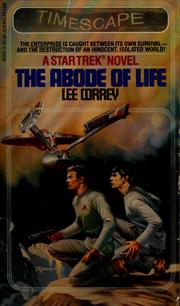
Stine continued to work to popularize the hobby, writing the Handbook of Model Rocketry in 1965, which went on through seven editions over the years. He returned to the aerospace industry, continuing to write under his pen name, including a Star Trek novel called The Abode of Life and the original novel Shuttle Down. Under his own name, he was a regular science-fact columnist for Astounding and its later successor Analog. He was a consultant to CBS News during the Apollo program, along with Lindy Davis, Charles Friedlander and Richard C. Hoagland. Stine would also occasionally advise Rick Sternbach and Mike Okuda in their work for Star Trek: The Next Generation as technical artists and advisors, and was credited in Star Trek: The Next Generation Technical Manual for that assistance. The character named "Harry Stein" in the novel Stardance (by Spider Robinson and Jeanne Robinson) is a homage to Stine.
Other work
Stine was very interested in the interaction of volunteer/free market Libertarian ideas with space colonization and as a tool of citizen diplomacy and world peace, and so was called to serve as chair of the advisory board of the Libertarian International Organization where he mentored various citizen initiatives until his death. In the wake of his book, The Third Industrial Revolution, he was asked to co-organize the American Astronautical Society 1977 conference on private space colonization to re-channel focus away from space exploration alone, and where he received an award as a founder of the international space effort. He was interested in the concept of non-immediate profit-driven free markets, and was seen as a developer and defender of the "pay it forward" approach with Robert A. Heinlein, a term also popularized in a movie of that name, starring Kevin Spacey and other stars. In addition to The Third Industrial Revolution, he wrote several other books encouraging public awareness of the possibilities of a lucrative and socially beneficial active space industry.
Stine was a founding member of the Citizens' Advisory Council on National Space Policy and attended several meetings including the 1980 meeting that prepared the space defense policy papers for the Reagan Transition Team.
以上文字摘自英文维基百科「G. Harry Stine」(有删节,去掉了参考文献等尾部小节),按 CC BY-SA 4.0 使用,作者为维基百科的各位编者。
资料卡
- 笔名
- Lee Correy
- 出生
- 1928 年 3 月 26 日
- 出生地
- 费城
- 逝世
- 1997 年 11 月 2 日
- 逝世地
- 菲尼克斯
- 职业
- 工程师、小说家、科幻作家、作家
- 使用语言
- 英语
- 就读学校
- 新墨西哥军事学院
资料卡来自 Wikidata Q5512265(CC0),众包数据,个别字段可能不全。
本站收录的作品(1)
作品年表(2 本)
本站书库里署名G. Harry Stine的书(Open Library 上至少 10 人加过书架的才收),按首版年份排(有本站书页的用 Wikidata 记的首版年,其余用 Open Library 的);年份偶尔记成后来的版本或译本,以原书为准。全部作品见 Open Library。
- 1965Handbook of model rocketry书架 53
- 1982The Abode of Life书架 12