 书单
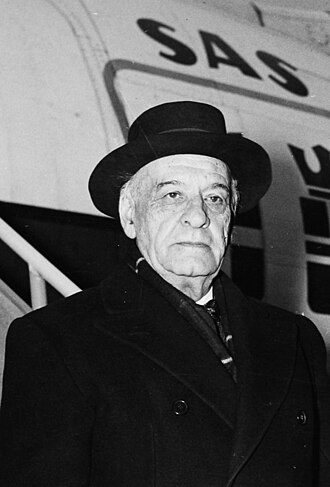
何塞·奥特嘉·伊·加塞特
- 生卒
- 1883 – 1955
- 国籍
- 西班牙
- 外文名
- José Ortega y Gasset
照片:SAS Scandinavian Airlines,公有领域,来自维基共享资源「José Ortega y Gasset (cropped).jpg」(经缩小)。
生平与创作
何塞·奥尔特加·加塞特(西班牙语:José Ortega y Gasset,1883年5月9日—1955年10月18日),简称奥尔特加,是一位西班牙哲学家、报业从业员及评论家。其哲学思想主要围绕存在主义、历史哲学和对西班牙文化的批判。
生平
奥尔特加在1883年生于西班牙马德里。1904年获博士学位。1905年游学德国,历时三年,奥尔特加在此深刻地吸收新康德学派的思想。这一年间,正发生马克斯·韦伯《资本主义与新教伦理》一书内容于《社会科学与政治文库》No.20中发表后的论战风波,而韦伯正是持新康德主义西南历史学派的方法论者。1910年任马德里大学形而上学教授。1923年为《西方的没落》一书西班牙译本作序。1931年西班牙第二共和国成立后当选国会议员,同年因发表批评意见而不见容于国会,1933年未再连任议员。
著作书目
《艺术的非人性化》1925 (La deshumanización del Arte e Ideas sobre la novela)
《小说的笔记》
《语言的本质》1927 (Espíritu de la letra)
《大众的反叛》1930 (La rebelión de las masas)
《论伽利略》 1933 (En torno a Galileo)
《自我沉思与自我疏离》1939 (Ensimismamiento y alteración)
《技术论》 1939 (Meditación de la técnica)
《概念与信念》 1940 (Ideas y Crencias)
《爱》 1940出版,后散收录在各书,台湾有中译版
《论莱布尼兹》 1958
《年轻民族的考察》 1958
《世界史诠释》 1960
《哲学的起源》
知名语录
“不必要的工作会使人情绪低落。”(可能的解释之一是:不要浪费时间做些无意义的事情,不然就是要附加这些事情意义。)
以上文字摘自维基百科「何塞·奧特加·加塞特」(去掉了参考文献等尾部小节),按 CC BY-SA 4.0 使用,作者为维基百科的各位编者。
中文维基百科的条目比较短,下面附上英文维基百科的内容(英文原文):
José Ortega y Gasset ( or-TAY-gə; Spanish: [xoˈse oɾˈteɣa j ɣaˈset]; 9 May 1883 – 18 October 1955) was a Spanish philosopher and essayist. He worked during the first half of the 20th century while Spain oscillated between monarchy, republicanism and dictatorship. His philosophy has been characterized as a "philosophy of life" that comprised "a long-hidden beginning in a pragmatist metaphysics" inspired by William James and with a general method from a realist phenomenology imitating Edmund Husserl, which served both his proto-existentialism (prior to Martin Heidegger's), and his realist historicism, which has been compared to both Wilhelm Dilthey and Benedetto Croce.
Biography
José Ortega y Gasset was born 9 May 1883 in Madrid. His father was director of the newspaper El Imparcial, which belonged to the family of his mother, Dolores Gasset. The family was definitively of Spain's end-of-the-century liberal and educated bourgeoisie. The liberal tradition and journalistic engagement of his family had a profound influence in Ortega y Gasset's activism in politics.
Ortega was first schooled by the Jesuit priests of St. Stanislaus Kostka College, Málaga, Málaga (1891–1897). He attended the University of Deusto, Bilbao (1897–98) and the Faculty of Philosophy and Letters at the Central University of Madrid (now Complutense University of Madrid) (1898–1904), receiving a doctorate in Philosophy. From 1905 to 1907, he continued his studies in Germany at Leipzig, Nuremberg, Cologne, Berlin and, above all Marburg. At Marburg, he was influenced by the neo-Kantianism of Hermann Cohen and Paul Natorp, among others.
On his return to Spain in 1908, he was appointed professor of Philosophy, Logic and Ethics at the Escuela Superior del Magisterio de Madrid. In 1910, he married Rosa Spottorno Topete, a Spanish translator and feminist, and was named full professor of Metaphysics at Complutense University of Madrid, a vacant seat previously held by Nicolás Salmerón.
In 1917 he became a contributor to the newspaper El Sol, where he published, as a series of essays, his two principal works: España invertebrada (Invertebrate Spain) and La rebelión de las masas (The Revolt of the Masses). The latter made him internationally famous. He founded the Revista de Occidente in 1923, remaining its director until 1936. This publication promoted translation of (and commentary upon) the most important figures and tendencies in philosophy, including Oswald Spengler, Johan Huizinga, Edmund Husserl, Georg Simmel, Jakob von Uexküll, Heinz Heimsoeth, Franz Brentano, Hans Driesch, Ernst Müller, Alexander Pfänder, and Bertrand Russell.
Elected deputy for the Province of León in the constituent assembly of the Second Spanish Republic, he was the leader of a parliamentary group of intellectuals known as Agrupación al Servicio de la República ("The Grouping at the Service of the Republic"), which supported the platform of Socialist Republican candidates, but he soon abandoned politics, disappointed.
Leaving Spain at the outbreak of the Civil War, he spent years of exile in Buenos Aires, Argentina until moving back to Europe in 1942. He settled in Portugal by mid-1945 and slowly began to make short visits to Spain. In 1948 he returned to Madrid, where he founded the Institute of Humanities, at which he lectured. Upon his return to Spain, he often privately expressed his hostility to the Franco regime, stating that the government did not deserve anyone's confidence and that his beliefs were "incompatible with Franco."
以上文字摘自英文维基百科「José Ortega y Gasset」(有删节,去掉了参考文献等尾部小节),按 CC BY-SA 4.0 使用,作者为维基百科的各位编者。
资料卡
- 母语名
- José Ortega y Gasset
- 本名
- José Ortega y Gasset
- 出生
- 1883 年 5 月 9 日
- 出生地
- 马德里
- 逝世
- 1955 年 10 月 18 日
- 逝世地
- 马德里
- 职业
- 哲学家、教育学家、作家、大学教师、社会学家、文学评论家、舆论记者、政治人物 等 10 项
- 使用语言
- 西班牙语、德语
- 写作语言
- 西班牙语
- 就读学校
- Universidad Central、德乌斯托大学、St. Stanislaus Kostka College, Málaga、马尔堡大学(1906)
- 领域
- 哲学
- 所属团体
- 巴伐利亚造型艺术学院、比利时皇家弗拉芒科学与艺术学院;另有 2 项只有外文名
- 配偶
- 罗莎·斯波托尔诺·托佩特
- 获奖
- 法兰克福歌德奖章(1949)、歌德艺术与科学奖章(1932)
资料卡来自 Wikidata Q153020(CC0),众包数据,个别字段可能不全。
本站收录的作品(1)
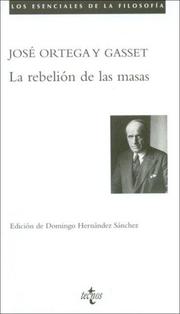
作品年表(2 本)
本站书库里署名何塞·奥特嘉·伊·加塞特的书(Open Library 上至少 10 人加过书架的才收),按首版年份排(有本站书页的用 Wikidata 记的首版年,其余用 Open Library 的);年份偶尔记成后来的版本或译本,以原书为准。全部作品见 Open Library。
- 1914Meditaciones del Quijote书架 21
- 1929大众的反叛La rebelión de las masas书架 29