 书单
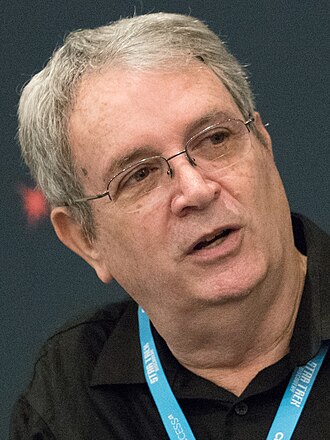
大卫·杰洛德
- 生卒
- 1944 –
- 国籍
- 美国
- 外文名
- David Gerrold
照片:Mike Muegel,CC BY 2.0,来自维基共享资源「David Gerrold 2016 (cropped).jpg」(经缩小)。
生平与创作
这个词条暂时没有中文维基百科条目,下面是英文维基百科的内容(英文原文):
David Gerrold (born Jerrold David Friedman; January 24, 1944) is an American science fiction screenwriter and novelist. He wrote the script for the original Star Trek episode "The Trouble with Tribbles", created the Sleestak race on the TV series Land of the Lost, and wrote the novelette The Martian Child, which won both Hugo and Nebula Awards, and was adapted into a 2007 film starring John Cusack.
Early life
Gerrold was born to a Jewish family on January 24, 1944, in Chicago, Illinois. He attended Van Nuys High School and graduated from Ulysses S. Grant High School in its first graduating class, Los Angeles Valley College, and San Fernando Valley State College (now California State University, Northridge).
Career
Star Trek: The Original Series
Within days of seeing the Star Trek series premiere "The Man Trap" on September 8, 1966, 22-year-old Gerrold wrote a 60-page outline for a two-part episode called "Tomorrow Was Yesterday" about the Enterprise discovering a ship launched from Earth centuries earlier. Although Star Trek producer Gene L. Coon rejected the outline, he realized Gerrold was talented and expressed interest in his submitting some story premises. Bearing preliminary titles and, in some cases, preliminary character names, Gerrold submitted five premises.
Two of the submissions of which he later had little recollection involved a spaceship-destroying machine, similar to Norman Spinrad's "The Doomsday Machine", and a situation in which Kirk had to play a chess game with an advanced intelligence using his crew as chess pieces. A third premise, "Bandi", involved a small being running about the Enterprise as someone's pet, and which empathically sways the crew's feelings and emotions to comfort it, even at someone else's expense.
A fourth premise, "The Protracted Man", applied science fiction to an effect seen in West Side Story, when Maria twirls in her dancing dress and the colours separate. Gerrold's story involved a man transported from a shuttlecraft trying out a new space warp technology. The man is no longer unified, separating into three visible forms when he moves, separated by a fraction of a second. As efforts are undertaken to correct the condition and move the Enterprise to where corrective action can be taken, the protraction worsens.
The fifth premise, "The Fuzzies", was also initially rejected by Coon, but a while later he changed his mind and called Gerrold's agent to accept it. Gerrold then expanded the story to a full television story outline entitled "A Fuzzy Thing Happened to Me...", and it eventually became "The Trouble with Tribbles". The name "Fuzzy" was changed because H. Beam Piper had written novels about a fictional alien species of the same name (see Little Fuzzy). The script went through numerous rewrites, including, at the insistence of Gerrold's agent, being re-set in a stock frontier town instead of an "expensive" space station. Gerrold later wrote a book, The Trouble with Tribbles, telling the story of producing the episode and his earlier premises.
"The Cloud Minders" from the third season has a story credited to Gerrold and Oliver Crawford.
I came in with what I thought was a near-perfect Star Trek story, which is we find a culture that isn't working for everybody and fix it. But my original ending was that, as they're flying off, Kirk says, "Well, we solved another one." Spock says, "Well, actually, it'll take years and years and years for all of these changes to be put in place." And McCoy says, "I wonder how many children are going to die in the meantime." So the idea was, "Let's get gritty. We're not going to change things overnight, but we can put changes in place that will have long-term effects." There was also more to the story that was about the social issue, and there was no magical zenite gas that was causing the problem. Freddy Freiberger and Margaret Armen came in and changed it to a "Let's solve it all in the last five minutes with gas masks" (ending). And I thought, "That's really not a very good story. It doesn't do what Gene Roddenberry or Gene L. Coon would have been willing to do." So I was disappointed.
The Trouble with Tribbles was one of two books Gerrold wrote about Star Trek in the early 1970s after the original series had been canceled. His other was an analysis of the series, entitled The World of Star Trek, in which he criticized some of the elements of the show, particularly Kirk's habit of placing himself in dangerous situations and leading landing parties himself.
Star Trek: The Animated Series
Gerrold contributed two stories for the Emmy Award-winning Star Trek: The Animated Series which ran from 1973 to 1974: "More Tribbles, More Troubles" and "Bem". "Bem" featured the first use of James T. Kirk's middle name, which was revealed to be Tiberius. This was later entered into live-action canon in the movie Star Trek VI: The Undiscovered Country when Captain Kirk and Doctor McCoy are on trial for the death of the Klingon Chancellor Gorkon.
Star Trek: The Next Generation
Many of the changes Gerrold had advocated in The World of Star Trek were incorporated into Star Trek: The Next Generation when it debuted in 1987. He parted company with the producers at the beginning of the first season.
Gerrold wrote a script for Star Trek: The Next Generation entitled "Blood and Fire", which included an AIDS metaphor and a gay couple in the ship's crew. Gerrold wrote this script in response to being with Roddenberry at a convention in 1987 where he had promised that the upcoming Next Generation series would deal with the issue of sexual orientation in the egalitarian future. The script was purchased by the TNG producers, but eventually shelved. He later reworked the story into the third book in the Star Wolf series (see below) and again as a two-part episode of the fan-produced Star Trek: New Voyages, which he also directed.
以上文字摘自英文维基百科「David Gerrold」(有删节,去掉了参考文献等尾部小节),按 CC BY-SA 4.0 使用,作者为维基百科的各位编者。
资料卡
- 母语名
- David Gerrold
- 笔名
- David Gerrold
- 出生
- 1944 年 1 月 24 日
- 出生地
- 芝加哥
- 职业
- 小说家、作家、编剧、科幻作家、电视演员、电影演员、电视导演
- 使用语言
- 美国英语、英语
- 就读学校
- 加州州立大学,北岭、范努伊斯高中、洛杉矶谷学院
- 创作体裁
- 科学幻想
- 领域
- 美国文学、科幻小说
- 获奖
- 星云奖最佳中短篇小说(1995)、雨果奖最佳中篇小说奖(1995)、轨迹奖最佳中短篇小说(1995);另有 2 项只有外文名
资料卡来自 Wikidata Q1174539(CC0),众包数据,个别字段可能不全。
本站收录的作品(3)
作品年表(6 本)
本站书库里署名大卫·杰洛德的书(Open Library 上至少 10 人加过书架的才收),按首版年份排(有本站书页的用 Wikidata 记的首版年,其余用 Open Library 的);年份偶尔记成后来的版本或译本,以原书为准。全部作品见 Open Library。
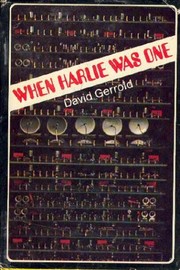
- 1972When HARLIE Was One书架 12
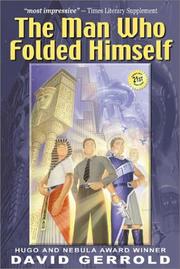
- 1973The man who folded himself书架 52
- 1973The World of Star Trek书架 12
- 1973Star Trek - Trouble with Tribbles - Fotonovel书架 12
- 1985Enemy Mine书架 12
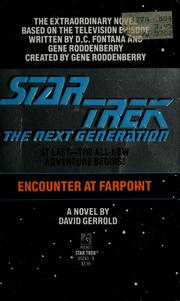
- 1987Star Trek The Next Generation - Encounter at Farpoint书架 12