 书单
休伯·塞尔比
- 生卒
- 1928 – 2004
- 国籍
- 美国
- 外文名
- Hubert Selby Jr.
生平与创作
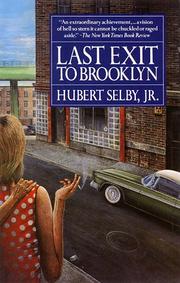
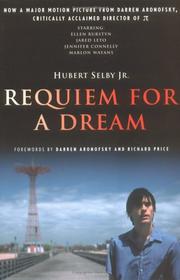
休伯·塞尔比(英语:Hubert Selby, Jr.,1928年7月23日—2004年4月26日)是美国20世纪的作家。他最著名的小说是《最后退出布鲁克林》(1964)和《安魂曲》(1978)。这两部小说后来被改编为电影,他于剧中但任在小角色。
参阅
休伯·塞尔比在互联网电影资料库(IMDb)上的资料(英文)
"Interview with Hubert Selby, Jr.", NPR, April 28, 2004, originally broadcast on May 4, 1990.
Alan Kaufman, "Review of Hubert Selby Jr.'s last novel" Archive.today的存档,存档日期2013-02-02, San Francisco Chronicle.
Interview: Hubert Selby, Jr., Spike Magazine
Jerry Stahl, "Dark Angel: Remembering Hubert Selby Jr.", L.A. Weekly, May 6, 2004
Encyclopædia Britannica "Selby, Hubert, Jr.", Encyclopædia Britannica
Hubert Selby, Jr. Biography, Cinema.com
Hubert Selby Jr., "Why I Continue To Write. Thirty-five years after Last Exit to Brooklyn", LA Weekly, February 26 - March 4, 1999.
以上文字摘自维基百科「休伯·塞爾比」(去掉了参考文献等尾部小节),按 CC BY-SA 4.0 使用,作者为维基百科的各位编者。
中文维基百科的条目比较短,下面附上英文维基百科的内容(英文原文):
Hubert "Cubby" Selby Jr. (July 23, 1928 – April 26, 2004) was an American novelist. Two of his books, Last Exit to Brooklyn (1964) and Requiem for a Dream (1978), were adapted into films, both of which he appeared in.
With no formal writing training, Selby used a raw language to depict the bleak and violent world that encompassed his youth, which would go on to set the stage for his early life. His first novel was prosecuted for obscenity in the United Kingdom and banned in Italy, which prompted defenses from many leading authors such as Anthony Burgess. He has influenced multiple generations of writers. For more than 20 years, he taught creative writing at the University of Southern California in Los Angeles, where he lived full-time after 1983.
Biography
Early life and education
Hubert Selby was born in 1928 in Brooklyn, New York City, to Adalin and Hubert Selby Sr., a merchant seaman and former coal miner from Kentucky. Selby and his wife Adalin had settled in Bay Ridge. Hubert attended public schools, including the competitive Stuyvesant High School.
Selby Jr. dropped out of school at the age of 15 to work in the city docks before becoming a merchant seaman in 1947.
Having been diagnosed with tuberculosis, he was taken off the ship in Bremen, Germany, and sent back to the United States. For the next three and a half years, Selby was in and out of the U.S. Public Health Hospital (part of a system of hospitals originally established to care for merchant seamen) in New York for treatment.
Selby went through an experimental drug treatment, streptomycin, that later caused some severe complications. During an operation, surgeons removed several of Selby's ribs to reach his lungs. One of his lungs collapsed, and doctors removed part of the other.
Becoming a writer
For the next ten years, Selby was mostly bedridden; he was frequently hospitalized with a variety of lung-related ailments. The doctors offered a bleak prognosis, suggesting he was unlikely to survive long because he "just didn't have enough lung capacity". Gilbert Sorrentino, a childhood friend who had become a writer, encouraged Selby to write fiction. Unable to have regular work because of his health, Selby decided, "I know the alphabet. Maybe I could be a writer."
He later wrote:
I was sitting at home and had a profound experience. I experienced, in all of my Being, that someday I was going to die, and it wouldn't be like it had been happening, almost dying but somehow staying alive, but I would just die! And two things would happen right before I died: I would regret my entire life; I would want to live it over again. This terrified me. The thought that I would live my entire life, look at it and realize I blew it forced me to do something with my life.
Little concerned with proper grammar, punctuation, or diction, Selby used unorthodox techniques in most of his works. He indented his paragraphs with alternating lengths, often by simply dropping down one line when finished with a paragraph. Like Jack Kerouac in his "spontaneous prose", Selby often completed his writing in a fast, stream-of-consciousness style. He substituted slashes for apostrophes so he would not have to hold down the CAPS key on a typewriter.
Early works
Selby started working on his first short story, "The Queen Is Dead," in 1958. At the time, he had a succession of day jobs, but he wrote every night. During the day, he worked as a clerk, insurance adjuster, and freelance copywriter. The short story developed slowly for the next six years before he published it.
In 1961, his short story "Tralala" was published in the literary journal The Provincetown Review. It also appeared in Black Mountain Review and New Directions. It portrays the seedy life (ridden with violence, theft and mediocre con-artistry) and the gang rape of a prostitute. The journal editor was arrested for selling pornographic literature to a minor. The journal was used as evidence in an obscenity trial, but the case was later dismissed on appeal.
以上文字摘自英文维基百科「Hubert Selby Jr.」(有删节,去掉了参考文献等尾部小节),按 CC BY-SA 4.0 使用,作者为维基百科的各位编者。
资料卡
- 出生
- 1928 年 7 月 23 日
- 出生地
- 布鲁克林区
- 逝世
- 2004 年 4 月 26 日
- 逝世地
- 洛杉矶
- 职业
- 编剧、小说家、作家、电影演员
- 使用语言
- 英语
- 写作语言
- 英语
- 就读学校
- 斯泰弗森特高中
- 代表作
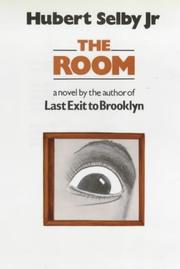
- Last Exit to Brooklyn、The Room、噩梦挽歌
资料卡来自 Wikidata Q551487(CC0),众包数据,个别字段可能不全。
本站收录的作品(3)
作品年表(5 本)
本站书库里署名休伯·塞尔比的书(Open Library 上至少 10 人加过书架的才收),按首版年份排(有本站书页的用 Wikidata 记的首版年,其余用 Open Library 的);年份偶尔记成后来的版本或译本,以原书为准。全部作品见 Open Library。
- 1964Last Exit to Brooklyn书架 139
- 1971The Room书架 46
- 1976The demon书架 11
- 1978噩梦挽歌Requiem for a dream书架 63
- 2000Requiem for a Dream书架 45