 书单
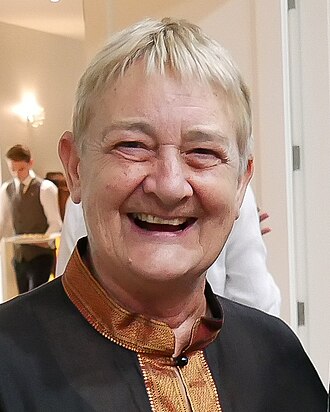
玛丽莲·华林
- 生卒
- 1952 –
- 国籍
- 新西兰
- 外文名
- Marilyn Waring
照片:New Zealand Government, Office of the Governor-General,CC BY 4.0,来自维基共享资源「Marilyn Waring 2020 (cropped).jpg」(经缩小)。
生平与创作
这个词条暂时没有中文维基百科条目,下面是英文维基百科的内容(英文原文):
Dame Marilyn Joy Waring (born 7 October 1952) is a New Zealand public policy scholar, international development consultant, former politician, environmentalist, feminist and a principal founder of feminist economics.
In 1975, aged 23, she became New Zealand's youngest member of parliament for the centre-right New Zealand National Party. As a member of parliament she chaired the Public Expenditure Committee. Her support of the opposition Labour Party's proposed nuclear-free New Zealand policy was instrumental in precipitating the 1984 New Zealand general election, and she left parliament in 1984.
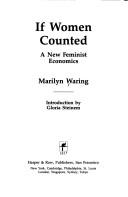
On leaving parliament she moved into academia; she is best known for her 1988 book If Women Counted, and she obtained a D.Phil in politics in 1989. Through her research and writing she is known as the principal founder of the discipline of feminist economics. Since 2006, Waring has been a professor of public policy at the Institute of Public Policy at AUT, focusing on governance and public policy, political economy, gender analysis, and human rights. She has taken part in international aid work and served as a consultant to UNDP and other international organisations.
She has outspokenly criticised the concept of gross domestic product (GDP), the economic measure that became a foundation of the United Nations System of National Accounts (UNSNA) following World War II. She criticises a system which "counts oil spills and wars as contributors to economic growth, while child-rearing and housekeeping are deemed valueless". Her work has influenced academics, government accounting in a number of countries, and United Nations policies. Waring has had a long-time involvement with the Association for Women's Rights in Development, a progressive feminist organisation that advocates inclusive feminism, and served on its board until 2012. In 2021 she was appointed by the World Health Organization as a member of the WHO Council on the Economics of Health For All.
Waring's work has been central to critiques of national income accounting, specifically in the exclusion of unpaid labour from measures such as gross domestic product. In her work, If Women Counted, she argues that current economic systems assign value primarily through market transactions, therefore excluding essential forms of labour such as childcare, elder care, and household work. Waring states that this exclusion misrepresents economic priorities by recognising activities like military expenses, while ignoring the labour that is required for proper social reproduction. She further emphasises that unpaid work, disproportionately performed by women, supports the functioning of the formal economy. Her analysis has contributed to the development of alternative accounting frameworks, including time use surveys and satellite accounts, which aim to better explain the economic significance of labour that is not on the current market.
Early life
Marilyn Waring grew up at Taupiri, where her parents owned a butchery. Her great-grandfather Harry (Arthur Henry) Waring had emigrated to New Zealand from Hopesay in Herefordshire, England, in 1881, and established the family butchery business at Taupiri. In 1927 Harry Waring stood unsuccessfully for election to parliament in the Raglan seat for the Reform Party, the forerunner of the National Party. Waring was a talented soprano in her youth, and her parents had hoped that she would become a classical singer. In 1973, Waring received an Honours BA in political science and international politics from Victoria University of Wellington.
Career
Political career
Waring joined the National Party while still a student at Victoria University. She joined because she supported National MP Venn Young, who introduced a private member's bill into parliament for homosexual law reform; this was opposed by Norman Kirk, the Labour Party Prime Minister. She quickly entered the Opposition Research Unit as a part-time advisor under George Gair, the Shadow Minister of Housing.
The 1972 to 1975 National Opposition had not had a single female member in its caucus. Exacerbated due to 1975 being International Women's Year, it was to deep embarrassment among the National Party's established figures that no women had been selected for any seats in the upcoming election. At age 22, Waring expressed some passing interest to Gair in standing for the party in the seat of Raglan, a very safe National seat that contained her hometown of Huntly. Gair anxiously called former Prime Minister Keith Holyoake to tell him about Waring's interest and origins in the area itself. An overjoyed Holyoake personally arrived within the hour to Parliament House, and offered her the selection without even formally introducing himself. The two thereafter became very close, to the extent that on one occasion she kissed Holyoake on the lips in front of cameras. She is thought to have helped soften Holyoake's ambivalent views on LGBT rights; after she was involuntarily outed by the New Zealand Truth in 1978, Holyoake worked with Prime Minister Robert Muldoon to quickly downplay the tabloid reports and to protect their friend.
以上文字摘自英文维基百科「Marilyn Waring」(有删节,去掉了参考文献等尾部小节),按 CC BY-SA 4.0 使用,作者为维基百科的各位编者。
资料卡
- 母语名
- Marilyn Waring
- 出生
- 1952 年 10 月 7 日
- 出生地
- Ngāruawāhia
- 职业
- 政治人物、作家、大学教师、经济学家、农民、女权活动家、环保人士
- 使用语言
- 英语
- 就读学校
- 惠灵顿维多利亚大学、怀卡托大学
- 文学运动 / 流派
- 女权论者
- 获奖
- 新西兰纪念奖章、BBC全球百大女性(2019);另有 4 项只有外文名
资料卡来自 Wikidata Q268510(CC0),众包数据,个别字段可能不全。
本站收录的作品(1)
作品年表(1 本)
本站书库里署名玛丽莲·华林的书(Open Library 上至少 10 人加过书架的才收),按首版年份排(有本站书页的用 Wikidata 记的首版年,其余用 Open Library 的);年份偶尔记成后来的版本或译本,以原书为准。全部作品见 Open Library。
- 1988If women counted书架 14