 书单
詹姆斯·哈德里·切斯
- 生卒
- 1906 – 1985
- 国籍
- 英国、大不列颠及爱尔兰联合王国
- 外文名
- James Hadley Chase
生平与创作
这个词条暂时没有中文维基百科条目,下面是英文维基百科的内容(英文原文):
René Lodge Brabazon Raymond (24 December 1906 – 6 February 1985), best known by the pen name James Hadley Chase, was an English author of crime fiction. He is one of the best known thriller writers of all time. The canon of Chase, comprising 90 titles, earned him a reputation as the king of thriller writers in Europe. He was also one of the internationally best-selling authors, and to date 50 of his books have been made into films.
Early life
Born René Lodge Brabazon Raymond on 24 December 1906 in London, England, he was the son of Colonel Francis Raymond of the colonial Indian Army, a veterinary surgeon. His father intended his son to have a scientific career and had him educated at King's School, Rochester, Kent.
Writing career
After Chase left home at the age of 18, he worked in sales, primarily focusing on books and literature. He sold children's encyclopaedias as well as working in a bookshop. He also served as an executive for a book wholesaler, before turning to a writing career that produced more than 90 mystery books. His interests included photography, of a professional standard, reading, and listening to classical music and opera. As a form of relaxation between novels, he put together highly complicated and sophisticated Meccano models.
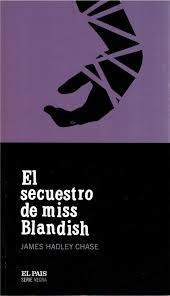
Prohibition and the ensuing Great Depression in the US (1929–39) had given rise to the Chicago gangster culture prior to World War II. This, combined with Chase's book trade experience, convinced him that there was a big demand for gangster stories. After reading James M. Cain's novel The Postman Always Rings Twice (1934), and having read about the American gangster Ma Barker and her sons, and with the help of maps and a slang dictionary, he wrote No Orchids for Miss Blandish in his spare time, he claimed over a period of six weekends, though his papers suggest it took longer. The book achieved remarkable notoriety and became one of the best-selling books of the decade. It was the subject of the 1944 essay "Raffles and Miss Blandish" by George Orwell. Chase and Robert Nesbitt adapted it to a stage play of the same name which ran in London's West End to good reviews. The 1948 film adaptation was widely denounced as salacious due to the film's portrayal of violence and sexuality. Robert Aldrich did a remake, The Grissom Gang, in 1971.
During World War II, Raymond served in the Royal Air Force, achieving the rank of Squadron Leader. He edited the RAF Journal with David Langdon and had several stories from it published after the war in the book Slipstream: A Royal Air Force Anthology. From that period comes Chase's short story "The Mirror in Room 22", in which he tried his hand outside the crime genre. It was set in an old house, occupied by officers of a squadron. The owner of the house had committed suicide in his bedroom, and the last two occupants of the room had been found with a razor in their hands and their throats cut. The Wing Commander tells that when he started to shave before the mirror, he found another face in it. The apparition drew the razor across his throat. The Wing Commander says, "I use a safety razor, otherwise, I might have met with a serious accident – especially if I had been using an old-fashioned cut-throat." The story was published under the author's real name, Rene Raymond, in the anthology of RAF writings Slipstream in 1946. In later collections, the story began to be published with his better known pseudonym James Hadley Chase.
During World War II, Chase became friendly with Merrill Panitt (then an officer with General Eisenhower's staff and subsequently editor of TV Guide), who provided him with a dictionary of American slang, detailed maps and reference books of the American underworld. This gave Chase the background for his early books with American settings, a number of which were based on actual events occurring there. Chase never lived in the United States though he did make two brief visits, one to Miami and the other en route to Mexico.
Over the years, Chase developed a distinct, signature style in his writing that was fast-paced, with little explanations or details about the surroundings or weather, unreliable characters. Characters in his novels and short stories would be more coherent and consistent who acted and reacted with unbreakable logic. Punchy sentences, short bursts of dialogue in authentic sounding slang with plenty of action were the characteristics of his writing.
Chase was subject to several court cases during his career. In 1942, his novel Miss Callaghan Comes to Grief (1941), a lurid account of the white slave trade, was banned by the British authorities after the author and publishers Jarrold were found guilty of causing the publication of an obscene book. Each was fined £100. In the court case, Chase was supported by literary figures such as H. E. Bates and John Betjeman. Later, the Anglo-American crime author Raymond Chandler successfully claimed that Chase had lifted a section of his work in Blonde's Requiem (published 1945) forcing Chase to issue an apology in The Bookseller.
By the end of World War II, eleven Chase titles had been published and he decided to adopt a different writing approach. All of his books to date had been compared to each other, and he wanted to move away from the American gangster scene to the London underworld that had sprung up following the end of German hostilities. He wrote More Deadly Than the Male under a new pseudonym, Ambrose Grant, and it was published in 1947 by Eyre and Spottiswoode, Graham Greene's publisher at that time. Alerted to Grant's new book, Greene gave it high praise as did the critics who, at the time, had no idea that Chase was the author. Contrary to rumour, the two authors did not know each other at the time, though they then became friends for the remainder of their lives, as Chase's papers and letters reveal. In the early 1960s, both men were caught up in an investment scandal involving Tom Roe which was to lead to Greene's tax exile beginning in 1966.
以上文字摘自英文维基百科「James Hadley Chase」(有删节,去掉了参考文献等尾部小节),按 CC BY-SA 4.0 使用,作者为维基百科的各位编者。
资料卡
- 母语名
- James Hadley Chase
- 笔名
- Ambrose Grant
- 出生
- 1906 年 12 月 24 日
- 出生地
- 伦敦
- 逝世
- 1985 年 1 月 6 日
- 逝世地
- 科尔索
- 职业
- 作家、小说家、编剧
- 使用语言
- 美国英语、法语、英语
- 写作语言
- 英语
- 创作体裁
- 推理作品
资料卡来自 Wikidata Q347912(CC0),众包数据,个别字段可能不全。
本站收录的作品(1)
同时代的英国作家
Open Library 上的全部作品
正在读取…