 书单
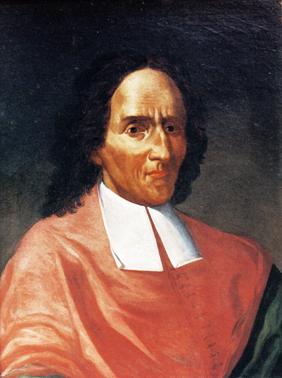
詹巴蒂斯塔·维柯
- 生卒
- 1668 – 1744
- 国籍
- 那不勒斯王国
- 外文名
- Giambattista Vico
照片:作者不详,公有领域,来自维基共享资源「Giovan Battista Vico.jpg」(经缩小)。
生平与创作
詹巴蒂斯塔·维柯(意大利语:Giambattista Vico)(1668年6月23日—1744年1月23日),原名乔瓦尼·巴蒂斯塔·维柯(意大利语:Giovanni Battista Vico),意大利启蒙运动时期的政治哲学家、修辞学家、历史学家和法学家,反启蒙思潮的代表人物,被誉为“人文主义之父”、“历史哲学之父”或“文化哲学之父”。他为古老风俗辩护,批判了现代理性主义,并以巨著《新科学》闻名于世。英国思想家以赛亚·伯林称赞他为“人类观念史上最大胆的创新者之一”
生平
他批评现代理性主义的扩张和发展,是古典时代的拥护者。维柯最出名的是他的巨作《新科学》(Scienza Nuova,1725)。 维柯是系统思想和复杂思想的前身,反对笛卡尔分析和其他类型的还原主义,并被认为是社会科学和符号学的基本方面的第一次阐述。作为一名知识分子,詹巴蒂斯塔·维柯被认为是开启了现代哲学的历史领域,虽然术语哲学哲学不在他的文本中,他说的是“哲学叙述的哲学史”。虽然不是历史主义者,但对维科的兴趣通常是由历史学家驱动的,如以赛亚·伯林和海登·怀特。此外,詹巴蒂斯塔·维柯也以拉丁语的格言(Verum esse ipsum factum)(“真正的本身就是事实”和“真正的本身是做的”)而闻名,这个命题是建构主义认识论的早期实例。
版本
原著校勘版
Fausto Nicolini 编,Opere,1914—40
Manuela Sanna、Vincenzo Vitiello 编,La scienza nuova - Le tre edizioni del 1725, 1730, 1744, 2012
以上文字摘自维基百科「詹巴蒂斯塔·维柯」(去掉了参考文献等尾部小节),按 CC BY-SA 4.0 使用,作者为维基百科的各位编者。
中文维基百科的条目比较短,下面附上英文维基百科的内容(英文原文):
Giambattista Vico (born Giovanni Battista Vico ; Italian: [ˈviːko]; 23 June 1668 – 23 January 1744) was an Italian philosopher, rhetorician, historian, and jurist during the Italian Enlightenment. He criticized the expansion and development of modern rationalism, finding Cartesian analysis and other types of reductionism impractical to human life, and he was an apologist for classical antiquity and the Renaissance humanities, in addition to being the first expositor of the fundamentals of social science and of semiotics. He is recognised as one of the first Counter-Enlightenment figures in history.
The Latin aphorism "Verum esse ipsum factum" ("truth is itself something made") coined by Vico is an early instance of constructivist epistemology. He inaugurated the modern field of the philosophy of history, and, although the term philosophy of history is not in his writings, Vico spoke of a "history of philosophy narrated philosophically." Although he was not an historicist, contemporary interest in Vico usually has been motivated by historicists, such as Isaiah Berlin, a philosopher and historian of ideas, and Hayden White, a metahistorian.
Vico's intellectual magnum opus is the book Scienza Nuova or New Science (1725), which attempts a systematic organization of the humanities as a single science that records and explains the historical cycles by which societies rise and fall.
Biography
Born to a bookseller in Naples, Italy, Giovanni Battista Vico attended several schools, but ill health and dissatisfaction with the scholasticism of the Jesuits led to his being educated at home by tutors. Evidence from his autobiographical work indicates that Vico likely was an autodidact educated under paternal influence, during a three-year absence from school, consequence of an accidental fall when the boy was seven years old. Giovanni Battista's formal education was at the University of Naples from which he graduated in 1694, as Doctor of Civil and Canon Law.
In 1686, after surviving a bout of typhus, he accepted a job as a tutor, in Vatolla, south of Salerno, which became a nine-year professional engagement that lasted till 1695. Four years later, in 1699, Vico married Teresa Caterina Destito, a childhood friend, and accepted a chair in rhetoric at the University of Naples, which he held until ill-health retirement, in 1741. Throughout his academic career, Vico would aspire to, but never attain, the more respectable chair of jurisprudence; however, in 1734, he was appointed historiographer royal, by Charles III, King of Naples, at a salary greater than he had earned as a university professor.
The rhetoric and humanism of Vico
Vico's version of rhetoric is a product of his humanistic and pedagogic concerns. In the 1708 commencement speech De Nostri Temporis Studiorum Ratione (On the Order of the Scholarly Disciplines of Our Times), Vico said that whoever "intends a career in public life, whether in the courts, the senate, or the pulpit" should be taught to "master the art of topics and [to] defend both sides of a controversy, be it on Nature, Man, or politics, in a freer and brighter style of expression, so he can learn to draw on those arguments which are most probable and have the greatest degree of verisimilitude"; yet, in Scienza Nuova, Vico denounced defending both sides in controversies as false eloquence.
As Royal Professor of Latin Eloquence, Vico prepared students for higher studies in the fields of Law and of Jurisprudence; thus, his lessons were about the formal aspects of the canon of rhetoric, including the arrangement and the delivery of an argument. Yet he chose to emphasize the Aristotelian connection of rhetoric with logic and dialectic, thereby placing ends (rhetoric) at their center. Vico's objection to modern rhetoric is that it is disconnected from common sense (sensus communis), defined as the "worldly sense" that is common to all men.
以上文字摘自英文维基百科「Giambattista Vico」(有删节,去掉了参考文献等尾部小节),按 CC BY-SA 4.0 使用,作者为维基百科的各位编者。
资料卡
- 母语名
- Giambattista Vico
- 本名
- Giovan Battista Vico
- 出生
- 1668 年 6 月 23 日
- 出生地
- 那不勒斯
- 逝世
- 1744 年 1 月 23 日
- 逝世地
- 那不勒斯
- 职业
- 哲学家、社会学家、历史学家、民间传说收集者、法学家、法律学者
- 使用语言
- 拉丁语、意大利语
- 就读学校
- 那不勒斯费德里科二世大学
- 领域
- 哲学
- 所属团体
- 都灵科学院
- 配偶
- Teresa Caterina Destito
- 代表作
- 新科学、De nostri temporis studiorum ratione、De antiquissima Italorum sapientia、De rebus gestis Antonii Caraphaei
资料卡来自 Wikidata Q178709(CC0),众包数据,个别字段可能不全。
本站收录的作品(1)
受 Ta 影响的作家
Open Library 上的全部作品
正在读取…