 书单
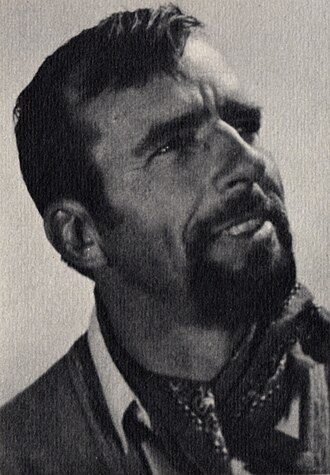
爱德华·艾比
- 生卒
- 1927 – 1989
- 国籍
- 美国
- 外文名
- Edward Abbey
照片:Photo by Woody Hilbert,公有领域,来自维基共享资源「"Desert Solitaire", by Edward Abbey (cropped).jpg」(经缩小)。
生平与创作
这个词条暂时没有中文维基百科条目,下面是英文维基百科的内容(英文原文):
Edward Paul Abbey (January 29, 1927 – March 14, 1989) was an American author and essayist noted for his advocacy of environmental issues, criticism of public land policies, and anarchist political views. His best-known works include the novel The Monkey Wrench Gang, which has been cited as an inspiration by radical environmental groups, and the non-fiction work Desert Solitaire.
Early life
Abbey was born in Indiana, Pennsylvania on January 29, 1927, to Mildred Postlewait and Paul Revere Abbey. Mildred was a schoolteacher and a church organist, and gave Abbey an appreciation for classical music and literature. Paul was an anarchist, atheist, and socialist whose views strongly influenced Abbey.
Abbey graduated from high school in Indiana, Pennsylvania, in 1945. Eight months before his 18th birthday, when he faced conscription into the U.S. military, Abbey decided to explore the American southwest. He traveled by foot, bus, hitchhiking, and freight train hopping. During this trip he fell in love with the desert country of the Four Corners region. Abbey wrote:
"[...] crags and pinnacles of naked rock, the dark cores of ancient volcanoes, a vast and silent emptiness smoldering with heat, color, and indecipherable significance, above which floated a small number of pure, clear, hard-edged clouds. For the first time, I felt I was getting close to the West of my deepest imaginings, the place where the tangible and the mythical became the same."
Military service and education
In the U.S. Army, Abbey applied for a clerk typist position but instead he served two years as a military police officer in Italy. Abbey was promoted in the army twice but due to his tendency to oppose authority, was twice demoted and was honorably discharged as a private. His experience in the military left him with a distrust for large institutions and regulations which influenced his writing throughout his career and strengthened his anarchist beliefs.
When he returned to the United States, Abbey took advantage of the G.I. Bill to attend the University of New Mexico, where he received a B.A. in philosophy and English in 1951, and a master's degree in philosophy in 1956. During his time in college, Abbey supported himself by working a variety of odd jobs, including being a newspaper reporter and bartending in Taos, New Mexico. During this time he had few male friends but had close relationships with a number of women. Shortly before getting his bachelor's degree, Abbey married his first wife, Jean Schmechal (another UNM student). While an undergraduate, Abbey was the editor of a student newspaper in which he published an article titled "Some Implications of Anarchy". A cover quotation of the article, "ironically attributed to Louisa May Alcott", stated "Man will never be free until the last king is strangled with the entrails of the last priest." University officials seized all of the copies of the issue and removed Abbey from the editorship of the paper.
Upon receiving his honorable discharge papers, he sent it back to the department with the words "Return to Sender". The FBI took note and added a note to his file which was opened in 1947 when Edward Abbey committed an act of civil disobedience; he posted a letter while in college urging people to rid themselves of their draft cards. Abbey was on the FBI's watch-list since then and he was watched throughout his life. In 1952, Abbey wrote a letter against the draft in times of peace and again the FBI took notice, writing, "Edward Abbey is against war and military." Throughout his life, the FBI took notes, building a profile on Abbey, observing his movements and interviewing many people who knew him. Towards the later part of his life, Abbey learned of the FBI's interest in him and said "I'd be insulted if they weren't watching me."
After graduating, Schmechal and Abbey traveled together to Edinburgh, Scotland, where Abbey spent a year at Edinburgh University as a Fulbright scholar. During this time, Abbey and Schmechal separated and ended their marriage. In 1951 Abbey began having an affair with American southwest artist Rita Deanin, who in 1952 would become his second wife after he and Schmechal divorced. Deanin and Abbey had two children, Joshua N. Abbey and Aaron Paul Abbey.
Abbey's master's thesis explored anarchism and the morality of violence, asking the two questions: "To what extent is the current association between anarchism and violence warranted?" and "In so far as the association is a valid one, what arguments have the anarchists presented, explicitly or implicitly, to justify the use of violence?". After receiving his master's degree, Abbey spent 1957 at Stanford University on a Wallace Stegner Creative Writing Fellowship.
Work for National Park Service
In 1956 and 1957, Abbey worked as a seasonal ranger for the United States National Park Service at Arches National Monument (now a national park), near the town of Moab, Utah. Abbey held the position from April to September each year, during which time he maintained trails, greeted visitors, and collected campground fees. He lived in a house trailer that had been provided to him by the Park Service, as well as in a ramada that he built himself. During his stay at Arches, Abbey accumulated a large volume of notes and sketches which later formed the basis of his first non-fiction work, Desert Solitaire. Abbey's second son Aaron was born in 1959, in Albuquerque, New Mexico.
In 1961, the movie version of his second novel, The Brave Cowboy, with screenplay by Dalton Trumbo, was being shot on location in New Mexico by Kirk Douglas who had purchased the novel's screen rights and was producing and starring in the film, released in 1962 as Lonely Are the Brave. Douglas once said that when Abbey visited the film set, he looked and talked so much like Douglas's friend Gary Cooper that Douglas was disconcerted. However, over 25 years later when Abbey died, Douglas wrote that he had 'never met' him. In 1981, his third novel, Fire on the Mountain, was also adapted into a TV movie by the same title.
以上文字摘自英文维基百科「Edward Abbey」(有删节,去掉了参考文献等尾部小节),按 CC BY-SA 4.0 使用,作者为维基百科的各位编者。
资料卡
- 本名
- Edward Paul Abbey
- 出生
- 1927 年 1 月 29 日
- 出生地
- 印第安纳
- 逝世
- 1989 年 3 月 14 日
- 逝世地
- 图森
- 职业
- 作家、小说家、哲学家、散文家、编剧、环保人士、社运人士、自然科学家
- 使用语言
- 英语
- 写作语言
- 英语
- 就读学校
- 爱丁堡大学、新墨西哥大学、耶鲁大学、宾夕法尼亚大学
- 文学运动 / 流派
- 环保主义、绿色无政府主义
- 创作体裁
- 自然写作、随笔
- 领域
- 自然保护、自然环境、纯文学
- 配偶
- Rita Deanin Abbey
- 受谁影响
- 奥尔多·利奥波德、亨利·戴维·梭罗、加里·斯奈德、彼得·阿列克谢耶维奇·克鲁泡特金、A.B.小格思里
- 代表作
- 故意破坏帮(1975)、Desert Solitaire(1968)
- 获奖
- 古根海姆学者奖(1975)
资料卡来自 Wikidata Q937610(CC0),众包数据,个别字段可能不全。
本站收录的作品(3)

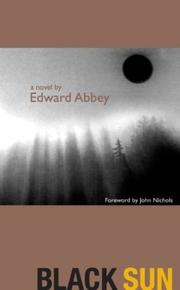
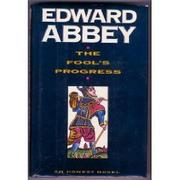
作品年表(7 本)
本站书库里署名爱德华·艾比的书(Open Library 上至少 10 人加过书架的才收),按首版年份排(有本站书页的用 Wikidata 记的首版年,其余用 Open Library 的);年份偶尔记成后来的版本或译本,以原书为准。全部作品见 Open Library。
- 1962Fire on the Mountain书架 12
- 1968Desert solitaire书架 164
- 1971Black Sun书架 11
- 1975Monkey Wrench Gang书架 88
- 1988The Fool's Progress书架 10
- 1989Prentice Hall Literature--The American Experience书架 21
- 2011Desert solitaire书架 10