 书单
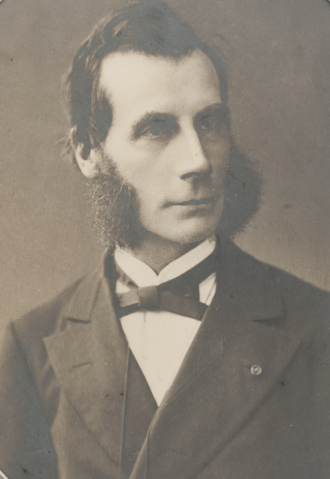
努马-丹尼斯·甫斯特尔·德·库朗日
- 生卒
- 1830 – 1889
- 国籍
- 法国
- 外文名
- Numa Denis Fustel de Coulanges
照片:Eugène Pirou,公有领域,来自维基共享资源「Numa Denis Fustel de Coulanges.png」(经缩小)。
生平与创作
努马·德尼·甫斯特尔·德·库朗日(法语:Numa Denis Fustel de Coulanges;1830年3月18日—1889年9月12日)是19世纪法国的历史学家,实证史学的代表史家。
作品
《古代城邦》
以上文字摘自维基百科「努马·德尼·甫斯特尔·德·库朗日」(去掉了参考文献等尾部小节),按 CC BY-SA 4.0 使用,作者为维基百科的各位编者。
中文维基百科的条目比较短,下面附上英文维基百科的内容(英文原文):
Numa Denis Fustel de Coulanges (French: [kulɑ̃ʒ]; 18 March 1830 – 12 September 1889) was a French historian and religious scholar best known for his work on ancient society and primitive religion.
Biography
Fustel de Coulanges was born in Paris and was of Breton descent. After studying at the École Normale Supérieure, he attended the French School at Athens.
Career
In 1853, he directed some excavations in Chios and wrote a historical account of the island.
After his return, he held various educational positions and earned his doctorate degree with two theses: Quid Vestae cultus in institutis veterum privatis publicisque valuerit and Polybe, ou la Grèce conquise par les Romains (1858). His knowledge of Greek and Roman institutions and skepticism of contemporary scholars led him to rely on original texts. Once he formed a clear idea from the sources, he treated it as truth.
From 1860 to 1870, he was a professor of history at the faculty of letters at Strasbourg, where he had a brilliant career as a teacher, but never yielded to the influence exercised by the German universities in the field of classical and Germanic antiquities.
Fustel de Coulanges was appointed to a lectureship at the École Normale Supérieure in February 1870, to a professorship at the Paris faculty of letters in 1875, and to the chair of medieval history created for him at the Sorbonne in 1878, he applied himself to the study of the political institutions of ancient France. The invasion of France by the German armies during the Franco-Prussian War attracted his attention to the Germanic invasions under the Roman Empire. Pursuing the theory of J.-B. Dubos, but also transforming it, he maintained that those invasions were not marked by the violent and destructive character usually attributed to them; that the penetration of the German barbarians into Gaul was a slow process; that the Germans submitted to the imperial administration; that the political institutions of the Merovingians had their origins in the Roman laws at least as much as, if not more than, in German usages; and, consequently, that there was no conquest of Gaul by the Germans.
He sustained the thesis in his Histoire des institutions politiques de l'ancienne France, the first volume of which appeared in 1874. It was the author's original intention to complete this work in four volumes, but as the first volume was keenly attacked in Germany as well as in France, Fustel was forced in self-defense to recast the book entirely. He re-examined all the texts and wrote a number of dissertations, which were dominated by his general idea and characterised by a total disregard for the results of such historical disciplines as diplomatic. From this crucible, issued an entirely new work, less well arranged than the original, but rich in facts and critical comments. The first volume was expanded into three volumes, La Gaule romaine (1891), L'Invasion germanique et la fin de l'empire (1891) and La Monarchie franque (1888), followed by three other volumes, L'Alleu et le domaine rural pendant l'époque mérovingienne (1889), Les Origines du système féodal: le bénéfice et le patronat ... (1890) and Les Transformations de la royauté pendant l'époque carolingienne (1892).
Thus, in six volumes, he had carried the work no farther than the Carolingian period. The dissertations not embodied in his work were collected by himself and (after his death) by his pupil, Camille Jullian, and published as volumes of miscellanies: Recherches sur quelques problèmes d'Histoire (1885), dealing with the Roman colonate, the land system in Normandy; the Germanic mark, and the judiciary organization in the kingdom of the Franks; Nouvelles recherches sur quelques problèmes d'histoire (1891); and Questions historiques (1893), which contains his paper on Chios and his thesis on Polybius.
以上文字摘自英文维基百科「Numa Denis Fustel de Coulanges」(有删节,去掉了参考文献等尾部小节),按 CC BY-SA 4.0 使用,作者为维基百科的各位编者。
资料卡
- 母语名
- Numa Denis Fustel de Coulanges
- 出生
- 1830 年 3 月 18 日
- 出生地
- 巴黎
- 逝世
- 1889 年 9 月 12 日
- 逝世地
- 马西
- 职业
- 历史学家、作家、大学教师
- 使用语言
- 法语
- 写作语言
- 法语
- 就读学校
- 高等师范学校(1850)、查理曼高中、巴黎文学院
- 所属团体
- 法兰西人文院(1875)、法国雅典学院(1853);另有 2 项只有外文名
- 代表作
- 古代城邦
- 获奖
- 法国荣誉军团军官勋章、蒙蒂雍奖(1865);另有 2 项只有外文名
资料卡来自 Wikidata Q462597(CC0),众包数据,个别字段可能不全。
本站收录的作品(1)
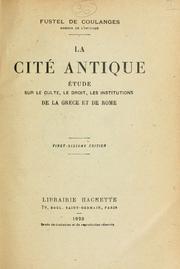
作品年表(1 本)
本站书库里署名努马-丹尼斯·甫斯特尔·德·库朗日的书(Open Library 上至少 10 人加过书架的才收),按首版年份排(有本站书页的用 Wikidata 记的首版年,其余用 Open Library 的);年份偶尔记成后来的版本或译本,以原书为准。全部作品见 Open Library。
- 1870古代城邦La cité antique书架 18