 书单
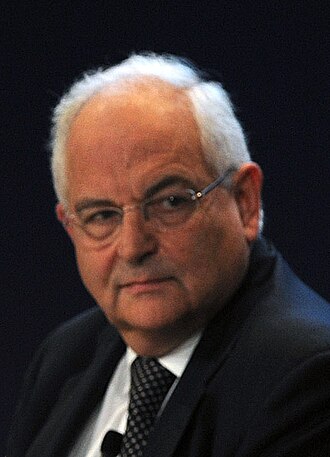
马丁·沃尔夫
- 生卒
- 1946 –
- 国籍
- 英国
- 外文名
- Martin Wolf
照片:World Economic Forum (Adam Nadel),CC BY-SA 2.0,来自维基共享资源「Martin Wolf 2009.jpg」(经缩小)。
生平与创作
马丁·沃尔夫(英语:Martin Wolf, 1946年3月16日—)是一位英国经济评论家和记者。英国《金融时报》的副主编及首席经济评论员。
生平
1946年出生在英国伦敦,父亲是奥地利犹太剧作家,第二次世界大战前从维也纳逃到了英格兰。
母亲是荷兰犹太人,在犹太人大屠杀中失去了将近三十位亲人。 他回忆道:自己家庭背景让他担心极端性政治,也激励他对经济学的兴趣,认为经济政策的失误是导致第二次世界大战的起因之一。 他在1970年代前是工党的支持者。1967年考入牛津大学基督圣体学院,最初学习古典学尔后转入哲学、政治学及经济学课程。
本科毕业后进入牛津大学纳菲尔德学院,1971年拿到经济学硕士学位。他表示自己不想读博士,因为不想成为学者。毕业后进入世界银行的青年学者项目,1974年成为一名高级经济学家。他对罗伯特·麦克纳马拉执掌下的世界银行颇为失望,观点也转向右倾和自由市场模式。
1981年离开世界银行在伦敦一家贸易政策研究中心担任主管,1987年加入英国《金融时报》,1990年成为助理编辑,1996年成为首席经济评论员。2000年代末之前,他是全球化和自由市场的颇具影响力支持者。
著作
《转型与冲击:马丁·沃尔夫谈未来全球经济》,中信出版社,2015年5月,ISBN 9787508650746
'《下一轮全球金融》,中信出版社,2009年12月,ISBN 9787508617282
以上文字摘自维基百科「马丁·沃尔夫」(去掉了参考文献等尾部小节),按 CC BY-SA 4.0 使用,作者为维基百科的各位编者。
中文维基百科的条目比较短,下面附上英文维基百科的内容(英文原文):
Martin Harry Wolf (born 16 August 1946 in London) is a British journalist who focuses on economics. He is the chief economics commentator at the Financial Times. He also wrote a weekly column for the French newspaper Le Monde until 2016.
Early life and education
Wolf was born in London, in 1946. His father Edmund was an Austrian Jewish playwright who migrated from Vienna to England before World War II.
In London, Edmund met Wolf's mother, a Dutch Jew who had lost nearly thirty close relatives in the Holocaust. Wolf recalls that his background left him wary of political extremes and encouraged his interest in economics, as he felt economic policy mistakes were one of the root causes of World War II. He was an active supporter of the Labour Party until the early 1970s.
Wolf was privately educated at University College School, a day school for boys in Hampstead in north west London, and the University of Oxford where in 1967 he was a student of Corpus Christi College, Oxford for his undergraduate studies. He initially read classics before switching to Philosophy, Politics and Economics. As a postgraduate student, Wolf moved on to Nuffield College, Oxford, which he left with a Master of Philosophy degree (MPhil) in economics in 1971. Wolf has said that he never pursued a PhD because he "didn't want to become an academic".
Career
In 1971, Wolf joined the World Bank's young professionals programme, becoming a senior economist in 1974. By the start of the eighties, Wolf was deeply disillusioned with the Bank's policies undertaken under the direction of Robert McNamara: the Bank had been strongly pushing for increased capital flows to developing countries, which had resulted in many of them suffering debt crises by the early 1980s. Seeing the results of misjudged intervention by global authorities and also influenced from the early 1970s by various works critical of government intervention, such as Friedrich Hayek's The Road to Serfdom, Wolf shifted his views towards the right and the free market.
Wolf left the World Bank in 1981, to become Director of Studies at the Trade Policy Research Centre, in London. He joined the Financial Times in 1987, where he has been associate editor since 1990 and chief economics commentator since 1996. Up until the late 2000s, Wolf was an influential advocate of globalisation and the free market.
In addition to his journalism and participation in various international forums, Wolf had also attempted to influence opinion with his books; he has stated that his 2004 book, Why Globalization Works, was intended to be a persuasive work rather than an academic study. By 2008, Wolf had become disillusioned with theories promoting what he came to see excessive reliance on the private sector. While remaining a pragmatist free of binding commitments to any one ideology, Wolf's views partially shifted away from free market thinking back to the Keynesian ideas he had been taught while young.
Wolf became one of the more influential drivers of the 2008–2009 Keynesian resurgence, and in late 2008 and early 2009, he used his platform on the Financial Times to advocate a massive fiscal and monetary response to the 2008 financial crisis. According to Julia Ioffe writing in 2009 for The New Republic, he was "arguably the most widely trusted pundit" of the crisis. Wolf is a supporter of a land value tax.
Between 2010 and 2011, Wolf served on the Independent Commission on Banking. In 2012, Wolf stated in remarks for the Financial Times that public goods are building blocks of civilisation: security and safety, knowledge and science, a sustainable environment, trust, the Rechtsstaat, and economic and financial stability. Wolf discussed the economic impact of the COVID-19 pandemic in an April 2020 editorial for the Financial Times titled "The world economy is now collapsing", where he called it the "biggest economic disaster since the Depression of the 1930s".
以上文字摘自英文维基百科「Martin Wolf」(有删节,去掉了参考文献等尾部小节),按 CC BY-SA 4.0 使用,作者为维基百科的各位编者。
资料卡
- 出生
- 1946 年 8 月 16 日
- 出生地
- 伦敦
- 职业
- 新闻工作者、经济学家、大学教师
- 使用语言
- 英语
- 就读学校
- 大学学院公学、牛津大学纳菲尔德学院、牛津大学基督圣体学院
- 配偶
- Alison Wolf
- 获奖
- 伊斯基亚国际新闻奖(2012)、大英帝国司令勋章;另有 2 项只有外文名
资料卡来自 Wikidata Q2993421(CC0),众包数据,个别字段可能不全。
本站收录的作品(1)
作品年表(2 本)
本站书库里署名马丁·沃尔夫的书(Open Library 上至少 10 人加过书架的才收),按首版年份排(有本站书页的用 Wikidata 记的首版年,其余用 Open Library 的);年份偶尔记成后来的版本或译本,以原书为准。全部作品见 Open Library。
- 2004Why Globalization Works书架 11
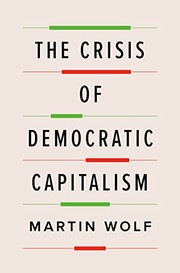
- 2023The Crisis of Democratic Capitalism书架 11