 书单
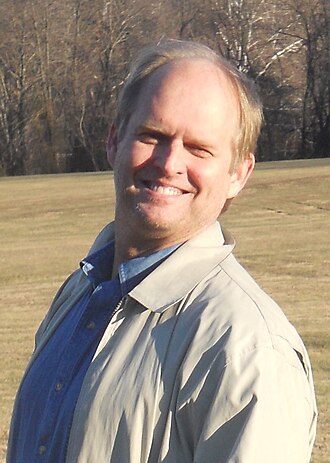
罗宾·汉森
- 生卒
- 1959 –
- 国籍
- 美国
- 外文名
- Robin Hanson
照片:KatjaGrace,CC BY-SA 3.0,来自维基共享资源「Robin Hanson in a field 2.jpg」(经缩小)。
生平与创作
这个词条暂时没有中文维基百科条目,下面是英文维基百科的内容(英文原文):
Robin Dale Hanson (born August 28, 1959) is an American economist and author. He is an associate professor of economics at George Mason University and a former research associate at the Future of Humanity Institute of Oxford University. Hanson is known for his work on idea futures and markets, and he was involved in the creation of the Foresight Institute's Foresight Exchange and DARPA's FutureMAP project. He invented market scoring rules like LMSR (Logarithmic Market Scoring Rule) used by prediction markets such as Consensus Point (where Hanson was Chief Scientist), and has conducted research on signalling. He also proposed the Great Filter hypothesis.
Background
Hanson received a BS in physics from the University of California, Irvine in 1981, an MS in physics and an MA in Conceptual Foundations of Science from the University of Chicago in 1984, and a PhD in social science from Caltech in 1997 for his thesis titled Four puzzles in information and politics: Product bans, informed voters, social insurance, and persistent disagreement. Before getting his PhD he researched artificial intelligence, Bayesian statistics and hypertext publishing at Lockheed, NASA, and elsewhere. In addition, he started the first internal corporate prediction market at Xanadu in 1990.
He is married to Peggy Jackson, a hospice social worker, and has two children. He is the son of a Southern Baptist preacher. Hanson has elected to have his brain cryonically preserved after death. He was involved early on in the creation of the Rationalist community through online weblogs.
Views
Prediction markets
Robin Hanson is credited with originating the concept of the Policy Analysis Market (PAM), a DARPA project to implement a market for betting on future developments in the Middle East. Hanson wrote that the cancellation of FutureMAP followed controversy over betting on terrorist attacks, after the Senate had voted to cut funding over privacy concerns about the related Total Information Awareness program. He also created and supports a proposed system of government called futarchy, in which policies would be determined by prediction markets.
Nate Silver has described Hanson's view on prediction markets, saying "[Hanson's] argument for these is pretty simple: They ensure that we have a financial stake in being accurate when we make forecasts, rather than just trying to look good to our peers."
Sex
In a 2018 blog post on the incel movement, Hanson compared concern about income inequality with concern about unequal access to sex. He wrote that he found it puzzling that similar concern had not been shown for incels as for low-income individuals. Some journalists, such as Alexandra Scaggs in the Financial Times, criticized Hanson for discussing sex as if it was a commodity.
Hanson has been criticized for his writings relating to sexual relationships and women. "If you've ever heard of George Mason University economist Robin Hanson, there's a good chance it was because he wrote something creepy", Slate columnist Jordan Weissmann wrote in 2018. In an article on bias against women in economics, Bloomberg columnist Noah Smith cited a blog post by Hanson comparing cuckoldry to "gentle silent rape", lamenting that there was no retraction and no outcry from fellow economists. In The New Yorker, Jia Tolentino described Hanson's 2018 blog post as a "flippantly dehumanizing thought experiment". Hanson later denied proposing an entitlement to sex and said he was more interested in sexual inequality generally than in the incel activist community.
Cryonics
Hanson is an advocate for cryonics and a member of the Alcor Life Extension Foundation, a cryonics organization that preserves human remains in the hope of future revival.
Great Filter
Hanson coined the term Great Filter, referring to whatever prevents "dead matter" from becoming an expanding and observable intelligent civilization, as a possible resolution of the Fermi Paradox. He was motivated to seek his doctorate so that his theories would reach a wider audience.
Books
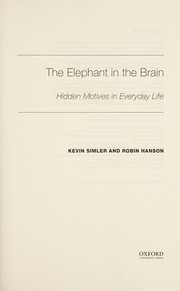
Hanson has written two books. The Age of Em (2016) concerns his views on brain emulation and its eventual impact on society. The Elephant in the Brain (2018), coauthored with Kevin Simler, looks at mental blind spots of society and individuals.
以上文字摘自英文维基百科「Robin Hanson」(去掉了参考文献等尾部小节),按 CC BY-SA 4.0 使用,作者为维基百科的各位编者。
资料卡
- 母语名
- Robin Dale Hanson
- 出生
- 1959 年 8 月 28 日
- 职业
- 经济学家、大学教师、社会科学家
- 使用语言
- 英语
- 写作语言
- 英语
- 就读学校
- 加利福尼亚大学欧文分校、芝加哥大学、加州理工学院
- 领域
- 预测市场、经济学、科技与社会
- 代表作
- The Age of Em、大过滤理论
资料卡来自 Wikidata Q2159779(CC0),众包数据,个别字段可能不全。
本站收录的作品(2)
作品年表(2 本)
本站书库里署名罗宾·汉森的书(Open Library 上至少 10 人加过书架的才收),按首版年份排(有本站书页的用 Wikidata 记的首版年,其余用 Open Library 的);年份偶尔记成后来的版本或译本,以原书为准。全部作品见 Open Library。
- 2016The age of em书架 21
- 2018The elephant in the brain书架 207