 书单
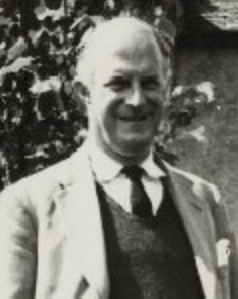
菲茨罗伊·麦克林
- 生卒
- 1911 – 1996
- 国籍
- 英国
- 外文名
- Sir Fitzroy MacLean, 1st Baronet
照片:Ccab2bb,CC BY-SA 4.0,来自维基共享资源「Fitzroy MacLean (cropped).png」(经缩小)。
生平与创作
这个词条暂时没有中文维基百科条目,下面是英文维基百科的内容(英文原文):
Sir Fitzroy Hew Royle Maclean, 1st Baronet (11 March 1911 – 15 June 1996), was a British Army officer, writer and politician. Before World War II, he served as a diplomat, after which point he enlisted, and distinguished himself on several fronts. He was a Unionist Member of Parliament (MP) from 1941 to 1974.
Maclean wrote several books, including his memoirs Eastern Approaches, in which he recounted three extraordinary series of adventures: travelling, often incognito, in Soviet Central Asia; fighting in the Western Desert campaign, where he specialised in commando raids behind enemy lines; and living rough with Josip Broz Tito and his Yugoslav Partisans while commanding the Maclean Mission there. It has been widely speculated that Ian Fleming used Maclean as one of his inspirations for James Bond.
Early life
Maclean was born in Cairo, Egypt, to Major Charles Wilberforce Maclean (1875–1953), a member of the Scottish minor nobility serving in Egypt with the Queen's Own Cameron Highlanders, and Frances Elaine Gladys Royle (1882–1954), the only daughter of George Royle, a Royal Navy officer, and Fannie Jane Longueville Snow, who wed on 12 July 1905 at St George's Church, Hanover Square, London.
Background and education
Maclean was descended from the Macleans of Ardgour, a sept of the Clan Maclean, whose chiefs have as their historic seat Duart Castle on the Isle of Mull in the Inner Hebrides.
Brought up in Italy, Maclean was educated at Eton before going up to King's College, Cambridge, where he read Classics and History. He then studied in Germany before joining HM Diplomatic Service in 1933.
In the Soviet Union
In 1934 Fitzroy Maclean was posted to the British Embassy in Paris. Bored with the pleasant but undemanding routine, he requested a posting to Moscow in 1937. The two and a half years he spent in the Soviet Union formed the first third of his best-known book, the autobiographical Eastern Approaches.
Maclean was in Moscow until late 1939, and was present during the great Stalinist purges, observing the fates of Bukharin and other Russian revolutionaries. Although he was stationed in the capital, Maclean travelled extensively, primarily by train, into remote regions of the USSR which were off limits to foreigners, and was shadowed by the NKVD as he did so.
Second World War
When the Second World War broke out in 1939, Maclean was prevented from joining the military because of his position as a diplomat: he was Second Secretary in the Foreign Office. Therefore, he resigned from the Diplomatic Service "to go into politics". After tendering his resignation he immediately took a taxi to the nearest recruiting office and enlisted as a private in the Queen's Own Cameron Highlanders. He was soon promoted to lance corporal before being commissioned in 1941. In that year he became the Conservative MP for Lancaster.
In North Africa in 1942, Maclean distinguished himself in the early actions of the newly-formed Special Air Service (SAS), where, with Ralph A. Bagnold, he developed ways of driving vehicles over the Libyan sand "seas". Maclean was a practitioner in the T. E. Lawrence brand of fighting, and he reported directly to Winston Churchill in Cairo. A letter of introduction from David Stirling said of him at the end of this period: "He has done well on our raids. Don't be taken in by his rather pompous manner or his slow way of speaking – he is OK."
Persia and Iraq
Later that year Maclean transferred to the Middle East as part of the Persia and Iraq Command. He was "allotted a platoon of Seaforth Highlanders and instructed to kidnap" General Fazlollah Zahedi, the commander of the Persian forces in the Isfahan area. Maclean captured him and smuggled him out by plane to internment in mandatory Palestine. This incident soon led Hitler's government to withdraw support from its network in Persia.
Yugoslavia
Churchill chose Maclean to lead a liaison mission (Macmis) to central Yugoslavia in 1943. Josip Broz Tito and his Partisans were emerging as a major obstacle to German control of the Balkans. Little was known at the time about Tito: some suspected this was an acronym for a committee or that he might, in fact, be a young woman. Maclean got to know Tito well, and later produced two biographies of him. Maclean's relationship with Tito's Partisans was not always easy, partly because they were communist, while he came from an upper class Scottish background, and had witnessed Stalinism in action (see above).
As Churchill personally told him, Maclean's mission was not to concern himself with how Yugoslavia was to be run after the war, but "simply to find out who was killing the most Germans and suggest means by which we could help them to kill more."
In 1944, together with Tito, Maclean planned and implemented Operation Ratweek. It was a major Allied bombing campaign in collaboration with the local Partisan troops in order to prevent German troops retreating back and reinforcing those in central and western Europe, thus prolonging the war.
His biography of Tito reveals the admiration he held for the Yugoslav leader and the Yugoslav Communist-led anti-fascist struggle. He developed a great affection for Yugoslavia and its people and was later given permission to buy a house on the Dalmatian island of Korčula, Croatia.
Having been appointed a Commander of the Order of the British Empire (CBE) in 1944, Maclean received the Order of Kutuzov (Soviet Union) (which impressed the Soviet troops in Belgrade), and after the war the Croix de Guerre (France), and the Partisan Star (Yugoslavia). Promoted to the rank of brigadier during the war, Maclean was accorded the local rank of major general on 16 June 1947.
Maclean was one of only two soldiers who during the Second World War enlisted in the British Army as a private and rose to the rank of brigadier, the other being future fellow Conservative MP Enoch Powell.
以上文字摘自英文维基百科「Sir Fitzroy Maclean, 1st Baronet」(有删节,去掉了参考文献等尾部小节),按 CC BY-SA 4.0 使用,作者为维基百科的各位编者。
资料卡
- 母语名
- Fitzroy Maclean
- 出生
- 1911 年 3 月 11 日
- 出生地
- 开罗
- 逝世
- 1996 年 6 月 15 日
- 逝世地
- 赫特福德
- 职业
- 政治人物、历史学家、外交官、军人、士兵、作家、作者
- 使用语言
- 英语
- 就读学校
- 伊顿公学、剑桥大学国王学院
- 领域
- 军事事务、外交、政治、文学
- 配偶
- Veronica Maclean(1946)
- 获奖
- 大英帝国司令勋章(1944);另有 1 项只有外文名
资料卡来自 Wikidata Q1263302(CC0),众包数据,个别字段可能不全。
本站收录的作品(1)
作品年表(1 本)
本站书库里署名菲茨罗伊·麦克林的书(Open Library 上至少 10 人加过书架的才收),按首版年份排(有本站书页的用 Wikidata 记的首版年,其余用 Open Library 的);年份偶尔记成后来的版本或译本,以原书为准。全部作品见 Open Library。
- 1949走近东方Eastern approaches书架 11