 书单
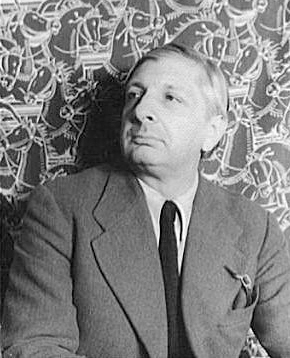
乔治·德·基里科
- 生卒
- 1888 – 1978
- 国籍
- 意大利
- 外文名
- Giorgio de Chirico
照片:Carl Van Vechten,公有领域,来自维基共享资源「Giorgio de Chirico (portrait).jpg」(经缩小)。
生平与创作
乔治欧·德·奇里诃(Giorgio de Chirico,1888年7月10日—1978年11月20日)是一名超现实画派大师,生于希腊东部的沃洛斯,由西西里裔的父亲和热那亚裔的母亲养育成人。他是形而上派(scuola metafisica)艺术运动的始创人。
生平
朱塞佩·马利亚·阿尔贝托·乔治欧·德·奇里诃出生于希腊沃洛斯,是杰玛·切尔韦托和埃瓦里斯托·德·奇里诃的长子。他的母亲是士麦那热那亚男爵夫人,具有希腊血统;父亲是西西里男爵,有希腊血统(基里科家族或基里科家族起源于希腊,1523年与其他4000个希腊天主教家庭一起从罗德岛移居巴勒莫)。德·奇里诃出生时,他的家人在希腊,因为他的父亲是一名工程师,负责铁路项目的建设,包括皮利翁铁路(Pelion railway)。他的弟弟安德烈亚·弗朗切斯科·阿尔贝托(Andrea Francesco Alberto)以笔名阿尔贝托·萨维尼奥(Alberto Savinio)成为了著名的作家、画家和作曲家。
从1900年开始,德·基里科在雅典理工学院学习素描和绘画,主要在希腊画家乔治斯·罗伊洛斯和乔治斯·雅各比德斯的指导下学习。1905年埃瓦里斯托·德·基里科去世后,全家于 1906 年移居德国,首先访问了佛罗伦萨。德·基里科进入慕尼黑美术学院,在那里他师从加布里埃尔·冯·哈克尔(Gabriel von Hackl)和卡尔·冯·马尔(Carl von Marr),阅读了哲学家弗里德里希·尼采、亚瑟·叔本华和奥托·魏宁格的著作。在那里,他也学习了阿诺德·勃克林和马克斯·克林格尔的作品。他最早的画作,如《垂死的半人马》(1909 年),风格受到了勃克林的影响
以上文字摘自维基百科「乔治·德·基里科」(去掉了参考文献等尾部小节),按 CC BY-SA 4.0 使用,作者为维基百科的各位编者。
中文维基百科的条目比较短,下面附上英文维基百科的内容(英文原文):
Giuseppe Maria Alberto Giorgio de Chirico ( KIRR-ik-oh; Italian: [ˈdʒordʒo de ˈkiːriko]; 10 July 1888 – 20 November 1978) was a Greek-Italian artist and writer born in Volos, Greece. In the years before World War I, he founded the scuola metafisica art movement, which profoundly influenced the surrealists. His best-known works often feature Roman arcades, long shadows, mannequins, trains, and illogical perspective. His imagery reflects his affinity for the philosophy of Arthur Schopenhauer and of Friedrich Nietzsche, and for the mythology of his birthplace.
After 1919, de Chirico became a critic of modern art, studied traditional painting techniques, and later worked in a neoclassical or neo-Baroque style, while frequently revisiting the metaphysical themes of his earlier work.
Early life and works
Giuseppe Maria Alberto Giorgio de Chirico was born in Volos, Greece, as the eldest son of Gemma Cervetto and Evaristo de Chirico. His mother was a baroness from Genoa, with Greek origins from Smyrna, and his father, a baron from Sicily, also had Greek ancestry. The Kyriko or Chirico family was of Greek origin, having moved from Rhodes to Palermo in 1523 together with 4,000 other Greek Catholic families. De Chirico's family was in Greece at the time of his birth because his father, an engineer, was in charge of the construction of railroad projects, including the Pelion railway. His younger brother, Andrea Francesco Alberto, became a famous writer, painter and composer under the pseudonym Alberto Savinio.
Beginning in 1900, de Chirico studied drawing and painting at Athens Polytechnic—mainly under the guidance of the Greek painters Georgios Roilos and Georgios Jakobides. After Evaristo de Chirico's death in 1905, the family relocated in 1906 to Germany, after first visiting Florence. De Chirico entered the Academy of Fine Arts in Munich, where he studied under Gabriel von Hackl and Carl von Marr and read the writings of the philosophers Friedrich Nietzsche, Arthur Schopenhauer and Otto Weininger. There, he also studied the works of Arnold Böcklin and Max Klinger. The style of his earliest paintings, such as The Dying Centaur (1909), shows the influence of Böcklin.
Metaphysical art
De Chirico returned to Italy in the summer of 1909 and spent six months in Milan. By 1910, he was beginning to paint in a simpler style with flat, anonymous surfaces. At the beginning of 1910, he moved to Florence, where he painted the first of his 'Metaphysical Town Square' series, The Enigma of an Autumn Afternoon, after the revelation he felt in Piazza Santa Croce. He also painted The Enigma of the Oracle while in Florence. In July 1911, he spent a few days in Turin on his way to Paris. De Chirico was profoundly moved by what he called the "metaphysical aspect" of Turin, especially the architecture of its archways and piazzas. The paintings de Chirico produced between 1909 and 1919, his metaphysical period, are characterized by haunted, brooding moods evoked by their images. At the start of this period, his subjects were motionless cityscapes inspired by the bright daylight of Mediterranean cities, but gradually he turned his attention to studies of cluttered storerooms, sometimes inhabited by mannequin-like hybrid figures. De Chirico's conception of Metaphysical art was strongly influenced by his reading of Nietzsche, whose style of writing fascinated de Chirico with its suggestions of unseen auguries beneath the appearance of things.
以上文字摘自英文维基百科「Giorgio de Chirico」(有删节,去掉了参考文献等尾部小节),按 CC BY-SA 4.0 使用,作者为维基百科的各位编者。
资料卡
- 母语名
- Giorgio de Chirico
- 出生
- 1888 年 7 月 10 日
- 出生地
- 沃洛斯
- 逝世
- 1978 年 11 月 20 日
- 逝世地
- 罗马
- 职业
- 画家、雕塑家、作家、舞台美学师、插画家、珠宝设计师、素描家、版画家
- 使用语言
- 法语、意大利语、现代希腊语、德语
- 写作语言
- 法语
- 就读学校
- 慕尼黑美术学院、雅典艺术学院
- 文学运动 / 流派
- 形而上派
- 创作体裁
- 形而上派、寓意像、风景画、裸体艺术、神话绘画、抽象艺术 等 10 项
- 领域
- 绘画
- 所属团体
- 佛罗伦萨美术学院、法兰西艺术院
- 配偶
- Raissa Calza
- 代表作
- 爱之歌、诗人的不确定性、一条街道的神秘与忧郁
- 获奖
- 法国荣誉军团骑士勋章、意大利共和国功绩大军官勋章(1957);另有 2 项只有外文名
资料卡来自 Wikidata Q156622(CC0),众包数据,个别字段可能不全。
本站收录的作品(1)
作品年表(1 本)
本站书库里署名乔治·德·基里科的书(Open Library 上至少 10 人加过书架的才收),按首版年份排(有本站书页的用 Wikidata 记的首版年,其余用 Open Library 的);年份偶尔记成后来的版本或译本,以原书为准。全部作品见 Open Library。
- 1929Hebdomeros书架 10