 书单
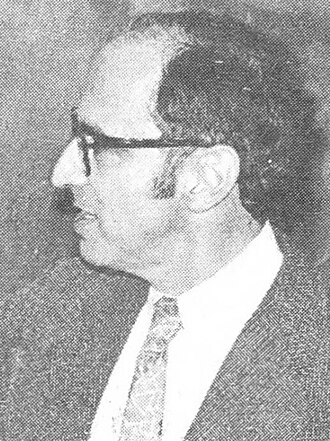
托马斯·库恩
- 生卒
- 1922 – 1996
- 国籍
- 美国
- 外文名
- Thomas Kuhn
照片:Bob Bielk,公有领域,来自维基共享资源「Thomas Kuhn (1977) (cropped).jpg」(经缩小)。
生平与创作
托马斯·塞缪尔·库恩(英语:Thomas Samuel Kuhn,1922年7月18日—1996年6月17日),美国物理学家、科学史学家和科学哲学家,代表作为《哥白尼革命》和《科学革命的结构》。
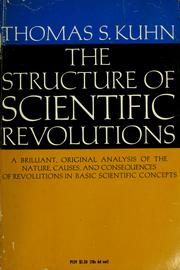
其最有名的著作《科学革命的结构》(The Structure of Scientific Revolutions,1962年),为当代的科学思想研究建立广为人知的讨论基础;不论是赞成或是批评,因此可以说是最有影响力的科学史及科学哲学家,其著作也被引用到科学史之外的其他广泛领域中。纽约时报认为,库恩此本著作让范式(paradigm)这个词汇变成当代最泛用的词汇之一。
著作
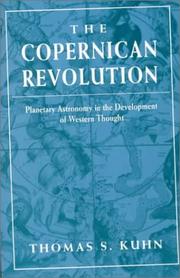
The Copernican Revolution (1957)
The Structure of Scientific Revolutions (Chicago: University of Chicago Press, 1962) (ISBN 0-226-45808-3)
繁体中文 〈科学革命的结构〉- (台北市:远流,1989) (ISBN 957-32-0811-3)
The Essential Tension: Selected Studies in Scientific Tradition and Change (1977)
Black-Body Theory and the Quantum Discontinuity, 1894-1912 (Chicago, 1987)
The Road Since Structure: Philosophical Essays, 1970-1993 (Chicago: University of Chicago Press, 2000) (ISBN 0-226-45798-2)
以上文字摘自维基百科「托马斯·库恩」(去掉了参考文献等尾部小节),按 CC BY-SA 4.0 使用,作者为维基百科的各位编者。
中文维基百科的条目比较短,下面附上英文维基百科的内容(英文原文):
Thomas Samuel Kuhn (July 18, 1922 – June 17, 1996) was an American historian and philosopher of science whose 1962 book The Structure of Scientific Revolutions was influential in both academic and popular circles. The book popularized the term paradigm shift, which has since become an English-language idiom. Alexander Bird describes the book as one of the most cited academic books of all time.
Kuhn made several claims concerning the progress of scientific knowledge: that scientific fields undergo periodic "paradigm shifts" rather than solely progressing in a linear and continuous way, and that these paradigm shifts open up new approaches to understanding what scientists would never have considered valid before; and that the notion of scientific truth, at any given moment, cannot be established solely by objective criteria but is defined by a consensus of a scientific community. Competing paradigms are frequently incommensurable; that is, there is no one-to-one correspondence of assumptions and terms. Thus, our comprehension of science can never rely wholly upon "objectivity" alone. Science must account for subjective perspectives as well, since all objective conclusions are ultimately founded upon the subjective conditioning/worldview of its researchers and participants.
Biography
Early life, family and education
Kuhn was born in Cincinnati, Ohio, in 1922 to Minette Stroock Kuhn and Samuel L. Kuhn, an industrial engineer, both Jewish though non-observant.
The family moved to Manhattan when he was an infant. From kindergarten through fifth grade, he was educated at Lincoln School, a private progressive school in Manhattan, which stressed independent thinking rather than learning facts and subjects. The family then moved 40 mi (64 km) north to the small town of Croton-on-Hudson, New York, where, once again, he attended a private progressive school – Hessian Hills School. Here, in sixth through ninth grade, he learned to love mathematics. He left Hessian Hills in 1937 and spent one year at the Solebury School before attending The Taft School in Watertown, Connecticut, graduating in 1940.
He obtained his BSc degree in physics from Harvard College in 1943. As an undergraduate, he wrote for The Harvard Crimson and headed its editorial board. He also obtained MSc and PhD degrees in physics in 1946 and 1949, respectively, under the supervision of John Van Vleck, after a short period of World War II war work with Van Vleck at Harvard's secret Radio Research Laboratory that included travel to England, France, and Germany.
Career
Kuhn began his teaching career with a course in the history of science at Harvard from 1948 until 1957 as assistant professor of General Education and History of Science at the suggestion of university president James B. Conant. He was a Harvard Junior Fellow 1948–1951 and, as he states in the first pages of the preface to the second edition of The Structure of Scientific Revolutions, these three years of total academic freedom were crucial in allowing him to switch from studying physics to studying the history of science and philosophy of science. However, Conant's influence at Harvard declined rapidly over the course of the 50s and the general education program was refocused, and Kuhn was rejected for tenure in 1957.
Kuhn taught next, after Harvard, at the University of California, Berkeley, in both the philosophy department and the history department; he was named Professor of History of Science in 1961. At Berkeley, Kuhn served as director of the National Science Foundation project Sources for the History of Quantum Physics 1961–1964. Kuhn interviewed and tape recorded Danish physicist Niels Bohr the day before Bohr's death. At Berkeley, he wrote and published (in 1962) his best known and most influential work: The Structure of Scientific Revolutions.
以上文字摘自英文维基百科「Thomas Kuhn」(有删节,去掉了参考文献等尾部小节),按 CC BY-SA 4.0 使用,作者为维基百科的各位编者。
资料卡
- 母语名
- Thomas Samuel Kuhn
- 出生
- 1922 年 7 月 18 日
- 出生地
- 辛辛那提
- 逝世
- 1996 年 6 月 17 日
- 逝世地
- 剑桥
- 职业
- 物理学家、科学史学家、科学哲学家、大学教师、哲学家
- 使用语言
- 英语
- 就读学校
- 哈佛大学、Hessian Hills School、塔夫特学校
- 文学运动 / 流派
- 西方哲学
- 领域
- 科学哲学、分析哲学、科学史
- 所属团体
- 利奥波第那科学院、欧洲科学与艺术院、哈佛学会、美国文理科学院、美国国家科学院(1979) 等 6 项,另有 1 项只有外文名
- 配偶
- Jehane Barton Burns、Kathryn Muhs
- 受谁影响
- 卡尔·古斯塔夫·亨佩尔、让·皮亚杰、迈克尔·波拉尼、路德维克·弗莱克
- 代表作
- 科学革命的结构、The Copernican Revolution
- 获奖
- 古根海姆学者奖(1954)、约翰·德斯蒙·伯纳尔奖(1983)、乔治·萨顿奖章(1982);另有 1 项只有外文名
资料卡来自 Wikidata Q184980(CC0),众包数据,个别字段可能不全。
本站收录的作品(2)
作品年表(2 本)
本站书库里署名托马斯·库恩的书(Open Library 上至少 10 人加过书架的才收),按首版年份排(有本站书页的用 Wikidata 记的首版年,其余用 Open Library 的);年份偶尔记成后来的版本或译本,以原书为准。全部作品见 Open Library。
- 1957The Copernican revolution书架 11
- 1962科学革命的结构The Structure of Scientific Revolutions书架 300