 书单
玛格丽特·桑格
- 生卒
- 1921 – 2003
- 国籍
- 美国
- 外文名
- Margaret Singer
生平与创作
这个词条暂时没有中文维基百科条目,下面是英文维基百科的内容(英文原文):
Margaret Thaler Singer (July 29, 1921 – November 23, 2003) was an American clinical psychologist and researcher with her colleague Lyman Wynne on family communication. She was a prominent figure in the study of undue influence in social and religious contexts, and a proponent of the brainwashing theory of cults.
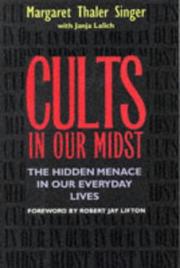
Singer's main areas of research included schizophrenia, family therapy, brainwashing and coercive persuasion. In the 1960s, she began to study the nature of social and religious group influence and brainwashing, and sat as a board member of the American Family Foundation and as an advisory board member of the Cult Awareness Network. She was the co-author of the book Cults in Our Midst.
Education
Singer was born in Denver, Colorado, to Margaret McDonough Thaler and Raymond Willard Thaler. Her mother was a secretary to a federal judge and her father was chief operating engineer at the US Mint. While attending the University of Denver, she played cello in the Denver Civic Symphony. She received her Bachelor of Arts in speech and a Master of Science in speech pathology and special education from the University of Denver. Singer received her Doctor of Philosophy (PhD) degree in clinical psychology from the University of Denver in 1943.
Career
After obtaining her PhD in clinical psychology, Singer worked at the University of Colorado's School of Medicine's department of psychiatry for eight years. In 1953, she started working at Walter Reed Army Medical Center, where she specialized in studying the returned prisoners of war who had been brainwashed by their captors into denouncing the United States and supporting North Korea and China.
In the scientific community, Singer was best known and respected for her studies in schizophrenia and family therapy. She conducted research with the National Institute of Mental Health, the United States Air Force, and the Massachusetts Institute of Technology. Singer was a guest lecturer of psychology at University of California, Berkeley, from 1964 to 1991, and she served as a faculty member and lecturer at other University of California campuses as well as the Albert Einstein College of Medicine, the University of Rochester, and other institutions.
Singer's work on family communication won her a place as one of the pioneers in the developing field of family therapy. As noted in one obituary, her collaboration with Lyman Wynne was particularly important.
Singer began to study brainwashing in the 1950s at Walter Reed in Washington, DC, where she interviewed United States soldiers who had been taken prisoner during the Korean War. Beginning in the late 1960s, she expanded her studies in the field of cults and published a number of articles on mind control ("psychological coercion") and similar areas. She developed theories about how cults recruit and retain members (such as her Theory of Systematic Manipulation of Social and Psychological Influence) and was on the board of many of the major anti-cult groups and organizations in the United States. At one point, Singer interviewed Charles Manson.
By the 1970s, Singer was a leading researcher in the field of psychosomatic medicine, and became the first female and first psychologist President of the American Psychosomatic Society in 1974. She also served as a member of the Kaiser Foundation Research Institute review board and the American Family Foundation board.
Singer testified as a brainwashing expert at the trial of Patty Hearst, presenting her conclusions that Hearst had been brainwashed, but outside the jury's presence. Singer described Hearst as "a low-IQ, low-affect zombie" and testified that by using speech patterns, she determined that Hearst was reading statements prepared by her captors. Prosecutors argued that Singer's testimony should not be presented to the jury because brainwashing had never before been accepted as a field of expertise upon which expert testimony could be presented. The judge decided in favor of the prosecution, and Hearst was convicted. Singer's testimony was widely reported, which increased her reputation as a brainwashing expert.
Singer played a role in the "Hillside Strangler" trial of Kenneth Bianchi. Singer concluded that Bianchi had faked symptoms of multiple personality disorder, in order to escape responsibility for the murders of several women in Los Angeles. Later, she spoke about the trial on PBS Frontline in a special show entitled: "The Mind of a Murderer." Singer asserted that Bianchi was a psychopath, and stated: "He may simply be evil."
Her expert testimony was no longer accepted after the report of the APA Task Force on Deceptive and Indirect Methods of Persuasion and Control, of which she was chair, was rejected by the Board of Social and Ethical Responsibility for Psychology (BSERP) of the American Psychological Association. Melton has written that afterward, courts began to shift toward accepting the position held by the great majority of scholars studying new religious movements, moving away from the minority perspective of Singer and others sympathetic to her brainwashing claims. According to Melton, this had significant consequences later on, since it meant that brainwashing could no longer be used as a defense for the practice of deprogramming.
DIMPAC task force controversy and aftermath
In the early 1980s, some American mental health professionals became well-known figures due to their involvement as expert witnesses in court cases against groups they considered to be cults. In their testimonies they presented theories of brainwashing, mind control, or coercive persuasion to support the legal positions of former group members against their former groups.
以上文字摘自英文维基百科「Margaret Singer」(有删节,去掉了参考文献等尾部小节),按 CC BY-SA 4.0 使用,作者为维基百科的各位编者。
资料卡
- 出生
- 1921 年 7 月 29 日
- 出生地
- 丹佛
- 逝世
- 2003 年 11 月 23 日
- 逝世地
- 伯克利
- 职业
- 心理学家、作家、精神科医师、大学教师
- 就读学校
- 丹佛大学
- 代表作
- Cults in Our Midst
资料卡来自 Wikidata Q2587743(CC0),众包数据,个别字段可能不全。
本站收录的作品(1)
作品年表(1 本)
本站书库里署名玛格丽特·桑格的书(Open Library 上至少 10 人加过书架的才收),按首版年份排(有本站书页的用 Wikidata 记的首版年,其余用 Open Library 的);年份偶尔记成后来的版本或译本,以原书为准。全部作品见 Open Library。
- 1996Cults in Our Midst书架 72