 书单

罗伯特·祖布林
- 生卒
- 1952 –
- 国籍
- 美国
- 外文名
- Robert Zubrin
照片:The Mars Society,CC BY-SA 3.0,来自维基共享资源「Robert Zubrin by the Mars Society.jpg」(经缩小)。
生平与创作
这个词条暂时没有中文维基百科条目,下面是英文维基百科的内容(英文原文):
Robert Zubrin (born April 9, 1952) is an American aerospace engineer, author, and advocate for human exploration of Mars. He is also an advocate for U.S. space superiority, writing that "in the 21st century, victory on land, sea or in the air will go to the power that controls space" and that "if we desire peace on Earth, we need to prepare for war in space."
He and his colleague at Martin Marietta, David Baker, were the driving force behind Mars Direct, a proposal in a 1990 research paper intended to produce significant reductions in the cost and complexity of a mission to Mars. The key idea was to use the Martian atmosphere to produce oxygen, water, and rocket propellant for the surface stay and return journey. A modified version of the plan was subsequently adopted by NASA as a "design reference mission". He questioned the delay and cost-to-benefit ratio of first establishing a base or outpost on an asteroid or another Apollo program-like return to the Moon, as neither would be able to provide all of its own oxygen, water, or energy; these resources are producible on Mars, and he expected people would be there thereafter.
Zubrin established the Mars Society in 1998, an international organization advocating a human mission to Mars, by private funding if possible.
Early life
Zubrin was born in Brooklyn, New York City on April 9, 1952. His father was descended from Russian Jewish immigrants.
Career
Zubrin holds a B.A. in Mathematics from the University of Rochester (1974); he was a science teacher for 7 years before becoming an engineer. He earned a M.S. in Nuclear Engineering (1984), a M.S. in Aeronautics and Astronautics (1986), and a Ph.D. in Nuclear Engineering (1992)—all from the University of Washington. He has developed a number of concepts for space propulsion and exploration, and is the author of over 200 technical and non-technical papers and several books. He is also President of both the Mars Society and Pioneer Astronautics, a private aerospace company.
Zubrin's inventions include the nuclear salt-water rocket and co-inventor (with Dana Andrews) of the magnetic sail. Zubrin is a fellow at the Center for Security Policy.
During his professional career, Zubrin was a member of Lockheed Martin's scenario development team charged with developing strategies for space exploration. He was also "a senior engineer with the Martin Marietta Astronautics company, working as one of its leaders in development of advanced concepts for interplanetary missions". During his time at Martin Marietta, he drafted ideas for a potential single-stage-to-orbit spacecraft, and developed the Black Colt rocket. He would eventually leave Martin Marietta to co-form Pioneer Rocketplane with Mitchell Burnside Clapp, an aerospace engineer from the US Air Force, due to a perceived lack of interest in reducing launch costs at larger aerospace firms. In his book, Entering Space: Creating a Spacefaring Civilization, Zubrin wrote about how both large aerospace firms, and the US Government, would fail to reduce the costs of spaceflight.
In 1998, Zubrin founded the Mars Society, and in the following years, was able to attract public interest to potential human colonisation on Mars. The work of the Mars Society was successful enough as to encourage the US Government to not cut funding for several Mars rover missions.
Pioneer Astronautics
In 1996, Zubrin founded Pioneer Astronautics (formerly Pioneer Invention), a company developing technologies to further space exploration and improve life on earth. The company relied primarily on small business research contracts and tackled a large variety of space-relevant problems.
On 13 July 2020, Voyager Space Holdings announced its acquisition of Pioneer Astronautics.
Pioneer Energy
In 2008, Zubrin founded Pioneer Energy, a research and development firm headquartered in Lakewood, Colorado. The company's focus is to develop mobile Enhanced Oil Recovery (EOR) systems that can enable CO2-based EOR for both small and large oil producers in the United States. The company has also developed a number of new processes for manufacturing synthetic fuels.
The ethics of terraforming
Zubrin is an advocate of a moderately anthropocentric position in the ethics of terraforming. Zubrin has held debates with his friend Christopher McKay, who advocates a moderately biocentric position on the ethics of terraforming.
Cultural references
In Martin Burckhardt's science fiction novel Score, the Mars Expedition astronauts send 90-year-old Robert Zubrin a video reply thanking him for his work over the years after receiving a congratulatory one from him for their successful landing on Mars.
Zubrin was featured in a 2007 CBC News documentary special, The Passionate Eye, titled "The Mars Underground".
The songwriter and musician Frank Black (alias Black Francis of the Pixies) penned an homage to Zubrin, "Robert Onion", on the album Dog in the Sand. The lyrics are in the form of an acrostic, spelling "Robert The Case for Mars Zubrin".
In 2010, Robert Zubrin was featured in the Symphony of Science video "The Case for Mars" along with Carl Sagan, Brian Cox, and Penelope Boston.
The fictional character Dr. Zachary Walzer in the 2010–2011 independent VODO series Pioneer One was inspired by Zubrin.
In 2016, Zubrin was one of several scientists and engineers interviewed in the National Geographic miniseries Mars.
以上文字摘自英文维基百科「Robert Zubrin」(去掉了参考文献等尾部小节),按 CC BY-SA 4.0 使用,作者为维基百科的各位编者。
资料卡
- 出生
- 1952 年 4 月 9 日
- 出生地
- 莱克伍德 等 2 项
- 职业
- 航空工程师、工程师、小说家、作家、科幻作家、新闻工作者、科学家
- 使用语言
- 英语
- 就读学校
- 华盛顿大学(1992)、罗切斯特大学、华盛顿大学(1984)
- 领域
- 宇宙研究
资料卡来自 Wikidata Q504677(CC0),众包数据,个别字段可能不全。
本站收录的作品(1)
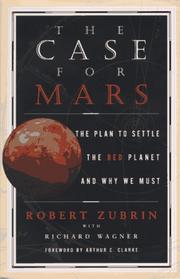
作品年表(1 本)
本站书库里署名罗伯特·祖布林的书(Open Library 上至少 10 人加过书架的才收),按首版年份排(有本站书页的用 Wikidata 记的首版年,其余用 Open Library 的);年份偶尔记成后来的版本或译本,以原书为准。全部作品见 Open Library。
- 1996赶往火星The case for Mars书架 33