 书单
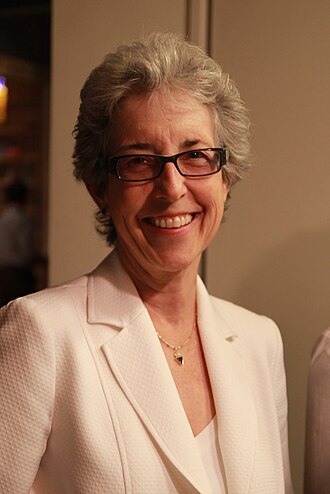
Carol Tavris
- 生卒
- 1944 –
- 国籍
- 美国
照片:Sgerbic,公有领域,来自维基共享资源「Carol Tavris IIG.jpg」(经缩小)。
生平与创作
这个词条暂时没有中文维基百科条目,下面是英文维基百科的内容(英文原文):
Carol Anne Tavris (born September 17, 1944) is an American social psychologist and feminist. She has devoted her career to writing and lecturing about the contributions of psychological science to the beliefs and practices that guide people's lives, and to criticizing "psychobabble," "biobunk," and pseudoscience. Her many writings have dealt with critical thinking, cognitive dissonance, anger, gender, and other topics in psychology.
Tavris received a B.A. in comparative literature and sociology from Brandeis University and a Ph.D. in social psychology from the University of Michigan. She has taught psychology at the University of California, Los Angeles and the New School for Social Research. She is a fellow of the Association for Psychological Science and the Committee for Skeptical Inquiry. Tavris was also a member of the editorial board of Psychological Science in the Public Interest. Her articles, book reviews, and op-eds have appeared in The New York Times, The Wall Street Journal, the Los Angeles Times, The Times Literary Supplement (TLS), Scientific American, and other publications. Her column "The Gadfly" in Skeptic Magazine ran from 2014 to 2024.
Early life
In an interview with The Skeptics Society, Tavris described her early life. She grew up in Los Angeles, California, with her parents, Sam and Dorothy Tavris, secular Jews who promoted and practiced critical thinking and equality for women. She was encouraged to argue and discuss everything with them, from household rules to religion. Her parents gave her books about successful women—ranging from Phillis Wheatley to Susan B. Anthony—and her father taught her poetry and storytelling. Her grandparents were Russian Jews who emigrated to Chicago in 1910. Her mother, who earned a law degree at 21, became the sole breadwinner of the family in 1956 when Tavris’s father died suddenly. Tavris was 11 years old.
Tavris majored in comparative literature and sociology at Brandeis University, graduating summa cum laude and Phi Beta Kappa. Brandeis faculty in her field were enamored with Freud during her college years, and her senior thesis was a "Freudian analysis of Hamlet and Don Quixote." But her undergraduate infatuation with Freudian approaches did not survive her first year of graduate school. When Tavris went to the University of Michigan to get her Ph.D. in social psychology, she "fell in love with the process of science." She loved learning about the "different methods of investigating questions, from field work and experiments to interviews and observations." One reason she chose social psychology, rather than comparative literature, as her career was that she "liked the idea of testing ideas for their relative validity" and of being in a field whose research had immediate beneficial applications for people's private lives, relationships, and society.
Career
Tavris took a year off from graduate school to write for a new magazine, Psychology Today. She returned to the magazine, after receiving her Ph.D., and she stayed for the next four years. She met Carole Wade, her future co-author, while writing for the publication. Together, the two of them taught one of the first courses in women's studies at San Diego State University, and out of that teaching collaboration, they wrote The Longest War: Sex Differences in Perspective, an interdisciplinary approach to the age-old question of why gender inequality exists.
In the 1980s, Tavris joined Carole Wade in writing an introductory psychology textbook, Psychology. It "was the first to explicitly and systematically integrate principles of critical thinking" into the introductory psychology course, along with mainstreaming research on gender and culture, with the goal of making the field more inclusive. Wade and Tavris also published Invitation to Psychology, a shorter version of their main textbook. As of 2025, Psychology is in its 14th edition and Invitation its 8th.
Tavris's first major trade book, Anger: The Misunderstood Emotion (1982, revised 1989), brought social-psychological research to light on many of the pop-psych, Freudian-based ideas about anger that were and are prevalent but wrong, such as that it is healthier, physically and psychologically, to "ventilate" anger than to "suppress" it. On the contrary, she showed, repeated venting rehearses anger, raises blood pressure, and often makes the other person angry back at you. In ways typical of her lifelong approach, she brought skepticism, data, and critical thinking to her evaluation of this and many other beliefs about anger. In her chapter on anger in social movements, she took as her main examples the efforts to promote women's rights and civil rights and the role of anger in igniting the pursuit of justice.
Cognitive dissonance
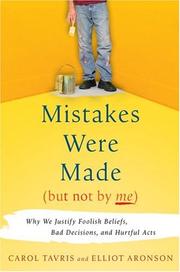
Another area of focus for Tavris is cognitive dissonance, a theory first developed by Leon Festinger and later advanced by his student, Elliot Aronson, into a theory of self-justification. Cognitive dissonance is the state of discomfort one feels when two beliefs, or a belief and behavior, contradict each other, or when a deeply held belief is disconfirmed by evidence. Written with the social psychologist Elliot Aronson, Tavris and Aronson's book, Mistakes Were Made (But Not by Me): Why We Justify Foolish Beliefs, Bad Decisions, and Hurtful Acts, delves into the effect cognitive dissonance has on people and on how they see both the world and themselves. The book, first published in 2007, was updated and revised for a second edition in 2015 and a third edition in 2020, with a new last chapter on the Trump phenomenon: "Dissonance, Democracy, and the Demagogue."
以上文字摘自英文维基百科「Carol Tavris」(有删节,去掉了参考文献等尾部小节),按 CC BY-SA 4.0 使用,作者为维基百科的各位编者。
资料卡
- 出生
- 1944 年 9 月 17 日
- 出生地
- 洛杉矶
- 职业
- 心理学家、作者
- 使用语言
- 英语
- 就读学校
- 密歇根大学、布兰戴斯大学
- 领域
- 社会心理学
- 配偶
- Ronan O'Casey
- 获奖
- 怀疑调查委员会会员;另有 1 项只有外文名
资料卡来自 Wikidata Q5044578(CC0),众包数据,个别字段可能不全。
本站收录的作品(1)
作品年表(6 本)
本站书库里署名Carol Tavris的书(Open Library 上至少 10 人加过书架的才收),按首版年份排(有本站书页的用 Wikidata 记的首版年,其余用 Open Library 的);年份偶尔记成后来的版本或译本,以原书为准。全部作品见 Open Library。
- 1984Anger书架 20
- 1987Psychology书架 238
- 1998Invitation to Psychology书架 156
- 2007Mistakes Were Made (But Not by Me)书架 141
- 2008Mistakes Were Made书架 16
- 2018Estrogen matters书架 11