 书单
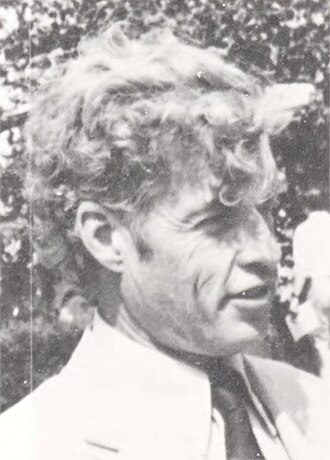
罗伯特·帕克斯顿
- 生卒
- 1932 –
- 国籍
- 美国
- 外文名
- Robert Paxton
照片:Manny Warman,公有领域,来自维基共享资源「Robert Paxton (Vichy France and the Jews, 1981).jpg」(经缩小)。
生平与创作
这个词条暂时没有中文维基百科条目,下面是英文维基百科的内容(英文原文):
Robert Owen Paxton (born June 15, 1932) is an American political scientist and historian specializing in Vichy France, fascism, and Europe during the World War II era. He is Mellon Professor Emeritus of Social Science in the Department of History at Columbia University. He is best known for his 1972 book Vichy France: Old Guard and New Order, which precipitated intense debate in France, and led to a paradigm shift in how the events of the Vichy regime are interpreted.
Early life and education
Robert Owen Paxton was born on June 15, 1932, in Lexington, Virginia. He attended Phillips Exeter Academy in New Hampshire for his secondary education. After Exeter, he received a B.A. from Washington and Lee University in 1954. Later, he won a Rhodes Scholarship and spent two years earning an M.A. at Merton College, Oxford, where he studied under historians including James Joll and John Roberts. He earned a Ph.D. from Harvard University in 1963.
Career
Paxton taught at the University of California, Berkeley and the State University of New York at Stony Brook before joining the faculty of Columbia University in 1969. He served there for the remainder of his career, retiring in 1997. He remains a professor emeritus. He has contributed more than twenty reviews to The New York Review of Books, beginning in 1978 and continuing through 2017.
Vichy
Paxton is best known for his 1972 book Vichy France: Old Guard and New Order, 1940–1944. In opposition to the traditional view pioneered by Robert Aron, he argued that the Vichy government was eager to collaborate with Nazi Germany and did not practice "passive resistance" to German rule. Unlike Aron and Henri Michel, Paxton did not play down Vichy's achievements in his explanation of its domestic agenda. He argued that the reforms undertaken by the Vichy government prefigured the reforms of the 1950s and 1960s and derived from Vichy's aim to transform French society.
Upon the book's publication in French translation in 1973, Paxton became the subject of intense vitriol from French historians and commentators. During a televised debate with Paxton in 1976, the Vichy naval leader Gabriel Auphan called him a liar. However, the translation sold thousands of copies, particularly to the young generation shaped by the civil unrest of May 1968 and who were uninterested in the "cozy mythologies" of Vichy apologists.
Paxtonian revolution
For decades prior to the 1970s modern period, French historiography was dominated by conservative or pro-Communist thinking, neither of them very inclined to consider the grass-roots pro-democracy developments at liberation.
There was little recognition in French scholarship on the active participation of the Vichy regime in the deportation of French Jews, until Paxton's 1972 book appeared. The book received a French translation within a year and sold thousands of copies in France. In the words of French historian Gérard Noiriel, the book "had the effect of a bombshell, because it showed, with supporting evidence, that the French state had participated in the deportation of Jews to the Nazi concentration camps, a fact that had been concealed by historians until then."
The "Paxtonian revolution", as the French called it, had a profound effect on French historiography. In 1997, Paxton was called as an expert witness to testify about collaboration during the Vichy period, at the trial in France of Maurice Papon.
French reaction and debate
Marc Ferro, a French historian, wrote that Vichy France would make the left feel uneasy by its contradiction of their belief that only the élite had betrayed France in 1940, "whereas in reality heroic resistance to the last man from Bayonne to Africa made no sense for anyone". He also noted that the Gaullists would object to Paxton's portrayal of them as "heirs of the regime they fought against" and that it would disturb all those who believed that Pétain had played a "double game" between the Axis and the Allies. Communists welcomed the book for buttressing their belief that Vichy had been the product of state monopoly capitalism, and it was also applauded by Jewish groups. The reaction among Resistance groups was mixed due to Paxton's argument that there was no serious Resistance until well into 1941.
In the preface to the 1982 edition of Vichy France, Paxton disagreed with the assertion of his opponents that he had written in "easy moral superiority" from the perspective of a "victor": "In fact [it] was written in the shadow of the war in Vietnam, which sharpened my animosity against nationalist conformism of all kinds. Writing in the late 1960s, what concerned me was not the comparison with defeated France but the confident swagger of the Germans in the summer of 1940."
Today, the book is considered a historical classic and one of the best studies on France in the Vichy era. It is so influential that Richard Vinen said that his interpretation is completely orthodox, perhaps excessively orthodox, in France. In a funny way, Eric Zemmour's right to say that Paxton has become a pillar of the French establishment ... Historians will one day move beyond Paxton. In some ways, it's been hard for French people to do that because it seems as if you're making an apology for the Vichy government ... But even when people do turn against Paxton, they'll still say that this is a wonderful book, a classic example of how you might do a certain kind of history.
It was published at a time when French historians and filmmakers were also exploring history under the Vichy regime, as in Marcel Ophüls' influential two-part documentary The Sorrow and the Pity (1969).
In 1981, Paxton and historian Michael R. Marrus co-published the book, Vichy France and the Jews, which examined the Vichy regime's policy towards the Jews during World War II. The New York Times review of the book was written by Stanley Hoffmann, a Harvard professor and scholar on France.
As an expert on the Vichy era, Paxton co-wrote Claude Chabrol's 1993 documentary The Eye of Vichy. In 1997 he testified at the trial of Vichy bureaucrat Maurice Papon.
以上文字摘自英文维基百科「Robert Paxton」(有删节,去掉了参考文献等尾部小节),按 CC BY-SA 4.0 使用,作者为维基百科的各位编者。
资料卡
- 出生
- 1932 年 6 月 15 日
- 出生地
- 列克星敦
- 职业
- 历史学家、大学教师、政治学家
- 使用语言
- 英语
- 写作语言
- 英语
- 就读学校
- 哈佛大学、默顿学院、华盛顿与李大学
- 所属团体
- 美国文理科学院
- 受谁影响
- 詹姆斯·乔尔
- 获奖
- 法国荣誉军团军官勋章(2009)、罗德奖学金(1954)、艺术与文学勋章司令勋位(1996);另有 4 项只有外文名
资料卡来自 Wikidata Q1229212(CC0),众包数据,个别字段可能不全。
作品年表(2 本)
本站书库里署名罗伯特·帕克斯顿的书(Open Library 上至少 10 人加过书架的才收),按首版年份排(有本站书页的用 Wikidata 记的首版年,其余用 Open Library 的);年份偶尔记成后来的版本或译本,以原书为准。全部作品见 Open Library。
- 1972Vichy France书架 20
- 2004The Anatomy of Fascism (Allen Lane History)书架 18