 书单
Elizabeth Bowen
- 生卒
- 1899 – 1973
- 国籍
- 爱尔兰
- 获奖
- 詹姆斯·泰特·布莱克纪念奖(1969)
生平与创作
这个词条暂时没有中文维基百科条目,下面是英文维基百科的内容(英文原文):
Elizabeth Dorothea Cole Bowen ( BOH-ən; 7 June 1899 – 22 February 1973) was an Anglo-Irish novelist and short story writer notable for her books about "the Big House" of Irish landed Protestants as well as her fiction about life in wartime London.
In 1958, she was nominated for the Nobel Prize in Literature by Russian-American linguist Roman Jakobson.
Life
Elizabeth Dorothea Cole Bowen was born on 7 June 1899 at 15 Herbert Place in Dublin, daughter of barrister Henry Charles Cole Bowen (1862–1930), who succeeded his father as head of their Irish gentry family traced back to the late 1500s, of Welsh origin, and Florence Isabella Pomeroy (died 1912), daughter of Henry FitzGeorge Pomeroy Colley, of Mount Temple, Clontarf, Dublin, grandson of the 4th Viscount Harberton. Florence Bowen's mother was granddaughter of the 4th Viscount Powerscourt. Elizabeth Bowen was baptised in the nearby St Stephen's Church on Upper Mount Street. Her parents later brought her to her father's family home, Bowen's Court at Farahy, near Kildorrery, County Cork, where she spent her summers. Among her enduring childhood friends were the artists Mainie Jellett and Sylvia Cooke-Collis.
When her father became mentally ill in 1907, she and her mother moved to England, eventually settling in Hythe. After her mother died in September 1912, Bowen was brought up by her aunts; her father remarried in 1918. She was educated at Downe House School under the headship of Olive Willis. After some time at art school in London she decided that her talent lay in writing. She mixed with the Bloomsbury Group, becoming good friends with Rose Macaulay, who helped her seek a publisher for her first book, a collection of short stories titled Encounters (1923).
In 1923, she married Alan Cameron, an educational administrator who subsequently worked for the BBC. The marriage has been described as "a sexless but contented union." The marriage was reportedly never consummated. She had various extra-marital relationships, including one with Charles Ritchie, a Canadian diplomat seven years her junior, which lasted over thirty years. She also had an affair with the Irish writer Seán Ó Faoláin and a relationship with the American poet May Sarton.
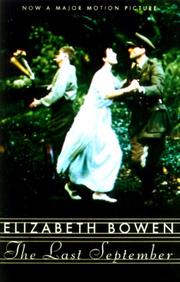
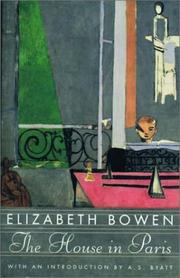
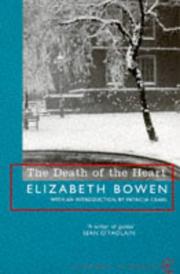
Bowen and her husband first lived near Oxford, where they socialised with Maurice Bowra, John Buchan, and Susan Buchan, and where she wrote her early novels, including The Last September (1929). Following the publication of To the North (1932), they moved to 2 Clarence Terrace, Regent's Park, London, where she wrote The House in Paris (1936) and The Death of the Heart (1938). In 1937, she became a member of the Irish Academy of Letters.
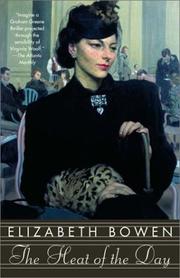
In 1930, Bowen became the first (and only) woman to inherit Bowen's Court, but remained based in England, making frequent visits to Ireland. During World War II, she worked for the British Ministry of Information, reporting on Irish opinion, particularly on the issue of neutrality. Bowen's political views tended towards Burkean conservatism. During and after the war she wrote about life in wartime London, The Demon Lover and Other Stories (1945) and The Heat of the Day (1948), works which earned acclaim for their depiction of that period. In Ninety-nine Novels, Anthony Burgess wrote of The Heat of the Day that "No novel has better caught the atmosphere of London during the second world war."
Bowen was awarded the CBE in 1948. Her husband retired in 1952 and they settled in Bowen's Court, where he died a few months later. Many writers visited her at Bowen's Court from 1930 onward, including Virginia Woolf, Eudora Welty, Carson McCullers, Iris Murdoch, and the historian Veronica Wedgwood. For years, Bowen struggled to keep the house, lecturing in the United States to earn money.
In 1957, her portrait was painted at Bowen's Court by her friend, painter Patrick Hennessy. She travelled to Italy in 1958 to research and prepare A Time in Rome (1960), but by the following year, Bowen was forced to sell her beloved Bowen's Court, which was demolished in 1960. In the following months, she wrote the narrative of the documentary titled Ireland the Tear and the Smile for CBS which was aimed at American audiences and presented by Walter Cronkite. After spending some years without a permanent home, Bowen finally settled at "Carbery", Church Hill, Hythe, in 1965.
Her final novel, Eva Trout, or Changing Scenes (1968), won the James Tait Black Memorial Prize in 1969 and was shortlisted for the Booker Prize in 1970. Subsequently, she was a judge (alongside her friend Cyril Connolly) that awarded the 1972 Man Booker Prize to John Berger for G. She spent Christmas 1972 at Kinsale, County Cork, with her friends, Major Stephen Vernon and his wife Lady Ursula (daughter of the Duke of Westminster), but was hospitalised upon her return. Here she was visited by Connolly, Lady Ursula Vernon, Isaiah Berlin, Rosamund Lehmann, Charles Ritchie, and her literary agent Spencer Curtis Brown.
In 1972, Bowen developed lung cancer. She died in University College Hospital on 22 February 1973, age 73. She is buried with her husband in St Colman's churchyard in Farahy, close to the gates of Bowen's Court. There is a memorial plaque to the author bearing the words of John Sparrow at the entrance to St Colman's Church, where a commemoration of her life is held annually.
Legacy
In 1977, Victoria Glendinning published the first biography of Elizabeth Bowen. In 2009, Glendinning published Love's Civil War, a compilation of letters Bowen wrote to Charles Ritche during their relationship, and excerpts from Ritchie's diary. In 2012, English Heritage marked Bowen's Regent's Park home at Clarence Terrace with a blue plaque. Another blue plaque was unveiled 19 October 2014 to mark Bowen's residence at the Coach House, The Croft, Headington, from 1925 to 1935.
以上文字摘自英文维基百科「Elizabeth Bowen」(有删节,去掉了参考文献等尾部小节),按 CC BY-SA 4.0 使用,作者为维基百科的各位编者。
资料卡
- 母语名
- Elizabeth Bowen
- 笔名
- Bitha、Bitha Bowen、Elizabeth Bowen Cameron、Dorothea Cole
- 出生
- 1899 年 6 月 7 日
- 出生地
- 都柏林
- 逝世
- 1973 年 2 月 22 日
- 逝世地
- 伦敦
- 职业
- 作家、小说家、短篇故事作家
- 使用语言
- 英语
- 就读学校
- 牛津大学、唐屋中学
- 配偶
- Alan Charles Cameron(1923)
- 代表作
- The Last September、The House in Paris、The Death of the Heart、当日之热度、Eva Trout
- 获奖
- 罗马奖、大英帝国司令勋章、詹姆斯·泰特·布莱克纪念奖(1969)
资料卡来自 Wikidata Q235308(CC0),众包数据,个别字段可能不全。
本站收录的作品(4)
同时代的爱尔兰作家
前后几届的詹姆斯·泰特·布莱克纪念奖得主
全部得主 ›Open Library 上的全部作品
正在读取…