 书单
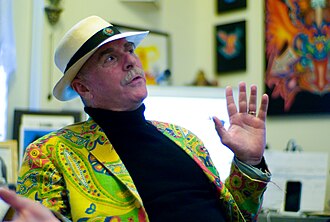
霍华德·莱茵戈德
- 生卒
- 1947 –
- 国籍
- 美国
- 外文名
- Howard Rheingold
照片:Joi Ito,CC BY 2.0,来自维基共享资源「HowardRheingoldJI4.jpg」(经缩小)。
生平与创作
这个词条暂时没有中文维基百科条目,下面是英文维基百科的内容(英文原文):
Howard Rheingold (born 1947) is an American critic, writer, and teacher, known for his specialties on the cultural, social and political implications of modern communication media such as the Internet, mobile telephony and virtual communities.
Biography
Rheingold was born on July 7, 1947, in Phoenix, Arizona. He graduated from Reed College in Portland, Oregon, in 1968. His senior thesis was entitled What Life Can Compare with This? Sitting Alone at the Window, I Watch the Flowers Bloom, the Leaves Fall, the Seasons Come and Go.
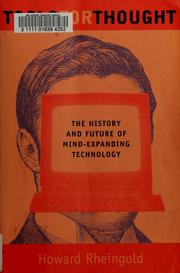
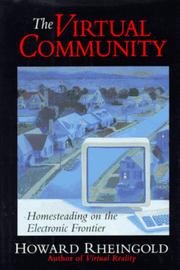
A lifelong fascination with mind augmentation and its methods led Rheingold to the Institute of Noetic Sciences and Xerox PARC. There he worked on and wrote about the earliest personal computers. This led to his writing Tools for Thought in 1985, a history of the people behind the personal computer. Around that time he first logged on to The WELL – an influential early online community. He explored the experience in his seminal book, The Virtual Community.
Also in 1985, Rheingold coauthored Out of the Inner Circle: A Hacker's Guide to Computer Security with former hacker Bill Landreth. In 1991, he published Virtual Reality: Exploring the Brave New Technologies of Artificial Experience and Interactive Worlds from Cyberspace to Teledildonics.
After a stint editing the Whole Earth Review, Rheingold served as editor in chief of the Millennium Whole Earth Catalog. Shortly thereafter, he was hired on as founding executive editor of HotWired, one of the first commercial content web sites published in 1994 by Wired magazine. Rheingold left HotWired and soon founded Electric Minds in 1996 to chronicle and promote the growth of community online. Despite accolades, the site was sold and scaled back in 1997.
In 1998, he created his next virtual community, Brainstorms, which, as of 2024, is a successful private webconferencing community for knowledgeable, intellectual, civil, and future-thinking adults from all over the world.
In 2002, Rheingold published Smart Mobs, exploring the potential for technology to augment collective intelligence. Shortly thereafter, in conjunction with the Institute for the Future, Rheingold launched an effort to develop a broad-based literacy of cooperation.
In 2008, Rheingold became the first research fellow at the Institute for the Future, with which he had long been affiliated.
Rheingold is a visiting lecturer in Stanford University's Department of Communication where he has taught courses such as "Digital Journalism", "Virtual Communities and Social Media", and "Social Media Literacies". He is a former lecturer in UC Berkeley's School of Information where he taught "Virtual Communities and Social Media" and "Participatory Media/Collective Action". He has been a frequent contributor to the Connected Learning Alliance blog on topics ranging from new media literacy to learning innovation.
Rheingold lives in Mill Valley, California, with his wife Judy and daughter Mamie. In an entry on his video blog, he provides a tour of the converted garage that became a "dream office" and an "externalization of [his] mind" where Rheingold absorbs information, writes, and creates art.
He contributed the essay "Participative Pedagogy for a Literacy of Literacies" to the Freesouls book project.
以上文字摘自英文维基百科「Howard Rheingold」(去掉了参考文献等尾部小节),按 CC BY-SA 4.0 使用,作者为维基百科的各位编者。
资料卡
- 出生
- 1947 年 7 月 7 日
- 出生地
- 菲尼克斯
- 职业
- 文学评论家、社会学家、散文家、作家、作者
- 使用语言
- 英语
- 就读学校
- 里德学院
- 代表作
- The Virtual Community
资料卡来自 Wikidata Q962698(CC0),众包数据,个别字段可能不全。
本站收录的作品(2)
作品年表(3 本)
本站书库里署名霍华德·莱茵戈德的书(Open Library 上至少 10 人加过书架的才收),按首版年份排(有本站书页的用 Wikidata 记的首版年,其余用 Open Library 的);年份偶尔记成后来的版本或译本,以原书为准。全部作品见 Open Library。
- 1985Tools for thought书架 12
- 1991Virtual reality书架 14
- 1993The virtual community书架 17