 书单
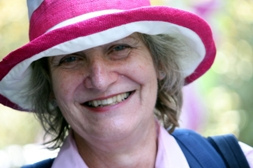
Raewyn Connell
- 生卒
- 1944 –
- 国籍
- 澳大利亚
照片:kyeleek,CC BY 2.0,来自维基共享资源「Dianne-Reggett.jpg」(经缩小)。
生平与创作
这个词条暂时没有中文维基百科条目,下面是英文维基百科的内容(英文原文):
Raewyn Connell (born 3 January 1944), usually cited as R. W. Connell, is an Australian feminist sociologist and professor emerita at the University of Sydney, mainly known for co-founding the field of masculinity studies and coining the concept of hegemonic masculinity, as well as for her work on Southern theory.
Life and career
Connell was born in Sydney, Australia. Her father, William Fraser (Bill) Connell (OBE), was a professor of education at the University of Sydney for many years, where he focused on educational research and teaching. Her mother, Margaret Lloyd Connell (née Peck) was a high school science teacher. Connell has two sisters, Patricia Margaret Selkirk and Helen Connell.
Connell was educated at Manly and North Sydney High Schools, and has degrees from the University of Melbourne and University of Sydney. She has held academic positions at universities in Australia, including being the founding professor of sociology at Macquarie University 1976–1991.
In the United States Connell was visiting professor of Australian studies at Harvard University 1991–1992, and professor of sociology at University of California Santa Cruz 1992–1995. She was a rank-and-file member of the Australian Labor Party until the early 1980s and a trade unionist, currently in the National Tertiary Education Union. She has been considered a prominent intellectual of the Australian New Left.
She was appointed University Professor at the University of Sydney in 2004, and retired from her University Chair on 31 July 2014. She has been professor emerita at the University of Sydney since her retirement.
Connell serves on the editorial board or advisory board of numerous academic journals, including Signs, Sexualities, The British Journal of Sociology, Theory and Society, and The International Journal of Inclusive Education.
Connell is a trans woman, who formally began transitioning late in life. Almost all her earlier work was published under the gender-neutral name "R. W. Connell" up to the second edition of "Masculinities" in 2005. Since 2006 all her work has appeared under the name Raewyn Connell. Connell has also written about trans women and feminism from an international perspective. Connell identifies as a "hardline feminist" and "dangerous lefty".
Major contributions
Connell's sociology emphasises the historical nature of social reality and the transformative character of social practice. Her writing tries to combine empirical detail, structural analysis, critique, and relevance to practice. Much of her empirical work uses biographical (life-history) interviewing in education, family life and workplaces. She has written or co-written twenty-one books and more than 150 research papers, and her work has been translated into 18 languages.
Class and education
Connell first became known for research on large-scale class dynamics ("Ruling Class, Ruling Culture", 1977 and "Class Structure in Australian History", 1980), and the ways class and gender hierarchies are re-made in the everyday life of schools ("Making the Difference", 1982).
Gender
In the late 1980s she developed a social theory of gender relations ("Gender and Power", 1987), which emphasized that gender is a large-scale social structure not just a matter of personal identity. In this text, she proposed that the word "gender" be discussed in terms of three structures (power, production/labor and emotion/sexual relations). In applied fields she has worked on poverty and education, sexuality and AIDS prevention, and labour movement strategy. Connell and Messerschmidt collaborated on a piece, "Hegemonic Masculinity: Rethinking the Concept", 2005, in response to scepticism that the outcome of her theory creates a fixed typology. In addition to supporting the categorization of her theories, Connell emphasizes the relationship between men and emotions. Connell argues that in today's society, men may be so emotionally disconnected that they are not conscious of their emotional states, such as depression. Many males have learned from their parents, friends, or other peers that they should not show emotion as it can be seen as a weakness. Once these boys become adults, they have developed the ability to suppress their emotional responses, such as crying or even sad facial expressions, to the point where they are really unaware of these emotions and unable to connect with them. One gender cannot be examined in isolation from another and emphasizes that there are disparities among males, even though neither one chooses the Postmodern practice of completely undermining this concept. Connell's writings emphasize the heterogeneous nature of masculinity. In contrast to feminism, masculine politics, according to Connell, cannot be a political movement. Women's marginalized identities frequently undergo positive evaluation on the part of feminists. On the other hand, authors on masculinity are almost always critical of the benefits that come with being a man.
以上文字摘自英文维基百科「Raewyn Connell」(有删节,去掉了参考文献等尾部小节),按 CC BY-SA 4.0 使用,作者为维基百科的各位编者。
资料卡
- 出生
- 1944 年 1 月 3 日
- 出生地
- 悉尼
- 职业
- 社会学家、教授
- 使用语言
- 英语
- 写作语言
- 英语
- 就读学校
- 墨尔本大学
- 领域
- 社会学、性别研究
资料卡来自 Wikidata Q453592(CC0),众包数据,个别字段可能不全。
作品年表(3 本)
本站书库里署名Raewyn Connell的书(Open Library 上至少 10 人加过书架的才收),按首版年份排(有本站书页的用 Wikidata 记的首版年,其余用 Open Library 的);年份偶尔记成后来的版本或译本,以原书为准。全部作品见 Open Library。
- 1987Gender and Power书架 73
- 1995Masculinities书架 57
- 2002Gender书架 25