 书单
贡萨洛·托兰得·巴列斯特
生平与创作
这个词条暂时没有中文维基百科条目,下面是英文维基百科的内容(英文原文):
Gonzalo Torrente Ballester (13 June 1910 – 27 January 1999) was a Spanish writer associated with the Generation of '36 movement.
Life
He was born in Serantes, Ferrol, Galicia, and received his first education there, subsequently attending the universities of Santiago de Compostela and Oviedo.
Although primarily a novelist, he also published journalism, essays, and plays. His career as a writer began in Oviedo, but developed largely in Madrid.
Before the outbreak of the Spanish civil war, he traveled to Paris with the intention of writing his doctoral thesis and there he was surprised by the coup d'etat of July 18, 1936. After hesitating, he returned to Spain in October to be with his family. From the bus that was taking him home, he saw the bodies of victims of the repression in the ditches. His father exclaimed by way of greeting: "Don't you know that many of your friends have been shot?". He followed the recommendation of a priest he trusted and joined the Falange. His first novel, Javier Mariño, appeared in 1943, and he continued to publish novels almost until his death, receiving major prizes for some of them.
Despite his affiliation to the Falangists, from 1939, when he returned to Santiago to take up a university post, he increasingly distanced himself from the party. He joined in protests in favour of striking Asturian miners in 1962, and was expelled from his teaching post at the university as a result. In the mid-1960s he had a number of problems with government censors.
He left Spain for a post at the University at Albany, State University of New York in 1966, and remained there until 1973 as the university's first distinguished professor. In 1975 he moved to the city of Salamanca, where he remained until his death. After his return to Spain, he was increasingly celebrated: he was elected to seat E of the Real Academia Española, which he took up on 27 May 1977, and was awarded the premier Spanish literary prize, the Cervantes Prize, in 1985.
Immediately after his death, the Fundación Gonzalo Torrente Ballester was set up to protect, study and disseminate his work.
Screenplays
Night Arrival (1949)
Surcos (1951)
Devil's Roundup (1952)
Rebellion (1954)
以上文字摘自英文维基百科「Gonzalo Torrente Ballester」(去掉了参考文献等尾部小节),按 CC BY-SA 4.0 使用,作者为维基百科的各位编者。
资料卡
- 本名
- Gonzalo Torrente Ballester
- 出生
- 1910 年 6 月 13 日
- 出生地
- Serantes
- 逝世
- 1999 年 1 月 27 日
- 逝世地
- 萨拉曼卡
- 职业
- 作家、编剧、新闻工作者、剧作家、文学评论家、译者、小说家
- 使用语言
- 西班牙语
- 写作语言
- 西班牙语
- 就读学校
- 奥维耶多大学、圣地亚哥德坎波斯特拉大学
- 创作体裁
- 演出法
- 领域
- language and literature
- 所属团体
- 西班牙皇家语言学院、Royal Galician Academy(1981)
- 代表作
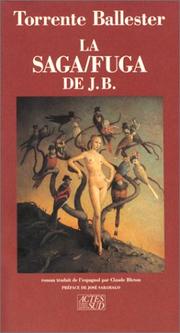
- Los gozos y las sombras、Don Juan、La saga/fuga de J. B.、Filomeno, a mi pesar、The King Amaz'd
- 获奖
- Castilian Narrative Critic Award(1973)、国家叙事文学奖(1981)、Princess of Asturias Literary Prize(1982)、Dearest Son of Ferrol(1983)、Hijo Adoptivo de Salamanca(1984)、塞万提斯奖(1985)、Grand Cross of the Civil Order of Alfonso X the Wise(1987)、honorary doctorate of the University of Salamanca(1987)、honorary doctorate of University of Burgundy(1988)、Castelao Medal(1988)、行星奖(1988)、honorary doctorate of the University of Santiago de Compostela(1988)、Premio Azorín(1994)、honorary doctor of the University of Havana
资料卡来自 Wikidata Q500546(CC0),众包数据,个别字段可能不全。
本站收录的作品(3)
同时代的西班牙作家
前后几届的塞万提斯奖得主
全部得主 ›Open Library 上的全部作品
正在读取…