 书单
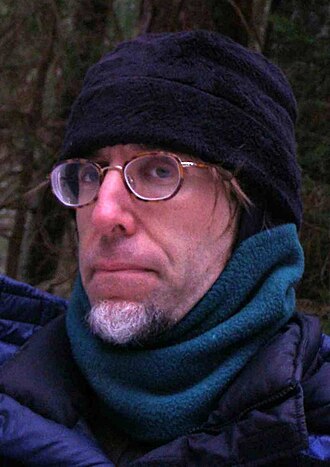
大卫·艾布拉姆
- 生卒
- 1957 –
- 国籍
- 美国
- 外文名
- David Abram
照片:Kk,GFDL,来自维基共享资源「David Abram, 2009 (cropped).jpg」(经缩小)。
生平与创作
这个词条暂时没有中文维基百科条目,下面是英文维基百科的内容(英文原文):
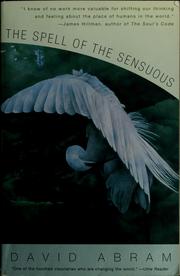
David Abram is an American ecologist and philosopher best known for his work bridging the philosophical tradition of phenomenology with environmental and ecological issues. He is the author of Becoming Animal: An Earthly Cosmology (2010) and The Spell of the Sensuous: Perception and Language in a More-than-Human World (1996), for which he received the Lannan Literary Award for Nonfiction. Abram is founder and creative director of the Alliance for Wild Ethics (AWE); his essays on the cultural causes and consequences of ecological disarray have appeared often in such journals as the online magazine Emergence, Orion, Environmental Ethics, Parabola, Tikkun, and The Ecologist, as well as in numerous academic anthologies.
In 1996, Abram coined the phrase "the more-than-human world" as a way of referring to earthly nature (introducing it in the subtitle of The Spell of the Sensuous and throughout the text of that book); the term was gradually adopted by other scholars, theorists, and activists, and has become a key phrase within the lingua franca of the broad ecological movement. In recent writings, Abram sometimes refers to the more-than-human world as "the commonwealth of breath."
Abram was the first contemporary philosopher to advocate a reappraisal of "animism" as a complexly nuanced and uniquely viable worldview—one which roots human cognition in the sensitive and sentient human body, while affirming the ongoing entanglement of our bodily experience with the uncanny sentience of other animals (each of which encounters the same world that we perceive yet from an outrageously different angle and perspective). A close student of the traditional ecological knowledge systems of diverse indigenous peoples, Abram articulates the entwinement of human subjectivity not only with other animals but with the varied sensitivities of the many plants upon which humans depend, as well as our cognitive entanglement with the collective sensitivity and sentience of the particular earthly places—the bioregions (or ecosystems)—that surround and sustain our communities. In recent years his work has come to be closely associated both with the "new animism," and with a broad movement loosely termed "New Materialism," due to Abram's espousal of a radically transformed sense of matter and materiality.
Abram is currently a senior visiting scholar in ecology and natural philosophy at Harvard Divinity School.
Life and early influences
Born in the suburbs of New York City, Abram began practicing sleight-of-hand magic during his high school years in Baldwin, Long Island; it was this craft that sparked his ongoing fascination with perception. In 1976, he began working as "house magician" at Alice's Restaurant in the Berkshires of Massachusetts and soon was performing at clubs throughout New England while studying at Wesleyan University. After his second year of college, Abram took a year off to travel as an itinerant street magician through Europe and the Middle East; toward the end of that journey, in London, he began exploring the application of sleight-of-hand magic to psychotherapy under the guidance of R. D. Laing. After graduating summa cum laude from Wesleyan in 1980, Abram traveled throughout Southeast Asia as an itinerant magician, living and studying with traditional, indigenous magic practitioners (or "medicine persons") in Sri Lanka, Indonesia, and Nepal. Upon returning to North America, he continued performing while devoting himself to the study of natural history and ethnoecology, visiting and learning from Native communities in the Southwest Desert and the Pacific Northwest. A much-reprinted essay written while studying ecology at the Yale School of Forestry in 1984, entitled "The Perceptual Implications of Gaia", brought Abram into association with the scientists formulating the Gaia Hypothesis. He was soon lecturing in tandem with biologist Lynn Margulis and geochemist James Lovelock, both in Britain and the United States. In the late 1980s, Abram turned his attention to exploring the decisive influence of language upon the human senses and upon our sensory experience of the land around us. Abram received a doctorate for this work from Stony Brook University in 1993.
Abram's writing is informed by his studies among indigenous peoples in Indonesia, Nepal, and the Americas, as well as by the American nature-writing tradition that stems from Henry David Thoreau, Walt Whitman, and Mary Austin. His philosophical work is informed by the European tradition of phenomenology—especially by the writings of the French phenomenologist, Maurice Merleau-Ponty. Abram's evolving work has also been influenced by his friendships with the archetypal psychologist James Hillman, the iconoclastic evolutionary biologist Lynn Margulis, and the social critic and radical historian Ivan Illich—as well as by his esteem for the American poet Gary Snyder and the agrarian novelist, poet, and essayist Wendell Berry.
以上文字摘自英文维基百科「David Abram」(有删节,去掉了参考文献等尾部小节),按 CC BY-SA 4.0 使用,作者为维基百科的各位编者。
资料卡
- 出生
- 1957 年 6 月 24 日
- 出生地
- 长岛
- 职业
- 哲学家、作家、生态学家、人类学家
- 使用语言
- 英语
- 就读学校
- 维思大学、耶鲁大学林学院
- 领域
- 生物伦理学
资料卡来自 Wikidata Q1173524(CC0),众包数据,个别字段可能不全。
本站收录的作品(1)
同时代的美国作家
Open Library 上的全部作品
正在读取…