 书单
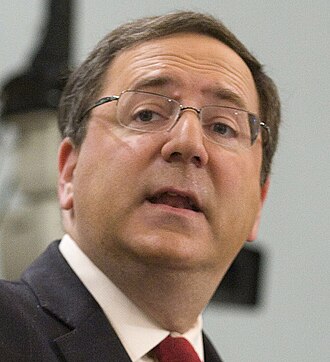
戴维·桑格
- 生卒
- 1960 –
- 国籍
- 美国
- 外文名
- David E. Sanger
照片:Miller Center of Public Affairs flickr page, Charlottesville, VA,CC BY 2.0,来自维基共享资源「David E. Sanger 2011 05.jpg」(经缩小)。
生平与创作
戴维·桑格(英语:David E. Sanger,1960年7月5日—),是《纽约时报》的记者,主要撰写的内容是关于总统以及国家安全的新闻报道。
作品
《The Inheritance: The World Obama Confronts and the Challenges to American Power》(2009年)
《Confront and Conceal: Obama's Secret Wars and Surprising Use of American Power》(2012年)
《The Perfect Weapon: War, Sabotage, and Fear in the Cyber Age》(2018年)
以上文字摘自维基百科「戴维·桑格」(去掉了参考文献等尾部小节),按 CC BY-SA 4.0 使用,作者为维基百科的各位编者。
中文维基百科的条目比较短,下面附上英文维基百科的内容(英文原文):
David E. Sanger is an American journalist who is the chief Washington correspondent for The New York Times. He has been writing since 1982, covering foreign policy, globalization, nuclear proliferation, and the presidency. As of 2025 he has also authored four books on US foreign policy, including Confront and Conceal: Obama's Secret Wars and Surprising Use of American Power (2012). He has been a member of three teams that won the Pulitzer Prize, and has been awarded numerous honors for national security and foreign policy coverage.
Early life and education
David E. Sanger is the son of Joan (née Samuels) and Kenneth E. Sanger. His mother worked as assistant coordinator in the White Plains Public School District and his father was a product manager for International Business Machines. His paternal grandfather was Elliott Sanger, a co-founder of WQXR-FM, the radio station of The New York Times; and his paternal grandmother was Eleanor Naumburg Sanger (grandniece of banker Elkan Naumburg), who served as program director of WQXR. He has one sister, Ellin Gail Sanger Agress.
He graduated from White Plains Senior High School in 1978. There, he was editor of The Orange, the student newspaper. He graduated magna cum laude in Government from Harvard College, where he was on the staff of The Harvard Crimson.
New York Times career
Sanger is chief Washington correspondent for The New York Times and one of the newspaper's senior writers. In a 42-year career at the paper, he has reported from New York, Tokyo, and Washington, specializing in foreign policy, national security, and the politics of globalization.
In 1982, after joining The New York Times, Sanger soon began specializing in the confluence of economic and foreign policy.
In 1986 Sanger played a major role in the team that investigated the causes of the Space Shuttle Challenger disaster. The team revealed the design flaws and bureaucratic troubles that contributed to the disaster and won the 1987 Pulitzer Prize for national reporting.
Throughout the '80s and '90s, he wrote extensively about how issues of national wealth and competitiveness came to redefine the relationships between the United States and its major allies.
Sanger was in Tokyo for six years, first as a foreign business and technology correspondent chronicling the sudden rise and crash of Japan’s economic bubble, and then bureau chief from 1994-1995 succeeding Steven R. Weisman, traveling widely in Asia. He wrote some of the first pieces describing North Korea’s nuclear weapons program, the rise and fall of Japan as one of the world's economic powerhouses, and China’s emerging role.
In 1994, he returned to Washington, as Chief Washington Economic Correspondent, and covered a series of global economic upheavals, from Mexico to the Asian economic crisis.
In March 1999, he was named a senior writer, and White House correspondent later that year.
In 2004, Sanger was awarded the Weintal Prize for diplomatic reporting for his coverage of the Iraq and Korea crises. He also won the Aldo Beckman prize for coverage of the presidency.
In both 2003 and 2007, Sanger was awarded the Merriman Smith Memorial Award for coverage of national security strategy. He also shared the American Society of Newspaper Editors' top award for deadline writing in 2004, for team coverage of the Columbia disaster. In 2007, The New York Times received the DuPont Award from the Columbia Journalism School for Nuclear Jihad: Can Terrorists Get the Bomb?, a documentary featuring him and colleague William J. Broad, and their investigation into the A.Q. Khan nuclear proliferation network. Their revelations in the Times about the network became a finalist for the Pulitzer Prize.
In 2011, Sanger was part of another team that was a Pulitzer Prize finalist for International Reporting for their coverage of the Japanese tsunami and nuclear disaster.
以上文字摘自英文维基百科「David E. Sanger」(有删节,去掉了参考文献等尾部小节),按 CC BY-SA 4.0 使用,作者为维基百科的各位编者。
资料卡
- 出生
- 1960 年 7 月 5 日
- 出生地
- 怀特普莱恩斯
- 职业
- 新闻工作者
- 使用语言
- 英语
- 就读学校
- 哈佛学院、White Plains High School
资料卡来自 Wikidata Q1174291(CC0),众包数据,个别字段可能不全。
本站收录的作品(1)
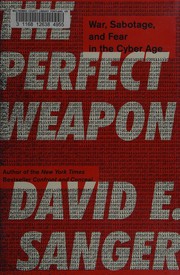
作品年表(1 本)
本站书库里署名戴维·桑格的书(Open Library 上至少 10 人加过书架的才收),按首版年份排(有本站书页的用 Wikidata 记的首版年,其余用 Open Library 的);年份偶尔记成后来的版本或译本,以原书为准。全部作品见 Open Library。
- 2018The perfect weapon书架 22