 书单
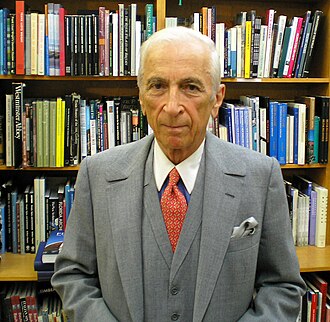
Gay Talese
- 生卒
- 1932 –
- 国籍
- 美国
照片:David Shankbone,CC BY 2.5,来自维基共享资源「Gay Talese by David Shankbone.jpg」(经缩小)。
生平与创作
这个词条暂时没有中文维基百科条目,下面是英文维基百科的内容(英文原文):
Gaetano "Gay" Talese (born February 7, 1932) is an American writer. As a journalist for The New York Times and Esquire magazine during the 1960s, he helped to define contemporary literary journalism and is considered, along with Joan Didion, Truman Capote, Norman Mailer, Hunter S. Thompson and Tom Wolfe, one of the pioneers of New Journalism. Talese's most famous articles are about Joe DiMaggio and Frank Sinatra.
Early life and education
Talese, who is of Italian heritage, was born in Ocean City, New Jersey. His father, Joseph Talese, was a tailor who had emigrated to the United States in 1922 from Maida, a small town in the province of Catanzaro, in the region of Calabria in southern Italy. His mother, the former Catherine DePaolo, was born in Brooklyn to parents who had emigrated from the same area in southern Italy, and worked as a buyer for a Brooklyn department store. At school as a child, Talese wore hand-crafted suits from his father's shop which, he later speculated in his memoir, Origins of a Nonfiction Writer (1996), caused him to seem older than his classmates. Talese recounted his early years in his book Unto the Sons.
Talese graduated from Ocean City High School in 1949. Screenwriter and author Nicholas Pileggi is his first cousin.
Talese's entry into writing was entirely coincidental and an unintentional consequence of his attempt as a high school sophomore to gain more playing time on the baseball team. The assistant coach had the duty of telephoning in the chronicle of each game to the local newspaper and when he complained he was too busy to do it properly, the head coach gave Talese the duty. As he recalls in his 1996 memoiristic essay "Origins of a Nonfiction Writer":
On the mistaken assumption that relieving the athletic department of its press duties would gain me the gratitude of the coach and get me more playing time, I took the job and even embellished it by using my typing skills to compose my own account of the games rather than merely relaying the information to the newspapers by telephone.
After only seven sports articles, Talese was given his own column for the weekly Ocean City Sentinel-Ledger in Ocean City. By the time he left for college in September 1949, he had written some 311 stories and columns for the Sentinel-Ledger.
Talese credits his mother as the role model he followed in developing the interviewing techniques that he would use during his career. He relates in "Origins of a Nonfiction Writer":
I learned [from my mother] ... to listen with patience and care, and never to interrupt even when people were having great difficulty in explaining themselves, for during such halting and imprecise moments ... people are very revealing—what they hesitate to talk about can tell much about them. Their pauses, their evasions, their sudden shifts in subject matter are likely indicators of what embarrasses them, or irritates them, or what they regard as too private or imprudent to be disclosed to another person at that particular time. However, I have also overheard many people discussing candidly with my mother what they had earlier avoided—a reaction that I think had less to do with her inquiring nature or sensitively posed questions than with their gradual acceptance of her as a trustworthy individual in whom they could confide.
Talese graduated from the University of Alabama in 1953. His selection of a major was, as he described it, a moot choice. "I chose journalism as my college major because that is what I knew," he recalls, "but I really became a student of history." At university, he became a brother of Phi Sigma Kappa fraternity.
It was there that Talese would begin to employ literary devices more well known for fiction, such as establishing the "scene" with minute details and beginning articles in medias res. During his junior year, he became the sports editor for the campus newspaper, The Crimson White, and started a column he dubbed "Sports Gay-zing", for which he wrote on November 7, 1951:
Rhythmic "Sixty Minute Man" emanated from the Supe Store juke box and Larry (The Maestro) Chiodetti beat against the table like mad in keeping time with the jumpy tempo. T-shirted Bobby Marlow was just leaving the Sunday morning bull session and dapper Bill Kilroy had just purchased the morning newspapers.
Career
Newspaper reporter
After graduation in June 1953, Talese moved to New York City, but could only find work as a copyboy. The job, however, was at The New York Times. He was eventually able to get an article published in the Times, albeit unsigned. In "Times Square Anniversary" (November 2, 1953), Talese interviewed the man (Herbert Kesner, Broadcast Editor) responsible for managing the headlines that flash across the famous marquee above Times Square.
Talese followed this up with an article in the 21 February 1954 edition concerning the chairs used on the boardwalk of Atlantic City. However, his budding journalism career would have to be put on hold, as he was drafted into the United States Army in 1954.
Talese had been required (as were all male students at the time owing to the Korean War) to join the Reserve Officers' Training Corps (ROTC), and had moved to New York awaiting his eventual commission as a second lieutenant. Talese was sent to Fort Knox, Kentucky, to train in the Tank Corps. Finding his mechanical skills lacking, Talese was transferred to the Office of Public Information where he worked for an army newspaper, Inside the Turret (known today as The Gold Standard), and soon had his own column, "Fort Knox Confidential".
以上文字摘自英文维基百科「Gay Talese」(有删节,去掉了参考文献等尾部小节),按 CC BY-SA 4.0 使用,作者为维基百科的各位编者。
资料卡
- 母语名
- Gay Talese
- 出生
- 1932 年 2 月 7 日
- 出生地
- 大洋城
- 职业
- 作家、新闻工作者、大学教师
- 使用语言
- 英语
- 就读学校
- 阿拉巴马大学、Ocean City High School
- 配偶
- Nan A. Talese
- 获奖
- 乔治·波尔克奖(2008)、新泽西州名人堂(2023);另有 2 项只有外文名
资料卡来自 Wikidata Q607325(CC0),众包数据,个别字段可能不全。
本站收录的作品(2)
作品年表(3 本)
本站书库里署名Gay Talese的书(Open Library 上至少 10 人加过书架的才收),按首版年份排(有本站书页的用 Wikidata 记的首版年,其余用 Open Library 的);年份偶尔记成后来的版本或译本,以原书为准。全部作品见 Open Library。
- 1971Honor Thy Father书架 16
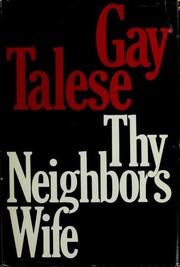
- 1981Thy Neighbor's Wife书架 48
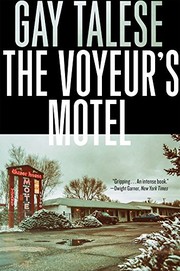
- 2016The voyeur's motel书架 11