 书单
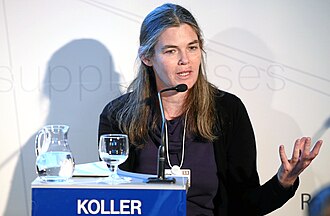
达芙妮·科勒
- 生卒
- 1968 –
- 国籍
- 以色列、美国
- 外文名
- Daphne Koller
照片:World Economic Forum from Cologny, Switzerland,CC BY-SA 2.0,来自维基共享资源「The Future of Higher Education Daphne Koller (8411917358).jpg」(经缩小)。
生平与创作
达芙妮·科勒(希伯来语:דפנה קולר,英语:Daphne Koller,1968年8月27日—)是一位美籍以色列裔的教授,在史丹佛大学教授计算机科学。她也是一位麦克阿瑟奖学金的获奖者。
生平
她和吴恩达2012年一同创办了线上教育平台Coursera。 她专精于人工智能研究 并积极发展在生医领域的应用。 她的研究工作专注在表现、干预、学习和决策,最近则关注电脑视觉和计算生物学。 科勒和史丹佛大学的安娜潘博士,一同开发了PhysiScore,采用各种数据要素来预测早产儿是否有健康问题。 2004年一篇来自麻省理工科技评论的文章"将改变世界的10个新兴技术" 中,科勒教授提及贝式网络的技术。
以上文字摘自维基百科「達芙妮·科勒」(去掉了参考文献等尾部小节),按 CC BY-SA 4.0 使用,作者为维基百科的各位编者。
中文维基百科的条目比较短,下面附上英文维基百科的内容(英文原文):
Daphne Koller (Hebrew: דפנה קולר; born August 27, 1968) is an Israeli-American computer scientist. She was a professor in the department of computer science at Stanford University and a MacArthur Foundation fellowship recipient. She is one of the founders of Coursera, an online education platform. Her general research area is artificial intelligence and its applications in the biomedical sciences. Koller was featured in a 2004 article by MIT Technology Review titled "10 Emerging Technologies That Will Change Your World" concerning the topic of Bayesian machine learning.
Early life
Koller was born on August 27, 1968, in Jerusalem, Israel. She received a bachelor's degree from the Hebrew University of Jerusalem in 1985, at the age of 17, and a master's degree from the same institution in 1986, at the age of 18. She completed her PhD at Stanford in 1993 under the supervision of Joseph Halpern.
Career and research
After her PhD, Koller did postdoctoral research at University of California, Berkeley from 1993 to 1995 under Stuart J. Russell, and joined the faculty of the Stanford University computer science department in 1995. She was named a MacArthur Fellow in 2004. She was elected a member of the National Academy of Engineering in 2011 for contributions to representation, inference, and learning in probabilistic models with applications to robotics, vision, and biology. She was also elected a fellow of the American Academy of Arts and Sciences in 2014 and as a member of the National Academy of Sciences in 2023.
In April 2008, Koller was awarded the first ever $150,000 ACM-Infosys Foundation Award in Computing Sciences.
She and Andrew Ng, a fellow Stanford computer science professor in the AI lab, founded Coursera in 2012. She served as the co-CEO with Ng, and then as president of Coursera. She was recognized for her contributions to online education by being named one of Newsweek's 10 Most Important People in 2010, Time magazine's 100 Most Influential People in 2012, and Fast Company's Most Creative People in 2014.
She left Coursera in 2016 to become chief computing officer at Calico. In 2018, she left Calico to start and lead Insitro, a drug discovery startup. The company operates an automated lab equipment running on algorithms that use its own in vitro disease models. The process allows the combination of machine learning and genomics to predict as well as test treatments for diseases.
Koller is primarily interested in representation, inference, learning, and decision making, with a focus on applications to computer vision and computational biology. Along with Suchi Saria and Anna Penn of Stanford University, Koller developed PhysiScore, which uses various data elements to predict whether premature babies are likely to have health issues.
Koller's work on artificial intelligence builds on Bayes' theorem, an 18th-century result about probability named after the mathematician Thomas Bayes. The approach underpins the process of transforming a current assumption about an event into a more accurate assumption based on more evidence. Koller is a leading figure in research that expanded the existing Bayesian-related software so that it is capable of discerning patterns in vast collections of data. In 2009, she published a textbook on probabilistic graphical models together with Nir Friedman. She offers a course on the subject.
In 2020, Koller co-founded the startup Engageli, which developed an alternative to the Zoom app. Its online learning platform addressed problems such as low student engagement, featuring what the company called as “superior” learning experience that includes real-time evaluations to determine whether students are keeping up.
Her former doctoral students include Lise Getoor, Mehran Sahami, Suchi Saria, Eran Segal, and Ben Taskar.
Koller was interviewed by BBC Radio 4 on The Life Scientific broadcast on 27 September 2022.
Honors and awards
1994: Arthur Samuel Thesis Award
1996: Sloan Foundation Faculty Fellowship
以上文字摘自英文维基百科「Daphne Koller」(有删节,去掉了参考文献等尾部小节),按 CC BY-SA 4.0 使用,作者为维基百科的各位编者。
资料卡
- 出生
- 1968 年 8 月 27 日
- 出生地
- 耶路撒冷
- 职业
- 计算机科学家、工程师、人工智能研究者、大学教师
- 就读学校
- 斯坦福大学、耶路撒冷希伯来大学
- 领域
- 机器学习
- 所属团体
- 美国国家工程院、美国人工智能协会、美国文理科学院
- 受谁影响
- 约瑟夫·哈尔彭
- 代表作
- Coursera
- 获奖
- 麦克阿瑟天才奖、ACM计算机奖(2007)、人工智能促进协会会士(2004)、美国文理科学院院士、计算机与思想奖(2001)、计算机先驱奖(2022);另有 3 项只有外文名
资料卡来自 Wikidata Q11755(CC0),众包数据,个别字段可能不全。
本站收录的作品(1)
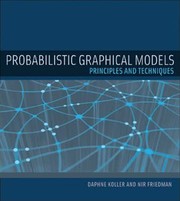
作品年表(1 本)
本站书库里署名达芙妮·科勒的书(Open Library 上至少 10 人加过书架的才收),按首版年份排(有本站书页的用 Wikidata 记的首版年,其余用 Open Library 的);年份偶尔记成后来的版本或译本,以原书为准。全部作品见 Open Library。
- 2009Probabilistic Graphical Models书架 11