 书单
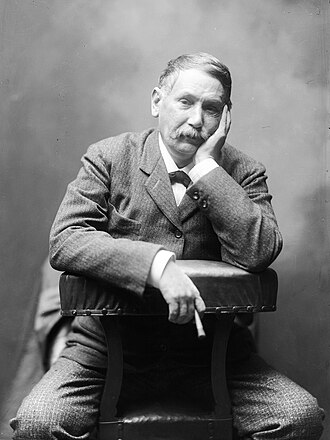
贝尼托·佩雷斯·加尔多斯
- 生卒
- 1843 – 1920
- 国籍
- 西班牙
- 外文名
- Benito Pérez Galdós
照片:Kaulak,CC BY 4.0,来自维基共享资源「Benito Perez Galdos - Kaulak (4.3).jpg」(经缩小)。
生平与创作
贝尼托·佩雷斯·加尔多斯(西班牙语:Benito Pérez Galdós,1843年5月10日—1920年1月4日)是西班牙现实主义小说家。贝尼托·佩雷斯·加尔多斯出生于加那利群岛大加那利岛拉斯帕尔马斯,后来移居到马德里,20岁的他就在那里度过了他的大部分的成年生活。
以上文字摘自维基百科「贝尼托·佩雷斯·加尔多斯」(去掉了参考文献等尾部小节),按 CC BY-SA 4.0 使用,作者为维基百科的各位编者。
中文维基百科的条目比较短,下面附上英文维基百科的内容(英文原文):
Benito María de los Dolores Pérez Galdós (Spanish pronunciation: [beˈnito ˈpeɾeθ ɣalˈðos]; 10 May 1843 – 4 January 1920) was a Spanish realist novelist and politician. He was a leading literary figure in 19th-century Spain, and some scholars consider him second only to Miguel de Cervantes in stature as a Spanish novelist.
Pérez Galdós was a prolific writer, publishing 31 major novels, 46 historical novels in five series, 23 plays, and the equivalent of 20 volumes of shorter fiction, journalism and other writings. He remains popular in Spain, and is considered equal to Charles Dickens, Honoré de Balzac and Leo Tolstoy. He is less well known in Anglophone countries, but some of his works have now been translated into English. His play Realidad (1892) is important in the history of realism in the Spanish theatre. The Pérez Galdós museum in Las Palmas, Gran Canaria features a portrait of the writer by Joaquín Sorolla.
Pérez Galdós was nominated for the Nobel Prize for Literature in 1912, but his opposition to religious authorities led him to be boycotted by conservative sectors of Spanish society, and traditionalist Catholics, who did not recognize his literary merit.
Galdós was interested in politics, although he did not consider himself a politician. His political beginnings were liberal, and he later embraced republicanism and then socialism, under Pablo Iglesias Posse. Early on he joined the Sagasta Progressive Party and in 1886 became a deputy for Guayama, Puerto Rico. At the beginning of the 20th century he joined the Republican Party and was elected deputy to the Madrid cortes for the Republican–Socialist Conjunction in the legislatures of 1907 and 1910. In 1914 he was elected deputy for Las Palmas.
Childhood and first years
Pérez Galdós was born on 10 May 1843 in Calle Cano in Las Palmas de Gran Canaria, in a house that is now the Casa-Museo of Pérez Galdós. He was the tenth and last son of lieutenant colonel Don Sebastián Pérez and Doña Dolores Galdós. He was baptised Benito María de los Dolores at the church of San Francisco de Asís, (es) two days after his birth.
Pérez Galdós studied at San Agustín school, where he was taught by teachers trained in the principles of the enlightenment. In 1862, after completing his secondary studies, he travelled to Tenerife to obtain his certificate in bachillerato in arts. That same year he moved to Madrid to start a law degree, which he did not complete.
While at university, Pérez Galdós frequented the Ateneo of Madrid and other gatherings of intellectuals and artists. He became acquainted with life in Madrid and witnessed the political and historical events of the time, which were reflected in his journalistic works and in his early novels, The Golden Fountain Café (La Fontana de oro) (1870) and El audaz (1871).
Career as a writer
Pérez Galdós led a comfortable life, living first with two of his sisters and then at the home of his nephew, José Hurtado de Mendoza. He got up at sunrise and wrote regularly until ten o'clock in the morning, in pencil, because he considered the use of a pen a waste of time. He would then go for walks in Madrid to eavesdrop on other people's conversations and to gather details for his novels. He did not drink, but smoked leaf cigars incessantly. In the afternoons he read in Spanish, English or French; he preferred the classics, including Shakespeare, Dickens, Cervantes, Lope de Vega and Euripides. In later years, he began to read Leo Tolstoy. In the evenings he would return to his walks, unless there was a concert, for he adored music. He went to bed early and almost never went to the theater.
According to Ramón Pérez de Ayala, Pérez Galdós dressed casually, using sombre tones to go unnoticed. In winter he would wear a white woollen scarf wrapped around his neck, with a half-smoked cigar in his hand and, when seated, his German shepherd dog beside him. He was in the habit of wearing his hair cropped "al rape" and, apparently, suffered from severe migraines.
以上文字摘自英文维基百科「Benito Pérez Galdós」(有删节,去掉了参考文献等尾部小节),按 CC BY-SA 4.0 使用,作者为维基百科的各位编者。
资料卡
- 母语名
- Benito Pérez Galdós
- 出生
- 1843 年 5 月 10 日
- 出生地
- 拉斯帕尔马斯
- 逝世
- 1920 年 1 月 4 日
- 逝世地
- calle de Hilarión Eslava
- 职业
- 作家、剧作家、政治人物、小说家、新闻工作者、诗人
- 使用语言
- 西班牙语
- 写作语言
- 西班牙语
- 就读学校
- 马德里康普顿斯大学
- 文学运动 / 流派
- 现实主义文学
- 创作体裁
- 剧场艺术
- 领域
- 作家
- 所属团体
- 西班牙皇家语言学院
资料卡来自 Wikidata Q189869(CC0),众包数据,个别字段可能不全。
本站收录的作品(1)
作品年表(4 本)
本站书库里署名贝尼托·佩雷斯·加尔多斯的书(Open Library 上至少 10 人加过书架的才收),按首版年份排(有本站书页的用 Wikidata 记的首版年,其余用 Open Library 的);年份偶尔记成后来的版本或译本,以原书为准。全部作品见 Open Library。
- 1878Marianela书架 20
- 1886Doña Perfecta书架 21
- 1887Fortunata y Jacinta书架 19
- 1892Tristana书架 10