 书单
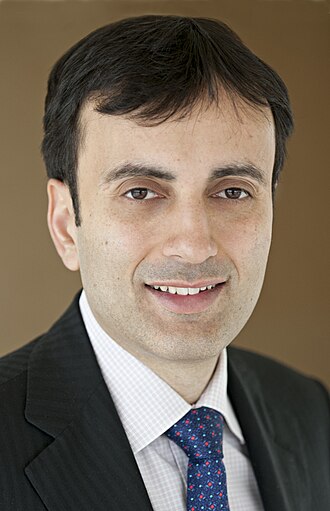
鲁吉·夏尔马
- 国籍
- 印度
- 外文名
- Ruchir Sharma
照片:Zj007ny,CC BY-SA 3.0,来自维基共享资源「RuchirSharma.jpg」(经缩小)。
生平与创作
这个词条暂时没有中文维基百科条目,下面是英文维基百科的内容(英文原文):
Ruchir Sharma is an Indian American author, fund manager and columnist for the Financial Times. He is the head of Rockefeller Capital Management's international business, and was an emerging markets investor at Morgan Stanley Investment Management.
Career
Sharma has told interviewers he spent his early school years in Mumbai, Delhi, and Singapore. He did his undergraduate studies at the Shri Ram College of Commerce in New Delhi, and afterward joined a securities trading company, and in 1991 he launched a column called For Ex, first for The Observer, later for The Economic Times of India. His writings attracted the attention of Morgan Stanley, which hired him in its Mumbai office in 1996. In 2002 he moved to the New York office. In 2003 he became co-head of the emerging markets team at Morgan Stanley Investment Management. In 2006 he became head of the team. In 2016, he took on an added role as Chief Global Strategist of MSIM. In November 2021, it was announced he would leave the firm on January 31, 2022.
Economic and financial market views
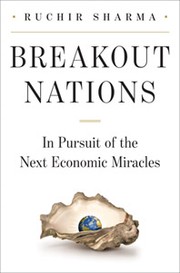
Sharma's first book, Breakout Nations: In Pursuit of the next Economic Miracles (Norton 2012) chronicled his travels through emerging countries trying to spot the next big economic winners—and losers. He defined "breakout nations" as those poised to grow faster than rivals in their own income class. The book broke the nonfiction sales record in India and became an international bestseller.
In 2012 Foreign Policy magazine cited Sharma as one of its top 100 Global Thinkers "for dusting the gold off the term 'emerging markets', and refocusing the global discussion on "the real breakout nations to watch."
Sharma used his travels as the basis for many of his opinion columns, first published in The Economic Times, later in Newsweek International, The Wall Street Journal and other global media. Sharma's work has appeared in Foreign Affairs, The Washington Post, Time, Foreign Policy, Forbes, and The Bloomberg View, among others. A 2017 profile in the Financial Times described Sharma's style as a mix of stories picked up through his wanderings in bazaars and political rallies with "simple rubrics to explain distant economies… think Anthony Bourdain's inquisitiveness combined with Warren Buffett's folksiness."
From 2016 to early 2021 Sharma was a contributing opinion writer on global economics and politics for the New York Times, and he is currently a contributing editor at the Financial Times.
In June 2016, W. W. Norton & Company released The Rise and Fall of Nations: Forces of Change in the Post-Crisis World. It explained the principles he uses to identify nations that are poised to rise or decline in coming years, starting with the principle he calls "impermanence", that rapid economic growth is difficult to achieve, much less to sustain. Thus the next stars of the global economy are often those less known to the public. He said, "I prefer to look closely at countries that are so disdained by media that they are virtually ignored."
In a 2012 piece for Foreign Affairs, "Broken BRICs," Sharma had argued that the broad boom that lifted up virtually all emerging economies in the 2000s was freakishly unusual, and unlikely to be repeated. The hype over the BRICs—Brazil, Russia, India and China—was unlikely to be borne out. Forecasters who saw these rapidly catching up with rich ones would be disappointed. Instead, he said, the more likely outcome was a return to the normal historical pattern, with a few emerging economies catching up rapidly, and many struggling. Failing to sustain growth has been the general rule, and that rule is likely to reassert itself in the coming decade (2020's)," he wrote. ["Broken BRICS: Why the Rest Stopped Rising" Foreign Affairs Nov/Dec 2012].
The United States
At the same time, in articles for The Atlantic and other magazines, Sharma argued that the star of the 2020s was more likely to be the United States, which had seen its global reputation battered by the 2008 financial crisis. He cited five key factors pointing to a US comeback, all related to the superior flexibility of the US system, compared to its peers. The US was paying down its private debts faster than European rivals or Japan. The dollar was at its most competitive level in three decades (in real terms). The US remained the hub of technological innovation. The revolution in US shale oil and gas was greatly lowering energy costs. All these factors were helping to spur a US renaissance in manufacturing, putting the US in position to be the "breakout nation of the developed world," if it can address its Achilles heel: rising government debt.
By 2020, Sharma was arguing that the cycles were shifting again, bringing a new set of potential winners and losers to the fore. In "The Comeback Nation," a long essay for Foreign Affairs in March that year ["The Comeback Nation," Foreign Affairs March 31, 2020], Sharma pointed out that the United States had seen its share of global GDP expand over the previous decade, restoring its reputation as an economic superpower. It had also emerged more influential than ever as a financial superpower, with a greatly expanded share of global financial markets, and the dollar more dominant than ever as the world's most popular currency.
His message remained the same: don't believe the rosy straight-line forecasts, don't expect another golden decade for America. The United States was starting to show signs of the complacency and excess—particularly in the form of rising debt—that often develop in the course of a long boom. The next stars were still likely to come from outside the circle of hype.
China
以上文字摘自英文维基百科「Ruchir Sharma」(有删节,去掉了参考文献等尾部小节),按 CC BY-SA 4.0 使用,作者为维基百科的各位编者。
资料卡
- 出生地
- 斋浦尔
- 职业
- 作家、商人
- 就读学校
- 斯里拉姆商学院
资料卡来自 Wikidata Q7376598(CC0),众包数据,个别字段可能不全。
本站收录的作品(1)
作品年表(2 本)
本站书库里署名鲁吉·夏尔马的书(Open Library 上至少 10 人加过书架的才收),按首版年份排(有本站书页的用 Wikidata 记的首版年,其余用 Open Library 的);年份偶尔记成后来的版本或译本,以原书为准。全部作品见 Open Library。
- 2012Breakout nations书架 17
- 2016The rise and fall of nations书架 38