 书单
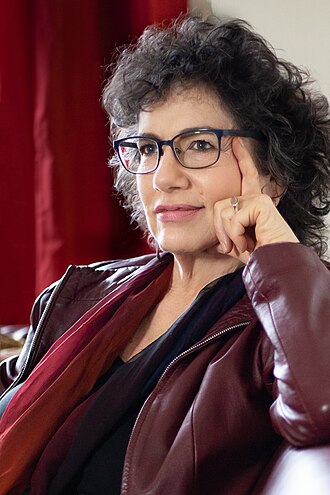
Susan Neiman
- 生卒
- 1955 –
- 国籍
- 美国、以色列
照片:Dominic Bonfiglio,CC BY-SA 4.0,来自维基共享资源「Susan Neiman.jpg」(经缩小)。
生平与创作
这个词条暂时没有中文维基百科条目,下面是英文维基百科的内容(英文原文):
Susan Neiman (born March 27, 1955) is an American moral philosopher, cultural commentator, and essayist. She has written extensively on the juncture between Enlightenment moral philosophy, metaphysics, and politics, both for scholarly audiences and the general public. She lives in Berlin.
Early life and education
Born and raised in Atlanta, Georgia, Neiman dropped out of high school to join the anti-Vietnam War movement. Later, she studied philosophy at Harvard University, earning her Ph.D. under the direction of John Rawls and Stanley Cavell. During graduate school, she spent several years of study at the Free University of Berlin between 1982 and 1988.
Career
From 1989 to 1996, Neiman was an assistant and associate professor of philosophy at Yale University, and from 1996 to 2000 she was an associate professor of philosophy at Tel Aviv University. From 2000 to 2026, she was Director of the Einstein Forum in Potsdam, Germany.
Neiman has been a Member of the Institute for Advanced Study in Princeton, New Jersey, a Research Fellow at the Rockefeller Foundation Study Center in Bellagio, and a Senior Fellow of the American Council of Learned Societies. She is currently a member of the Berlin-Brandenburg Academy of Sciences and Humanities and the American Philosophical Society. Her books have won prizes from PEN, the Association of American Publishers, and the American Academy of Religion. Her shorter pieces have appeared in The New York Review of Books, The New York Times, The Boston Globe, The Globe and Mail, and Dissent. In Germany, she has written for Die Zeit, Frankfurter Allgemeine Zeitung, and Freitag, among other publications.
Major works
Evil in Modern Thought
Evil in Modern Thought writes the history of modern philosophy as a series of responses to the existence of evil – that which, whether in the form of innocent suffering or human action intentionally causing it, "threatens our sense of the sense of the world." Neiman argues that the problem of evil provides a better framework than epistemology for understanding the history of philosophy because it includes a wider range of texts, forms a link between metaphysics and ethics, and is more faithful to philosophers' stated concerns. Indeed, Neiman believes that evil, by challenging the intelligibility of the world as a whole, lies at the root of all philosophical inquiry.
The book explores the period from the early Enlightenment to the late 20th century through discussions of philosophers who often figure in traditional histories of philosophy, such as Leibniz, Kant, Hegel, Nietzsche, and Schopenhauer, as well ones who do not, such as Pierre Bayle, Sigmund Freud, Albert Camus, Emmanuel Levinas, and Hannah Arendt. Neiman groups thinkers around two basic distinctions: one between those who believe in a guiding order beyond appearances and those who think that sensory experience is all we have for orientation; and another between those who believe we must try to understand evil and those who maintain that doing so would be immoral on the grounds that any explanation of evil would be tantamount to its justification.
The book has been translated into more than ten languages and has received reviews in many outlets, including The New York Times, The New York Review of Books, the Times Literary Supplement, The Wall Street Journal, and The New Republic. The reviews were mostly positive. Jonathan Rée, writing for the TLS, called Neiman " not only a fine analyst but an acute stylist too, both scintillating and self-disciplined." In The Wall Street Journal, Damon Linker writes: "Life is lived – and tentative meaning is forged – in the border zone between sense and senselessness: That is the lesson of this profound and provocative book. It is a lesson worth pondering as we prepare to commemorate Sept. 11 and to revisit the question of why such horrors happen in the first place." Edward Rothstein, in The New York Times, was more ambivalent. Though he concedes that Neiman "eloquently outlines" the efforts of philosophers to account for evil, he finds her "condescending" in discussing those who called the 9/11 terrorist attacks "evil."
Moral Clarity
In Moral Clarity, Neiman argues that all human beings have moral needs but that secular culture, particularly on the political left, is reluctant or unable to satisfy or even articulate them, and as a consequence has ceded the moral domain to religion and traditional conservatives. She attributes this failing not to a lack of values but to a lack of a "standpoint from which those values make sense."The book explores the reasons why this is so and offers a framework for moral thinking based on Enlightenment ideas, particularly those of Kant and Rousseau, which rely neither on divine authority nor on authoritarian ideology.
In contrast to the Times' mixed appraisal of Evil in Modern Thought, its review of Moral Clarity was thoroughly positive: "Neiman’s particular skill lies in expressing sensitivity, intelligence and moral seriousness without any hint of oversimplification, dogmatism or misplaced piety. She clearly and unflinchingly sees life as it is, but also sees how it might be, and could be, if we recaptured some of the hopes and ideals that currently escape us." Jane O'Grady, for The Guardian, called the book "fresh and exhilarating, inspiring optimism rather than recrimination."
以上文字摘自英文维基百科「Susan Neiman」(有删节,去掉了参考文献等尾部小节),按 CC BY-SA 4.0 使用,作者为维基百科的各位编者。
资料卡
- 母语名
- Susan Neiman
- 出生
- 1955 年 3 月 27 日
- 出生地
- 亚特兰大
- 职业
- 哲学家、大学教师、非虚构文学作家、新闻工作者、历史学家、作家、作者
- 使用语言
- 英语、德语
- 写作语言
- 英语
- 就读学校
- 哈佛大学、柏林自由大学
- 领域
- 哲学、新闻学
- 所属团体
- 柏林-勃兰登堡科学院和人文学院、普林斯顿高等研究院
- 配偶
- Felix de Mendelssohn
资料卡来自 Wikidata Q291699(CC0),众包数据,个别字段可能不全。
本站收录的作品(1)
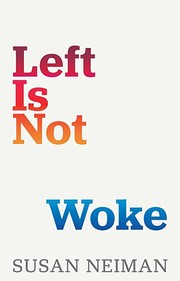
作品年表(1 本)
本站书库里署名Susan Neiman的书(Open Library 上至少 10 人加过书架的才收),按首版年份排(有本站书页的用 Wikidata 记的首版年,其余用 Open Library 的);年份偶尔记成后来的版本或译本,以原书为准。全部作品见 Open Library。
- 2023Left Is Not Woke书架 10