 书单
Julie Burchill
- 生卒
- 1959 –
- 国籍
- 英国
生平与创作
这个词条暂时没有中文维基百科条目,下面是英文维基百科的内容(英文原文):
Julie Burchill (born 3 July 1959) is an English writer. Beginning as a staff writer at the New Musical Express at the age of 17, she has since contributed to newspapers such as The Daily Telegraph, The Sunday Times and The Guardian. Her writing, which was described by John Arlidge in The Observer in 2002 as "outrageously outspoken" and "usually offensive", has been the subject of legal action. Burchill is also a novelist, and her 2004 novel Sugar Rush was adapted for television.
Early life and education
Julie Burchill was born in Bristol and educated at Brislington Comprehensive School. Her father was a Communist union activist who worked in a distillery. Her mother had a job in a cardboard box factory. She did not attend university, leaving the A-levels she had started a few weeks earlier to begin writing for the New Musical Express (NME).
Writing and broadcasting career
At the NME
She began her writing career at the New Musical Express (NME) in 1976, aged 17, after responding (coincidentally with her future husband Tony Parsons) to an advert in that paper seeking "hip young gunslingers" to write about the then emerging punk movement. She gained the job by submitting a "eulogy" of Patti Smith's Horses. She later wrote that at the time she only liked black music, and said: "When I actually heard a punk record, I thought, 'Oh my Lord! This is not music, this is just shouting'". She left her position at the NME at the age of 20, and started freelancing to be able to write about other subjects, although she has never completely given up writing about pop music.
1980s
Her main employers after the NME were The Face and The Sunday Times, where she wrote about politics, pop, fashion and society, and was their film critic from 1984 to 1986. She admitted in 2008 to making up film reviews and missing screenings, and her ex-husband, Cosmo Landesman, has admitted to attending screenings on her behalf.
During the Falklands War in 1982, Burchill argued that the military dictatorship of General Galtieri represented a greater evil. She wrote articles favourable to Margaret Thatcher. Her sympathy for Thatcher helped in gaining a column for The Mail on Sunday, where in 1987 she went against the paper's usual political line by urging its readers to vote Labour. Though she claims to like the MoS, she said of journalists on the Daily Mail in 2008: "Everybody knows that hacks are the biggest bunch of adulterers, the most misbehaving profession in the world – and you have people writing for the Daily Mail writing as though they are vicars ... moralising on single mothers and whatnot."
Into the 1990s
Burchill has spoken repeatedly and frankly of her relationship with drugs, writing that she had "put enough toot up my admittedly sizeable snout to stun the entire Colombian armed forces". She declared that "As one who suffered from chronic shyness and a low boredom threshold ... I simply can't imagine that I could have ever had any kind of social life without [cocaine], let alone have reigned as Queen of the Groucho Club for a good part of the '80s and '90s." While Burchill has frequently drawn on her personal life for her writing, that self-same personal life has been a subject of public comment, especially during this period, when "everything about her – her marriages, her debauchery, her children – seemed to be news."
In 1991, Burchill, Landesman and Toby Young established a short-lived magazine Modern Review through which she met Charlotte Raven, with whom she had a much publicised affair. "[I] was only a lesbian for about six weeks in 1995," she said in an interview with Lynn Barber in 2004, or "my very enjoyable six months of lesbianism" in a 2000 article. Launched under the slogan "Low culture for high brows", the magazine lasted until 1995, when Burchill and her colleagues fell out. It was briefly revived by Burchill, with Raven editing, in 1997. The "Fax war" in 1993 between Burchill and author Camille Paglia, published in the Modern Review, gained much attention.
In 1995, Burchill wrote a column for The Times, titled "I'm a bitch, and I'm proud", in which she argued that women should reclaim the word 'bitch,' used as a slur. She wrote: "it is the nature of these things that, in recent years, the slighted have taken steps to repossess the slight; thus, we have blacks who call each other 'nigger', pansies who call each other 'queer' and upper-class cretins who quite happily call each other 'Henry'."
In 1996, the actor, author, playwright and theatre director Steven Berkoff won a libel action against Burchill in respect of one of her articles, published in the Sunday Times newspaper, which included comments suggesting that he was "hideously ugly". The judge ruled that Burchill's actions "held him to ridicule and contempt." The late 1990s were a turbulent period for Burchill as she has recalled:
I got the heave-ho from my cushy billet at the Sunday Express, where I later learned my nickname had been "Caligula’s Horse" because my best friend – briefly the editor – had appointed me. For the first time in my brilliant career, no one wanted to hire me. Somehow I limped into a column on the doddering Punch – and then I got the boot from there, too! Surely I had reached the mythical rock bottom at last?
以上文字摘自英文维基百科「Julie Burchill」(有删节,去掉了参考文献等尾部小节),按 CC BY-SA 4.0 使用,作者为维基百科的各位编者。
资料卡
- 出生
- 1959 年 7 月 3 日
- 出生地
- Frenchay 等 2 项
- 职业
- 新闻工作者、小说家、作家、女性主义者、作者
- 使用语言
- 英语
- 领域
- 新闻学、散文、女权论者
- 配偶
- Tony Parsons、Cosmo Landesman
资料卡来自 Wikidata Q3404917(CC0),众包数据,个别字段可能不全。
本站收录的作品(1)
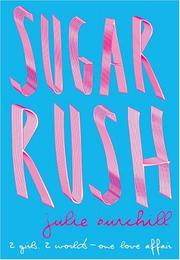
作品年表(1 本)
本站书库里署名Julie Burchill的书(Open Library 上至少 10 人加过书架的才收),按首版年份排(有本站书页的用 Wikidata 记的首版年,其余用 Open Library 的);年份偶尔记成后来的版本或译本,以原书为准。全部作品见 Open Library。
- 2004青春糖伴Sugar rush书架 17