 书单
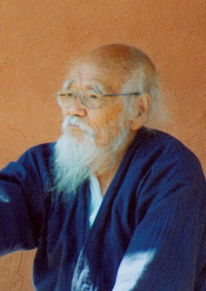
福冈正信
- 生卒
- 1913 – 2008
- 国籍
- 日本、大日本帝国
- 外文名
- Masanobu Fukuoka
照片:naturalfarming.org,CC BY-SA 2.5,来自维基共享资源「Masanobu Fukuoka, 2002 (cropped).jpg」(经缩小)。
生平与创作
福冈正信(1913年2月2日—2008年8月16日)是日本农学家、哲学家,自然农法的创始人、提倡者之一。他是不施肥、不施农药及除草剂的传统耕作方式的拥护者,亦是在此基础上他创立了广为人知的自然农法。
人物
福冈正信出生于爱媛县伊予郡南山崎村(现伊予市),毕业于旧制松山中学校岐阜高等农林学校(现岐阜大学应用生物科学部)。
青年时期的福冈就任于横滨海关的植物检查科,从事植物病理研究。不久因罹患急性肺炎住院。住院期间,他领悟了“一切无用(この世には何もない)”的思想,继而辞去工作,回乡务农。他致力于探寻“无为而治(やらなくてもいい)”的、也就是否定“科学农法”的农业道路,经历多次失败后,最终创立了自然农法。
然而,尽管他在著作的序文中大力提倡推行不耕作、无肥料、无农药、不除草的自然农法、著作中却仍有使用肥料及农药(除草剂、除虫剂)的记述。
1988年,他获得了由洛克菲勒兄弟财团出资设立的拉蒙·麦格塞塞奖。
据报道,年届90的福冈正信曾飞抵中国,不顾年事已高,步行困难,,现场亲自指导粘土团子的有关技术。
简历
1913年 - 出生于爱媛县
1931年 - 从松山中学毕业
1933年 - 岐阜高农农学科毕业
1934年 - 任职于横滨海关植物检查课
1937年 - 短暂回乡务农,开始自然农法试验
1939年 - 任职于高知县农业试験场(现高知县农业技术中心)。
1947年 - 再次回乡务农,开始专心研究自然农法。
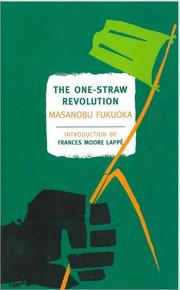
1975年 - 出版《自然农法・一根稻草的革命》
1988年 - 获得拉蒙·麦格塞塞奖的公共服务奖项和维斯瓦·巴拉蒂大学的Desikottam奖。
1997年 - 获得首届Earth Council奖。
2008年 - 8月16日上午逝世。
以上文字摘自维基百科「福岡正信」(去掉了参考文献等尾部小节),按 CC BY-SA 4.0 使用,作者为维基百科的各位编者。
中文维基百科的条目比较短,下面附上英文维基百科的内容(英文原文):
Masanobu Fukuoka (Japanese: 福岡 正信, Hepburn: Fukuoka Masanobu; 2 February 1913 – 16 August 2008) was a Japanese farmer and philosopher celebrated for his natural farming and re-vegetation of desertified lands. He was a proponent of no-till, herbicide and pesticide-free cultivation methods from which he created a particular method of agriculture, commonly referred to as "natural farming" or "do-nothing farming".
Fukuoka was the author of several books, scientific papers and other publications, and was featured in television documentaries and interviews from the 1970s onwards. His influences went beyond farming to inspire individuals within the natural food and lifestyle movements. He was an outspoken advocate of the value of observing nature's principles.
Life
Fukuoka was born on 2 February 1913 in Iyo, Ehime, Japan, the second son of Kameichi Fukuoka, an educated and wealthy land owner and local leader. He attended Gifu Prefecture Agricultural College and trained as a microbiologist and agricultural scientist, beginning a career as a research scientist specialising in plant pathology. He worked at the Plant Inspection Division of the Yokohama Customs Bureau in 1934 as an agricultural customs inspector. In 1937 he was hospitalised with pneumonia, and while recovering, he stated that he had a profound spiritual experience that transformed his world view and led him to doubt the practices of modern "Western" agricultural science. He immediately resigned from his post as a research scientist, returning to his family's farm on the island of Shikoku in southern Japan.
From 1938, Fukuoka began to practice and experiment with new techniques on organic citrus orchards and used the observations gained to develop the idea of "Natural Farming". Among other practices, he abandoned pruning an area of citrus trees, which caused the trees to become affected by insects and the branches to become entangled. He stated that the experience taught him the difference between nature and non-intervention. His efforts were interrupted by World War II, during which he worked at the Kōchi Prefecture agricultural experiment station on subjects including farming research and food production.
In 1940, Fukuoka married his wife Ayako, and they had five children together. After World War II, his father lost most of the family lands in postwar land reform and was left with three-eighths of an acre of rice land and the hillside citrus orchards his son had taken over before the war. Despite these circumstances, in 1947 he took up natural farming again with success, using no-till farming methods to raise rice and barley. He wrote his first book, Mu 1: The God Revolution, or Mu 1: Kami no Kakumei (無〈1〉神の革命) in Japanese, during the same year, and worked to spread word of the benefits of his methods and philosophy. His later book, The One-Straw Revolution, was published in 1975 and translated into English in 1978.
From 1979, Fukuoka travelled the world extensively, giving lectures, working directly to plant seeds and re-vegetate areas, and receiving a number of awards in various countries in recognition of his work and achievements. By the 1980s, Fukuoka recorded that he and his family shipped some 6,000 crates of citrus to Tokyo each year, totalling about 90 tonnes.
During his first journey overseas, Fukuoka was accompanied by his wife Ayako, met macrobiotic diet leaders Michio Kushi and Herman Aihara, and was guided by his leading supporter and translation editor Larry Korn. They sowed seeds in desertified land and met with United Nations UNCCD representatives including Maurice Strong, who encouraged Fukuoka's practical involvement in the "Plan of Action to Combat Desertification".
以上文字摘自英文维基百科「Masanobu Fukuoka」(有删节,去掉了参考文献等尾部小节),按 CC BY-SA 4.0 使用,作者为维基百科的各位编者。
资料卡
- 母语名
- 福岡正信
- 出生
- 1913 年 2 月 2 日
- 出生地
- 伊予市
- 逝世
- 2008 年 8 月 16 日
- 逝世地
- 伊予市
- 职业
- 农学家、教师、哲学家、作家、农民、植物学家、环保人士、微生物学家
- 使用语言
- 日语
- 领域
- 微生物学、自然农法、生态学、哲学
- 代表作
- The One-Straw Revolution
- 获奖
- 拉蒙·麦格塞塞奖(1988)
资料卡来自 Wikidata Q334997(CC0),众包数据,个别字段可能不全。
本站收录的作品(1)
同时代的日本作家
Open Library 上的全部作品
正在读取…