 书单
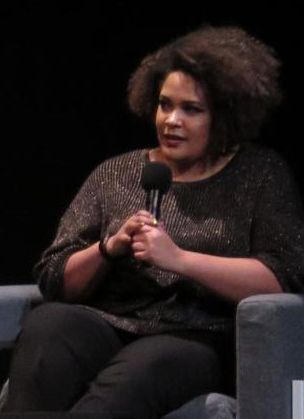
Ijeoma Oluo
- 生卒
- 1980 –
- 国籍
- 美国
照片:cactusbones from Seattle, US,CC BY-SA 2.0,来自维基共享资源「Lovett Or Leave It - Ijeoma Oluo 1.jpg」(经缩小)。
生平与创作
这个词条暂时没有中文维基百科条目,下面是英文维基百科的内容(英文原文):
Ijeoma Oluo (born 1980) is an American writer. She is the author of So You Want to Talk About Race and has written for The Guardian, Jezebel, The Stranger, Medium, and The Establishment, where she was also an editor-at-large.
Born in Denton, Texas, and based in Seattle, Washington, in 2015, Oluo was named one of the most influential people in Seattle, and in 2018, she was named one of the 50 most influential women in Seattle. Her writing covers racism, misogynoir, intersectionality, online harassment, the Black Lives Matter movement, economics, parenting, feminism, and social justice.
She gained prominence for articles critiquing race and the invisibility of women's voices, like her April 2017 interview with Rachel Dolezal, published in The Stranger.
Early life and education
Oluo was born in Denton, Texas, in 1980. Her father, Samuel Lucky Onwuzip Oluo, is from Nigeria, and her mother, Susan Jane Hawley, is from Kansas and is white. Oluo’s father moved back to Nigeria in her early childhood and died in 2006. Her younger sibling is jazz musician Ahamefule J. Oluo, who is married to Seattle writer Lindy West.
She graduated from Lynnwood High School in 1999 and received a Bachelor of Arts degree in political science from Western Washington University in 2007.
Career
Early career
Oluo began her career in technology and digital marketing. She turned to writing in her mid-30s after the 2012 death of Trayvon Martin, who was the same age as her son, Malcolm, at the time. Fearful for her son as well as her younger brother, a musician then traveling on tour, Oluo began sharing long-held concerns via a blog she had previously devoted to food writing. She has described these initial forays as a significant influence on her writing style, as she hoped that sharing personal stories would be a way to connect to and activate her predominantly white community in Seattle. Oluo has said she was disappointed by the response she initially received, and that many of her existing friends "fell away" instead of engaging in the issues she had begun raising; however, many black women she hadn't previously known reached out to express appreciation and Oluo's profile as a writer grew, with publishers asking to reprint work from her blog and eventually commissioning new writing.
Journalism and commentary
Oluo's columns and news articles appeared in The Guardian and The Stranger newspapers from 2015 through 2017, and she has also written for Jezebel, Medium and The Establishment, a publication based at Medium that Oluo helped launch; she was an editor-at-large. Her writing covers topics like misogynoir, intersectionality, online harassment, the Black Lives Matter movement, race, economics, parenting, feminism and social justice.
She is known for critiques of race and the erasure of black women's voices in the United States, as exemplified in Oluo's April 2017 interview of Rachel Dolezal, published in The Stranger.
Oluo stopped writing for The Stranger in July 2017; her reasons included the paper's decision to publish an article on detransitioning that Oluo said was "written by a cis woman without the knowledge and language necessary to responsibly report on the subject in a way that would not feed into the narrative of anti-trans bigots. The piece quotes a doctor widely discredited for junk science, with a well-known anti-trans bias." Though Oluo has taken strong stands on many social issues, she has also said fans should be comfortable criticizing and speaking honestly about errors such as expressions of sexism, racism, or classism by their favorite celebrities, without having to condemn or reject anyone as irredeemable, and that critics generally share many of the same flaws they call out in others. She wrote in 2015 that, "Being anti-racist doesn't mean that you are never racist, it means that you recognize and battle racism in yourself as hard as you battle it in others." She expanded on this theme of honest dialogue about uncomfortable truths in her 2018 book, writing that "This does not mean that you have to flog yourself for all eternity."
Oluo wrote on her blog in November 2017 that USA Today had asked her to write an op-ed, but only on the condition that Oluo's article argue against the need for due process with regard to sexual misconduct allegations such as the high-profile cases associated with the Me Too movement. Specifically she said that the editors "want a piece that says that you don't believe in due process and that if a few innocent men lose their jobs it's worth it to protect women." Oluo was willing to rebut the USA Today editorial that the accused are at great risk of their rights to due process being violated, but said she would not play the role of "their strawman", since she did in fact believe in everyone's right to due process. After Oluo wrote about the USA Today offer, The Washington Post responded with an editorial by Christine Emba that shared Oluo's position that the greatest violations of due process had been against the rights of harassment victims who had been denied justice for many years, and that such protestations over due process were, in Oluo's words, "attempt to re-center the concerns of men". Oluo had said that such apparent concern for due process was intended to, "stop women from coming forward before too many men are held accountable for their actions".
以上文字摘自英文维基百科「Ijeoma Oluo」(有删节,去掉了参考文献等尾部小节),按 CC BY-SA 4.0 使用,作者为维基百科的各位编者。
资料卡
- 出生
- 1980 年 12 月 30 日
- 出生地
- 登顿
- 职业
- 作家、社运人士、新闻工作者、政治学家
- 使用语言
- 英语
- 就读学校
- Lynnwood High School
- 领域
- 新闻学、女权论者、妇女权利、社会正义、种族主义
资料卡来自 Wikidata Q41671674(CC0),众包数据,个别字段可能不全。
本站收录的作品(1)
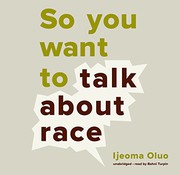
作品年表(2 本)
本站书库里署名Ijeoma Oluo的书(Open Library 上至少 10 人加过书架的才收),按首版年份排(有本站书页的用 Wikidata 记的首版年,其余用 Open Library 的);年份偶尔记成后来的版本或译本,以原书为准。全部作品见 Open Library。
- 2018So you want to talk about race书架 211
- 2020Mediocre书架 29