 书单
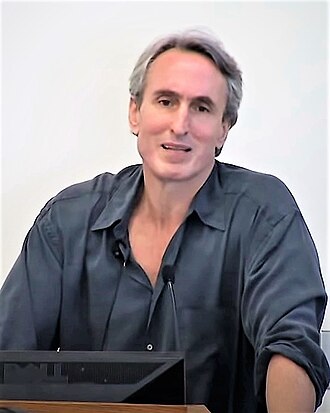
Gary Taubes
- 生卒
- 1956 –
- 国籍
- 美国
照片:AncestryFoundation,CC BY 3.0,来自维基共享资源「Gary Taubes at Ancestral Health Symposium.jpg」(经缩小)。
生平与创作
这个词条暂时没有中文维基百科条目,下面是英文维基百科的内容(英文原文):
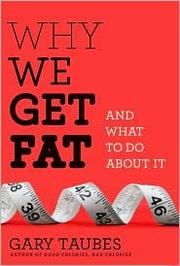
Gary Taubes (born April 30, 1956) is an American journalist, writer, and low-carbohydrate / high-fat (LCHF) diet advocate. His central claim is that carbohydrates, especially sugar and high-fructose corn syrup, overstimulate the secretion of insulin, causing the body to store fat in fat cells and the liver, and that it is primarily a high level of dietary carbohydrate consumption that accounts for obesity and other metabolic syndrome conditions. He is the author of Nobel Dreams (1987); Bad Science: The Short Life and Weird Times of Cold Fusion (1993); Good Calories, Bad Calories (2007), titled The Diet Delusion (2008) in the UK and Australia; Why We Get Fat: And What to Do About It (2010); The Case Against Sugar (2016); and The Case for Keto: Rethinking Weight Control and the Science and Practice of Low-Carb/High-Fat Eating (2020). Taubes's work often goes against accepted scientific, governmental, and popular tenets such as that obesity is caused by eating too much and exercising too little and that excessive consumption of fat, especially saturated fat in animal products, leads to cardiovascular disease.
Biography
Born in Rochester, New York, Taubes studied physics at Harvard University (BS, 1977) and aerospace engineering at Stanford University (MS, 1978). After receiving a master's degree in journalism at Columbia University in 1981, Taubes joined Discover magazine as a staff reporter in 1982. Since then he has written numerous articles for Discover, Science and other magazines. Originally focusing on physics issues, his interests have more recently turned to medicine and nutrition.
His brother, Clifford Henry Taubes, is the William Petschek Professor of Mathematics at Harvard University.
Scientific controversies
Taubes' books have all dealt with scientific controversies.
Nobel Dreams takes a critical look at the politics and experimental techniques behind the Nobel Prize-winning work of physicist Carlo Rubbia.
In Bad Science: The Short Life and Weird Times of Cold Fusion, he chronicles the short-lived media frenzy surrounding the Pons–Fleischmann cold fusion experiments of 1989. He opines in the book that heat generation in the experiments of Drs. Martin Fleischmann and Stanley Pons was due entirely to difference in ionic conductivity of deuterated salts solutions compared to normal aqueous solutions.
He also formulated an allegation of fraud regarding the results from John Bockris's research group.
Diet advocacy
Taubes gained prominence in the low-carb diet debate following the publication of his 2002 New York Times Magazine piece "What if It's All Been a Big Fat Lie?". The article, which questioned the efficacy and health benefits of low-fat diets, was seen as defending the Atkins diet against the medical establishment, and it became extremely controversial. Some scholars interviewed for the article complained that Taubes misinterpreted their words or treated them out of context. Taubes himself stated: "[E]ven though I knew the article would be the most controversial article the Times Magazine ran all year, [the reaction] still shocked me." The Center for Science in the Public Interest published a rebuttal to the Times article in its November 2002 newsletter. Cardiologist John W. Farquhar commented that "Gary Taubes tricked us all into coming across as supporters of the Atkins diet."
Taubes is an advocate of eating beef. Beef industry leader Amanda Radke has written in Beef Daily that "Today's best beef advocates wear a variety of hats [...] like Nina Teicholz or Gary Taubes who turn against conventional health advice to promote diets rich in animal fats and proteins". In a 2024 interview, Taubes stated he could "have a heart attack tomorrow, which is possible the way I eat, and which, God knows, I keep expecting".
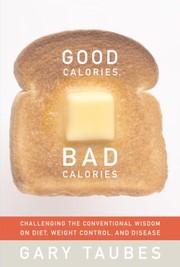
Good Calories, Bad Calories
In 2007, Taubes published his book Good Calories, Bad Calories: Challenging the Conventional Wisdom on Diet, Weight Control, and Disease (published as The Diet Delusion in the UK). This book proposed that a hypothesis — that dietary fat is the cause of obesity and heart disease — became dogma, and claims to show how the scientific method was circumvented so a contestable hypothesis could remain unchallenged. The book uses data and studies compiled from more than a century of dietary research to support what Taubes calls "the alternative hypothesis."
Taubes' argument is that the medical community and the U.S. federal government have relied upon misinterpreted scientific data on nutrition to build the prevailing paradigm about what constitutes healthful eating. Taubes argues that — contrary to conventional nutritional science — it is a carbohydrate-laced diet, augmented with sugar, that leads to heart disease, type 2 diabetes, obesity, cancer, and other "maladies of civilization." In the Epilogue to Good Calories, Bad Calories on page 454, Taubes sets out ten "inescapable" conclusions, the first of which is, "Dietary fat, whether saturated or not, is not a cause of obesity, heart disease, or any other chronic disease of civilization."
Reviewing Good Calories, Bad Calories, obesity researcher George A. Bray wrote that the book "...has much useful information and is well worth reading" but that "obese people clearly eat more than do lean ones" and that "some of the conclusions that the author reaches are not consistent with current concepts about obesity."
以上文字摘自英文维基百科「Gary Taubes」(有删节,去掉了参考文献等尾部小节),按 CC BY-SA 4.0 使用,作者为维基百科的各位编者。
资料卡
- 出生
- 1956 年 4 月 30 日
- 出生地
- 罗切斯特
- 职业
- 营养学家、新闻工作者
- 使用语言
- 英语
- 就读学校
- 哈佛大学、斯坦福大学、哥伦比亚大学新闻学院、哈佛大学工程与应用科学学院
资料卡来自 Wikidata Q3098624(CC0),众包数据,个别字段可能不全。
本站收录的作品(2)
作品年表(4 本)
本站书库里署名Gary Taubes的书(Open Library 上至少 10 人加过书架的才收),按首版年份排(有本站书页的用 Wikidata 记的首版年,其余用 Open Library 的);年份偶尔记成后来的版本或译本,以原书为准。全部作品见 Open Library。
- 2007Good calories, bad calories书架 33
- 2010Why we get fat and what to do about it书架 19
- 2010Why we get fat书架 10
- 2016The case against sugar书架 12