 书单
James H. Schmitz
- 生卒
- 1911 – 1981
- 国籍
- 美国
生平与创作
这个词条暂时没有中文维基百科条目,下面是英文维基百科的内容(英文原文):
James Henry Schmitz (October 15, 1911 – April 18, 1981) was a German-American science fiction writer.
Early life
Schmitz was born in Hamburg, Germany to American parents and was educated at a Realgymnasium in Hamburg, and grew up speaking both English and German. The family spent World War I in the United States, then returned to Germany.
Schmitz traveled to Chicago in 1930 to go to business school, then switched to a correspondence course in journalism. Unable to find a job because of the Great Depression, he returned to Germany to work with his father's company. Schmitz lived in various German cities, where he worked for the International Harvester Company, until his family left shortly before World War II broke out in Europe.
Writing career
Schmitz wrote mostly short stories, which sold chiefly to Galaxy Science Fiction and Astounding Science-Fiction (which later became Analog Science Fiction and Fact). Gale Biography in Context called him "a craftsmanlike writer who was a steady contributor to science fiction magazines for over 20 years."
Schmitz is best known as a writer of "space opera", and for his strong female characters (such as Telzey Amberdon and Trigger Argee) who did not conform to the "damsel in distress" stereotype typical of science fiction of the time.
His first published story was "Greenface", published in August 1943 in Unknown.
His story "Second Night of Summer", published in Galaxy Science Fiction in December 1950, features the first instance of the term "hive mind" in science fiction.
Most of his works are part of the "Hub" series and feature characters with telepathy. However, the novel that "is usually thought of as Schmitz's best work" is The Witches of Karres, concerning juvenile "witches" with genuine psi-powers and their escape from slavery. The Witches of Karres was nominated for a Hugo Award. In recent years, his novels and short stories have been republished by Baen Books, edited and with notes by Eric Flint.
In an introductory essay comparing Schmitz with contemporary author A. E. van Vogt, Gardner Dozois wrote, "Although he lacked van Vogt's paranoid tension and ornately Byzantine plots, the late James H. Schmitz was considerably better at people than van Vogt was, crafting even his villains as complicated, psychologically complex, and non-stereotypical characters, full of surprising quirks and behaviors that you didn't see in a lot of other Space Adventure stuff."
Dozois added:
And his universes, although they come with their own share of monsters and sinister menaces, seem as if they would be more pleasant places to live than most Space Opera universes, places where you could have a viable, ordinary, and decent life once the plot was through requiring you to battle for existence against some Dread Implacable Monster; Schmitz even has sympathy for the monsters, who are often seen in the end not to be monsters at all, but rather creatures with agendas and priorities and points-of-view of their own, from which perspectives their actions are justified and sometimes admirable—a tolerant attitude almost unique amidst the Space Adventure tales of the day, most of which were frothingly xenophobic.
John Clute writes in The Encyclopedia of Science Fiction,
From 1949, when "Agent of Vega" appeared in ASF as the first of 4 stories later assembled as Agent of Vega (collection of linked stories 1960), he regularly produced the kind of tale for which he remains most warmly remembered: Space Opera adventures, several featuring female Heroes depicted with minimum recourse to their "femininity" – they perform their active tasks, and save the Universe when necessary, in a manner almost completely free of sexual role-playing clichés. Most of his best work shares a roughly characterized common background, a Galaxy inhabited by humans and aliens with room for all and numerous opportunities for discoveries and reversals that carefully fall short of threatening the stability of that background. Many of his stories, as a result, focus less on moments of Conceptual Breakthrough than on the pragmatic operations of teams and bureaux involved in maintaining the state of things against criminals, monsters and unfriendly species; in this they rather resemble the tales of Murray Leinster, though they are more vigorous and less inclined to punish adventurousness.
Greg Fowlkes, editor-in-chief of Resurrected Press, said, "During the 50s and 60s "Space Opera" and James H. Schmitz were almost synonymous. He was famous for his tales of interstellar secret agents and galactic criminals, and particularly for heroines such as Telzey Amberdon and Trigger Argee. Many of these characters had enhanced "psionic" powers that let them use their minds as well as their weapons to foil their enemies. All of them were resourceful in the best heroic tradition."
In an essay in the anthology The Good Old Stuff (1998), Dozois laments that the book Agent of Vega is "long out-of-print, alas, but one which – if you can find it – delivers as pure a jolt of Widescreen Space Opera Sense of wonder as can be found anywhere." However, the website Free Speculative Fiction Online freely offers Agent of Vega, along with several of Schmitz's other stories, including "Greenface", "Balanced Ecology", "Lion Loose", "Goblin Night", and many more.
In the afterword to the Baen collected works Telzey Amberdon, Eric Flint wrote that in the 1960s to him Schmitz loomed as large as Heinlein, Clarke and Asimov. Flint attributed his fame fading away to the market shifting to large novels and multi-volume series, and Schmitz was basically a writer of short fiction in magazines of the day.
Schmitz wrote the introduction to the concordance The Universes of E. E. Smith.
以上文字摘自英文维基百科「James H. Schmitz」(有删节,去掉了参考文献等尾部小节),按 CC BY-SA 4.0 使用,作者为维基百科的各位编者。
资料卡
- 出生
- 1911 年 10 月 15 日
- 出生地
- 汉堡
- 逝世
- 1981 年 4 月 18 日
- 逝世地
- 洛杉矶
- 职业
- 科幻作家、小说家、短篇故事作家、作家
- 使用语言
- 英语
资料卡来自 Wikidata Q1406489(CC0),众包数据,个别字段可能不全。
本站收录的作品(1)
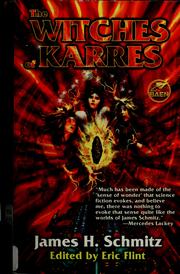
作品年表(1 本)
本站书库里署名James H. Schmitz的书(Open Library 上至少 10 人加过书架的才收),按首版年份排(有本站书页的用 Wikidata 记的首版年,其余用 Open Library 的);年份偶尔记成后来的版本或译本,以原书为准。全部作品见 Open Library。
- 1966The Witches of Karres书架 29