 书单
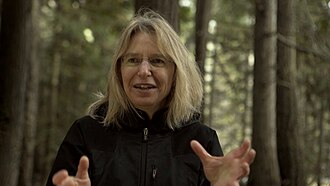
苏珊娜·西马德
- 生卒
- 1960 –
- 国籍
- 加拿大
- 外文名
- Suzanne W. Simard
照片:Jdoswim,CC BY-SA 4.0,来自维基共享资源「Suzanne Simard.jpg」(经缩小)。
生平与创作
苏珊娜·西马德(英语:Suzanne Simard,1960年—)是一名加拿大科学家,现任英属哥伦比亚大学森林与保育科学系教授。她在英属哥伦比亚省莫纳希山脉长大,于俄勒冈州立大学获得森林科学博士学位。在英属哥伦比亚大学任教之前,西马德曾在英属哥伦比亚省森林部担任研究科学家。
西马德最为人所知的是她对以真菌和根为特征的森林地下网络的研究。她研究这些真菌和根系如何促进生态系中树木和植物之间的交流和互动。树木和植物之间的交流包括碳、水、养分和防御讯号的交换。西马德也是TerreWEB计划的负责人,该计划旨在对研究生和博士后进行全球变迁科学及其传播方面的培训。
西马德在野外和温室实验中使用稀有的碳同位素作为示踪剂,测量碳在树木个体和物种之间的流动和共享,例如她发现桦树和花旗松可以共享碳。当桦树落叶时,桦树会从花旗松那里获得额外的碳,而桦树也会向树荫下的花旗松提供碳。
以上文字摘自维基百科「苏珊娜·西马德」(去掉了参考文献等尾部小节),按 CC BY-SA 4.0 使用,作者为维基百科的各位编者。
中文维基百科的条目比较短,下面附上英文维基百科的内容(英文原文):
Suzanne Simard (born 1960) is a Canadian forestry scientist and conservationist who is best known for her research on forest ecology and plant intelligence.
Simard is a Professor in the Department of Forest and Conservation Sciences at the University of British Columbia. After growing up in the Monashee Mountains, British Columbia, she received her PhD in Forest Sciences at Oregon State University. Prior to working at the University of British Columbia, Simard worked as a research scientist at the British Columbia Ministry of Forests.
Simard is known for the research she conducted on the underground networks of forests characterized by fungi and roots. She studies how these fungi and roots facilitate communication and interaction between trees and plants of an ecosystem. Within the communication between trees and plants is the exchange of carbon, water, nutrients and defense signals between trees. Simard is also a leader of TerreWEB, an initiative set to train graduate students and post-doctoral fellows in global change science and its communication.
She used rare carbon isotopes as tracers in both field and greenhouse experiments to measure the flow and sharing of carbon between individual trees and species, and discovered, for instance, that birch and Douglas fir share carbon. Birch trees receive extra carbon from Douglas firs when the birch trees lose their leaves, and birch trees supply carbon to Douglas fir trees that are in the shade.
Mother trees
Simard identified something called a hub tree, or "mother tree", which tend to be the largest trees in forests that act as central hubs for vast below-ground mycorrhizal networks. A mother tree could support seedlings by infecting them with fungi and supplying them with the nutrients they need to grow.
She discovered that Douglas firs provide carbon to baby firs. She found that there was more carbon sent to baby firs that came from that specific mother tree, than random baby firs not related to that specific fir tree. It was also found that the mother trees change their root structure to make room for baby trees.
Her book Finding the Mother Tree asserts that forest ecologies are interdependent with fungal mycelium. She asserts that trees (and other plants) exchange sugars through their respective root systems and through interconnected fungal mycelial structures to share (and at times trade) micronutrients. This is significant in terms of the way existing woods and forests are managed and new plantations established.
Interspecies cooperation
Simard found that "fir trees were using the fungal web to trade nutrients with paper-bark birch trees over the course of the season". For example, tree species can loan one another sugars as deficits occur within seasonal changes. This is a particularly beneficial exchange between deciduous and coniferous trees as their energy deficits occur during different periods. The benefit "of this cooperative underground economy appears to be better over-all health, more total photosynthesis, and greater resilience in the face of disturbance".
The interspecies cooperation is now criticized, highlighting the low amount of nutrient transfer between species through the mycorrhizal networks. The mother tree theory is also called into question by plant scientists for lacking scientific evidence and promoting the personification of plants. Simard and colleagues published a detailed rebuttal to this critique.
以上文字摘自英文维基百科「Suzanne Simard」(有删节,去掉了参考文献等尾部小节),按 CC BY-SA 4.0 使用,作者为维基百科的各位编者。
资料卡
- 出生
- 1960 年
- 出生地
- 不列颠哥伦比亚省
- 职业
- 生态学家、自然科学家、大学教师
- 使用语言
- 英语
- 就读学校
- 俄勒冈州立大学、不列颠哥伦比亚大学
- 领域
- 生态学
- 获奖
- 刘易斯·托马斯奖(2023)、Kew国际奖章、时代百大人物(2024)
资料卡来自 Wikidata Q26702907(CC0),众包数据,个别字段可能不全。
本站收录的作品(1)
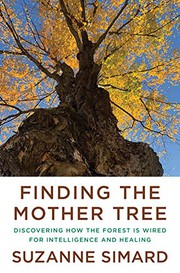
作品年表(1 本)
本站书库里署名苏珊娜·西马德的书(Open Library 上至少 10 人加过书架的才收),按首版年份排(有本站书页的用 Wikidata 记的首版年,其余用 Open Library 的);年份偶尔记成后来的版本或译本,以原书为准。全部作品见 Open Library。
- 2021Finding the Mother Tree书架 42