 书单
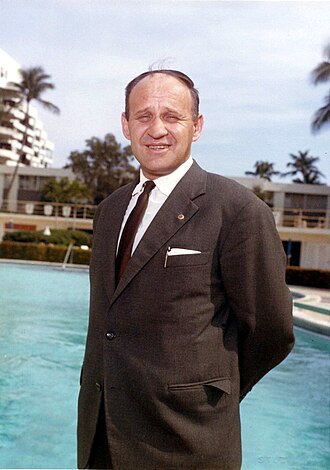
韦伊诺·林纳
- 生卒
- 1920 – 1992
- 国籍
- 芬兰
- 外文名
- Väinö Linna
照片:作者不详,公有领域,来自维基共享资源「Vaino Linna color.jpg」(经缩小)。
生平与创作
韦伊诺·林纳(芬兰语:Väinö Linna,1920年12月20日—1992年4月21日)是芬兰作家。他出生于乌尔亚拉一个屠夫家庭,后来在坦佩雷一家工厂当过工人。他的第三部小说《无名战士》(1954年出版)让其获得名誉,之后以三部曲《在北极星下》(Täällä Pohjantähden alla,1959 - 1963年出版)巩固其文学地位。
1963年林纳获得北欧理事会文学奖,1965年被授予坦佩雷大学名誉博士,1980年芬兰总统授予他“科学院院士”的荣誉称号。
作品
(1947) 《目标》(Päämäärä)
(1948) 《黑色的爱情》(Musta rakkaus)
(1949–53) Messias, (未完成)
(1954) 《无名战士》(Tuntematon sotilas)
(1959–63) 《在北极星下》三部曲(Täällä Pohjantähden alla I–III)
(1967) Oheisia
(1990) Murroksia
(2000) 《战争小说》(Sotaromaani),《无名战士》的未被剪辑的原稿
《无名战士》
《无名战士》描写了二战芬苏战争中芬兰下级官兵的战斗生活和思想感情,表达了芬兰人民捍卫芬兰独立的决心和意志。
《在北极星下》
《在北极星下》描写了海梅地方一个小村庄的变迁,反映了社会各阶层对土地所有制、妇女地位、民族觉醒运动和语言运动的不同态度。
以上文字摘自维基百科「韋伊諾·林納」(去掉了参考文献等尾部小节),按 CC BY-SA 4.0 使用,作者为维基百科的各位编者。
中文维基百科的条目比较短,下面附上英文维基百科的内容(英文原文):
Väinö Valtteri Linna (pronounced [ˈʋæi̯nø ˈlinːɑ] ; 20 December 1920 – 21 April 1992) was a Finnish author and a former soldier who fought in the Continuation War (1941–44). Linna gained literary fame with his third novel, Tuntematon sotilas (The Unknown Soldier, published in 1954), and consolidated his position with the trilogy Täällä Pohjantähden alla (Under the North Star, published in 1959–1963 and translated into English by Richard Impola). Both have been adapted to a film format on several occasions; The Unknown Soldier was first adapted into a film in 1955 and Under the North Star in 1968 as Here, Beneath the North Star, both directed by Edvin Laine.
Biography
Väinö Linna was born in Urjala in the Pirkanmaa region. He was the seventh child of Viktor (Vihtori) Linna (1874–1928) and Johanna Maria (Maija) Linna (née Nyman) (1888–1972). Linna's father, a butcher, died when Linna was only seven years old, thus Linna's mother had to support the entire family by working at a nearby manor. Despite his background, Linna's interest in literature began early on. As a child, Linna loved adventure novels which he borrowed from the local library. The author's education was, however, limited to six years at a public school which he finished in the mid-1930s. After working as a lumberjack and a farm hand at the same manor where his mother had worked, Linna moved to Tampere in 1938. Typical of his generation, the adolescent author-to-be moved from the countryside to a developing city in search of industrial labour which he found at the Finlayson textile mills as a fitter; he would work there from 1938 to 1940 and, after his military service, from 1944 until 1954.
In 1940, Linna was conscripted into the army. The Second World War had broken out, and for Linna's part it meant participation in the Continuation War (1941–44). He fought on the eastern front. In addition to being a squad-leader, he wrote notes and observations about his and his unit's experiences. Already at this point Linna knew that writing would be his preferred occupation. However, failure to get the notes published led him to burn them. In spite of rejection, the idea of a novel, which would depict ordinary soldiers' views on war, would later lead him to write The Unknown Soldier.
After the war, Linna got married and started writing while working at the mills during the day. Throughout his time at Finlayson, Väinö Linna read avidly. Such authors as Schopenhauer, Dostoyevsky, and Nietzsche gained Linna's respect. Linna later said that Erich Maria Remarque's All Quiet on the Western Front had also had a great influence on him. However, Linna's first two novels Päämäärä and Musta rakkaus sold poorly, though Musta rakkaus did earn him the City of Tampere literary prize in 1948; he also wrote poetry but did not enjoy success with that either. Not until the release of The Unknown Soldier (1954) did he rise to fame. It is evident that at the time there was a distinct social need for a novel that would deal with the war and ordinary people's role in it. A decade after the peace treaty with the Soviet Union many Finns were ready to reminisce, some even in a critical manner. The Unknown Soldier satisfied that need completely, as its characters were unarguably more diverse, realistic yet heroic, than those of earlier Finnish war novels. The book soon became something of a best-seller, as it sold 175,000 copies in only six months – quite a lot for a Finnish novel in the 1950s.
以上文字摘自英文维基百科「Väinö Linna」(有删节,去掉了参考文献等尾部小节),按 CC BY-SA 4.0 使用,作者为维基百科的各位编者。
资料卡
- 母语名
- Väinö Linna
- 本名
- Väinö Valtteri Linna
- 出生
- 1920 年 12 月 20 日
- 出生地
- 乌尔亚拉
- 逝世
- 1992 年 4 月 21 日
- 逝世地
- Pikonlinna
- 职业
- 作家、散文家
- 使用语言
- 芬兰语
- 写作语言
- 芬兰语
- 创作体裁
- 历史小说、小说文学
- 代表作
- 无名战士、Under the North Star
- 获奖
- 卡莱维·延蒂奖(1952)、北欧理事会文学奖(1963)、尤西奖(1969)、阿莱克西斯·基维奖(1960);另有 6 项只有外文名
资料卡来自 Wikidata Q311037(CC0),众包数据,个别字段可能不全。
本站收录的作品(1)
作品改编
同时代的芬兰作家
Open Library 上的全部作品
正在读取…