 书单
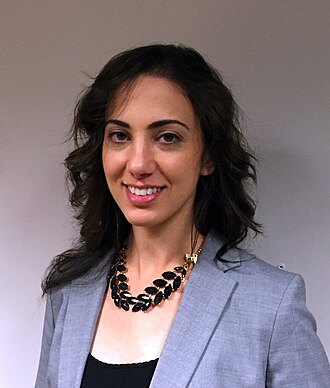
Julia Galef
- 生卒
- 1983 –
- 国籍
- 美国
照片:BrainDad,CC BY-SA 4.0,来自维基共享资源「20150126 Julia Galef 2.JPG」(经缩小)。
生平与创作
这个词条暂时没有中文维基百科条目,下面是英文维基百科的内容(英文原文):
Julia Galef (born July 4, 1983) is an American writer, speaker and co-founder of the Center for Applied Rationality. From 2010 to 2021, she hosted Rationally Speaking, the official podcast of New York City Skeptics, sharing the show with co-host and philosopher Massimo Pigliucci and produced by Benny Pollak until 2015.
Biography
Galef was born in 1983 in Maryland. She received a BA in statistics from Columbia University. In 2010 she joined the board of directors of the New York City Skeptics. She co-founded and became president of the nonprofit Center for Applied Rationality in 2012 after she moved from New York to Berkeley, California. The organization also gives workshops to train people to internalize and use strategies based on the principles of rationality on a more regular basis to improve their reasoning and decision-making skills and achieve goals. She was elected a fellow of the Committee for Skeptical Inquiry in 2015.
In 2021, Galef and her fiancé, blogger Luke Muehlhauser, left their San Francisco studio to work remotely and travel the United States. In April 2021, they were in Franklin, North Carolina, when she was interviewed by Intelligencer over Zoom.
Popularization of rationality research
In 2009, Galef began co-hosting the Rationally Speaking Podcast with the philosopher of science Massimo Pigliucci. Their first episode was released on February 1, 2010. The show has hosted conversations with public intellectuals such as Neil deGrasse Tyson, Lawrence Krauss, James Randi, and Peter Singer.
Galef frequently speaks on rationality and moderates debates at skeptic conferences. She gives public lectures to organizations including the Center for Inquiry and the Secular Student Alliance. From 2010 to 2015, she was a speaker for the Northeast Conference on Science and Skepticism.
Galef began writing the blog Measure of Doubt in 2011 with her brother, as well as writing for Religion Dispatches and Scientific American. From April 2015 to December 2021, she was the sole host of the Rationally Speaking podcast. Galef's activities as a writer, podcaster and president of the Center for Applied Rationality are mentioned by The Atlantic, The Verge, and NPR.
In 2014, she wrote several articles and recorded several short videos for Big Think, some of which are part of the Big Think Mentor's workshops. Subsequent to her exposure with Big Think as an expert on the topic of rationality, she was interviewed in 2014 by Forbes, Fast Company, and The Wall Street Journal. In particular her idea of keeping a "surprise journal" received attention, which is one of the techniques Galef uses to record incidents where her expectations were wrong, in order to recognize personal faulty assumptions that expose and counterweight the "bias blind spot". According to Galef, it can be easier to adjust internalized beliefs by framing the new evidence as a surprise.
In February 2016, Galef delivered a TED talk on, "Why you think you're right—even if you're wrong", encouraging critical self-skepticism and prioritizing coming to the correct viewpoint using "scout mindset" instead of working to ensure your current viewpoint is seen as correct with a "soldier mindset". The talk was covered by National Public Radio's TED Radio Hour in November 2016.
In 2021, her first book The Scout Mindset: Why Some People See Things Clearly and Others Don't was published by Penguin. Galef had left the Center for Applied Rationality in 2016 to focus on writing.
On 23 December 2021, she hosted the last episode of Rationally Speaking, "263: Is cash the best way to help the poor?", with economist Michael Faye as a guest.
Ideas on rationality
Julia Galef often explains common confusions and popular misconceptions of rationality. Frequently she distinguishes Richard Foley's concept of "epistemic rationality" from Max Weber's "instrumental rationality". She describes epistemic rationality as a way of reasoning according to logic and the principles of probability theory to form beliefs and conclusions. In contrast, she describes instrumental rationality as a decision-making process in which people choose the action that maximizes their expected utility, whatever their goals are.
Galef discussed the concept of Straw Vulcan, originally coined by the website TV Tropes, to describe the incorrect perception about rationality as a way of thinking that denies emotions such as love and lacks appreciations for beauty. It refers to the fictional character Spock (a half-Vulcan) in Star Trek, who is often seen to exemplify this caricature of rationality. Galef argues that, given the gross irrationality Spock has seen in humans, his failure to adjust his expectations about humans' ability to make rational decisions is itself a case of irrationality.
以上文字摘自英文维基百科「Julia Galef」(去掉了参考文献等尾部小节),按 CC BY-SA 4.0 使用,作者为维基百科的各位编者。
资料卡
- 出生
- 1983 年 7 月 4 日
- 出生地
- 银泉
- 职业
- 播客、演说家、主持人、博主
- 使用语言
- 英语
- 就读学校
- 哥伦比亚大学、Richard Montgomery High School
- 领域
- 播客节目、科学哲学、理性
- 获奖
- 怀疑调查委员会会员(2015)
资料卡来自 Wikidata Q19873435(CC0),众包数据,个别字段可能不全。
本站收录的作品(1)
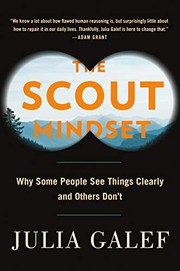
作品年表(1 本)
本站书库里署名Julia Galef的书(Open Library 上至少 10 人加过书架的才收),按首版年份排(有本站书页的用 Wikidata 记的首版年,其余用 Open Library 的);年份偶尔记成后来的版本或译本,以原书为准。全部作品见 Open Library。
- 2021Scout Mindset书架 47