 书单
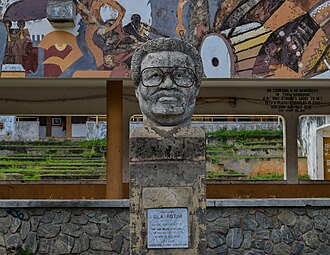
Ola Rotimi
- 生卒
- 1938 – 2000
- 国籍
- 尼日利亚
照片:Tufoto,CC BY-SA 4.0,来自维基共享资源「Statue of Prof. Ola Rotimi in Ile-Ife.jpg」(经缩小)。
生平与创作
这个词条暂时没有中文维基百科条目,下面是英文维基百科的内容(英文原文):
Olawale Gladstone Emmanuel Rotimi , best known as Ola Rotimi (13 April 1938 – 18 August 2000), was one of Nigeria's leading playwrights and theatre directors. He has been called "a complete man of the theatre – an actor, director, choreographer and designer – who created performance spaces, influenced by traditional architectural forms."
Biography
Early life
Rotimi was the son of Samuel Gladstone Enitan Rotimi a Yoruba steam-launch engineer (a successful director and producer of amateur theatricals) and Dorcas Adolae Oruene Addo an Ijaw drama enthusiast. He was born in Sapele, Nigeria; cultural diversity was a recurring theme in his work. He attended St. Cyprian's School in Port Harcourt from 1945 to 1949, St Jude's School, Lagos, from 1951 to 1952 and the Methodist Boys' High School, Lagos, before travelling to the United States in 1959 to study at Boston University, where he obtained a BA in fine arts. In 1965, he married Hazel Mae Gaudreau; Hazel also studied at Boston University, where she majored in opera, voice and music education. In 1966 he obtained an MA from Yale School of Drama, where he earned the distinction of being a Rockefeller Foundation scholar in playwriting and dramatic literature.
Upon returning to Nigeria in the 1960s, Rotimi joined the faculty of the University of Ife (now Obafemi Awolowo University), where he founded the Ori Olokun Acting Company, a theatre troupe that became influential in experimental Nigerian stage production.
He later taught at the University of Port Harcourt, where several of his later works premiered. During the 1990s, Rotimi also taught in the Caribbean and the United States, including at Macalester College, before returning to Nigeria in 2000.
Theatrical career
Rotimi often examined Nigeria's history and local traditions in his works. His first plays, To Stir the God of Iron (produced 1963) and Our Husband Has Gone Mad Again (produced 1966; published 1977), were staged at the drama schools of Boston University and Yale, respectively.
Later years
Upon returning to Nigeria in the 1960s, Rotimi taught at the University of Ife (now Obafemi Awolowo University), where he founded the Ori Olokun Acting Company, and Port Harcourt. Owing, in part, to political conditions in Nigeria, Rotimi spent much of the 1990s living in the Caribbean and the United States, where he taught at Macalester College in St. Paul, Minnesota. In 2000 he returned to Ile-Ife where he lectured in Obafemi Awolowo University till his demise. Hazel (his wife) died in May 2000, only a couple of months before Rotimi's death.
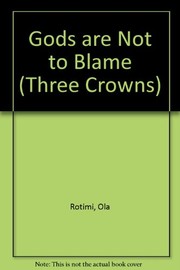
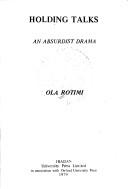
His later dramas include The Gods Are Not to Blame (produced 1968; published 1971), a retelling of Sophocles' Oedipus Rex in imaginative verse; Kurunmi and the Prodigal (produced 1969; published as Kurunmi, 1971), written for the second Ife Festival of Arts; Ovonramwen Nogbaisi (produced 1971; published 1974), about the last ruler of the Benin empire; and Holding Talks (1979).
Later plays, such as If: A Tragedy of the Ruled (1983) and Hopes of the Living Dead (1988), premiered at the University of Port Harcourt and was a common play in Obafemi Awolowo University Drama Department. The radio play Everyone His/Her Own Problem, was broadcast in 1987. His book African Dramatic Literature: To Be or to Become? was published in 1991.
Rotimi, a patriot who shunned the attraction of the West and Europe and returned home to contribute his own quota to nation building.
His dream of directing a play of 5000 cast members materialised at the Amphi Africa Theater when he was being put to rest as the crowd was drawn to a manuscript of the day's program outline. People made dramatic entry and exit to the stage around his casket with the man turning his casket.
Rotimi spent the second half of his last creative decade reworking two of his plays – Man Talk, Woman Talk and also Tororo, Tororo, Roro – and the result, unpublished at the time of his death in 2000, have now been published under the title The Epilogue. were probably meant as an epilogue to both Rotimi's theatrical and comic careers, which span the entire spectrum of his career.
It is comical and the language used is a version of "Nigerian English" (for example: "Se you get?" "I called God on him").
The works are also a social satire and this publication will spur renewed interest in his satires. Rotimi is sure to be remembered as a model in the literary genre whose views have shaped the conduct of the theatre and whose plays have demonstrated the power of drama to shape the thinking of the society and attempted to solve some of the problems encountered in everyday living.
Plays
(1963) To Stir the God of Iron
(1966) Our Husband Has Gone Mad Again—depicts the cocoa farmer and businessman Lejoka-Brown as a self-seeking, opportunistic leader who could make better contributions to his country outside of the political arena.
(1968) The Gods Are Not to Blame—an adaptation of the Greek classic Oedipus Rex; the main character gets trapped by pride, ignorance and the caprices of the divinities.
(1969) Kurunmi
(1970) Holding Talks
(1971) Ovonramven Nogbaisi—the title character simply luxuriates in the grandeur of his office. Although he is a custodian of culture who inspires people, he does not actively participate in their struggles.
(1973) Grip Am
(1973) Invitation into Madness
(1977) Akassa Youmi*
(1979) If: A Tragedy of the Ruled—in If, the young firebrand Hamidu is nowhere to be found when a real commitment is required.
(1985) Hopes of The Living Dead—Rotimi here depicts a different kind of leader: a selfless, result-oriented, committed leadership complemented by a followership that believes in the good of the generality of its members through the application of itself to the cause that is beneficial.
When the Criminals Become Judges
The Epilogue: Two unpublished plays of Ola Rotimi
Man Talk, Woman Talk
以上文字摘自英文维基百科「Ola Rotimi」(有删节,去掉了参考文献等尾部小节),按 CC BY-SA 4.0 使用,作者为维基百科的各位编者。
资料卡
- 母语名
- Ola
- 出生
- 1938 年 4 月 13 日
- 出生地
- 萨佩莱
- 逝世
- 2000 年 8 月 18 日
- 逝世地
- 伊费
- 职业
- 作家、大学教师、戏剧导演、编舞者
- 使用语言
- 英语、尼日利亚皮钦语
- 就读学校
- 波士顿大学、耶鲁大学戏剧学院(1966)、波士顿大学艺术学院(1959)、Methodist Boys' High School
- 代表作
- The Gods Are Not To Blame(1968)、Kurunmi(1969)、Hopes of the Living Dead(1985)、Ovonramwen Nogbaisi(1971)、Our husband has gone mad again、Holding Talks
- 获奖
- 凯恩非洲文学奖
资料卡来自 Wikidata Q1684073(CC0),众包数据,个别字段可能不全。
本站收录的作品(2)
作品年表(6 本)
本站书库里署名Ola Rotimi的书(Open Library 上至少 10 人加过书架的才收),按首版年份排(有本站书页的用 Wikidata 记的首版年,其余用 Open Library 的);年份偶尔记成后来的版本或译本,以原书为准。全部作品见 Open Library。
- 1971The gods are not to blame书架 102
- 1971Kurunmi书架 24
- 1974The Gods Are Not to Blame (Three Crowns)书架 15
- 1977Our husband has gone mad again书架 246
- 1979Holding talks书架 11
- 1988Hopes of the living dead书架 26