 书单
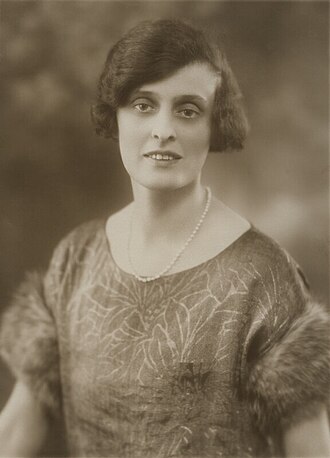
E. M. Delafield
- 生卒
- 1890 – 1943
- 国籍
- 英国
照片:Bassano Ltd,公有领域,来自维基共享资源「E. M. Delafield in 1925.jpg」(经缩小)。
生平与创作
这个词条暂时没有中文维基百科条目,下面是英文维基百科的内容(英文原文):
Edmée Elizabeth Monica Dashwood, née de la Pasture (9 June 1890 – 2 December 1943), commonly known as E. M. Delafield, was a prolific English author. She wrote novels, short stories, essays, and plays, but is now best known for her largely autobiographical Diary of a Provincial Lady, the fictional journal of an upper-middle-class Englishwoman in a Devon village in the 1930s. Delafield is considered a master of the comedy of manners.
Life
Delafield was born in Hove, Sussex. She was the elder daughter of Count Henry Philip Ducarel de la Pasture, of Llandogo Priory, Monmouthshire, and Elizabeth Lydia Rosabelle Bonham, daughter of Edward William Bonham, who as Mrs Henry de la Pasture was also a well-known novelist. The pen-name Delafield adopted later was a thin disguise of "de la Pasture," suggested by her sister, Yoé. The de la Pasture family was bilingual, and young Elizabeth was educated until age ten by a series of French governesses. She then attended several convent schools until 1907, when she was seventeen. Count Henry died suddenly of a heart attack the next year, when Delafield was entering the marriage market. She was lively and charming but shy, so she "failed" as a debutante. Her mother, meanwhile, found another husband for herself: Sir Hugh Clifford GCMG, who governed the colonies of the Gold Coast (1912–19), Nigeria (1919–25), Ceylon (1925–27), and the Malay States. Sir Hugh is said to have been the inspiration for a character in Noel Coward's Mad Dogs and Englishmen.
In 1911, Delafield chose to pursue a religious life. She was accepted as a postulant by a French religious order established in Belgium. Her account of the experience, The Brides of Heaven, was written in 1931 and eventually published in her biography. "The motives which led me, as soon as I was 21, to enter a French Religious Order are worthy of little discussion, and less respect," she begins. These motives appear to have included receiving only one marriage offer as a debutante. She recounts being told by the Superior that if a doctor advised a surgical operation, "your Superiors will decide whether your life is of sufficient value to the community to justify the expense. If it is not, you will either get better without the operation or die. In either case you will be doing the will of God, and nothing else matters." Delafield finally left the convent when she learned that Yoé was planning to join another enclosed order: "The thought of the utter and complete earthly separation that must necessarily take place between us was more than I could bear."
After the outbreak of World War I, she worked as a nurse in a Voluntary Aid Detachment in Exeter, under the command of Georgiana Buller. Delafield's first novel, Zella Sees Herself, was published in 1917, the same year in which she decided to use the first name Edmée. In the last two years of the war, she worked for the Ministry of National Service in Bristol and published two more novels. Delafield continued to publish one or two novels every year until nearly the end of her life.
On July 17, 1919, Delafield married Colonel Arthur Paul Dashwood, OBE, a younger son of Sir George Dashwood, 6th Baronet and Lady Mary Seymour, the youngest daughter of Francis Seymour, 5th Marquess of Hertford). Dashwood was an engineer who had built the massive docks at Hong Kong Harbour. After two years of living with him in the Malay States, Delafield insisted on coming back to England, and they subsequently lived in Croyle, an old house in Kentisbeare, Devon, on the Bradfield estate, where Dashwood became the land agent. They had two children, Lionel and Rosamund. At the initial meeting of the Kentisbeare Women's Institute in 1924, Delafield was unanimously elected president and remained in that office until she died. She also served as a Justice of the Peace from 1925, when she was appointed the first woman magistrate on the local Cullompton Bench.
Delafield's son, Lionel, died in late 1940 while serving in the army, some suggest by his own hand, a tragedy from which she never recovered. Her own health suffered a progressive decline, which necessitated a colostomy and many visits to a neurologist. Three years later, on December 2, 1943, Delafield died after collapsing while lecturing in Oxford. She was buried under her favourite yew tree in the Kentisbeare churchyard, near her son. Her mother survived her and died five years later. Her daughter, Rosamund Dashwood, emigrated to Canada.
Diary of a Provincial Lady
When the editor of Time and Tide "wanted some light 'middles', preferably in serial form, Delafield promised to submit some pieces." She later said: "The idea had come into my mind of writing, in the first-person singular, a perfectly straightforward account of the many disconcerting facets presented by everyday life to the average woman." It was thus, in 1930, that her most popular and enduring work, Diary of a Provincial Lady, was written. This largely autobiographical novel substituted the names of "Robin" and "Vicky" for her own children. The book has never been out of print and inspired several sequels chronicling later portions of Delafield's life: The Provincial Lady Goes Further, The Provincial Lady in America, and The Provincial Lady in War-Time.
In 1961, Delafield's daughter, Rosamund Dashwood, published Provincial Daughter, a semi-autobiographical account of her own experiences of domesticated life in the 1950s.
Reception
Delafield was an author of middlebrow fiction in her day, along with such writers as Angela Thirkell and Agatha Christie. Of her novels, only the Provincial Lady series achieved wide commercial success (The Diary of a Provincial Lady was a Book Society Book of the Month in December 1930). However, Delafield's contributions to magazines such as Time and Tide and Punch, which published over four hundred of her pieces, gained her great fame in the United Kingdom. She also was popular in the United States and went on two successful speaking tours there in the 1930s.
以上文字摘自英文维基百科「E. M. Delafield」(有删节,去掉了参考文献等尾部小节),按 CC BY-SA 4.0 使用,作者为维基百科的各位编者。
资料卡
- 本名
- Edmée Elizabeth Monica de la Pasture
- 笔名
- E. M. Delafield
- 出生
- 1890 年 6 月 9 日
- 出生地
- 斯泰宁
- 逝世
- 1943 年 12 月 2 日
- 逝世地
- Kentisbeare
- 职业
- 日记作者、作家、短篇故事作家、剧作家、新闻工作者、小说家
- 使用语言
- 英语
- 配偶
- Arthur Paul Dashwood(1919)
- 代表作
- Diary of a Provincial Lady、Consequences
资料卡来自 Wikidata Q5322031(CC0),众包数据,个别字段可能不全。
本站收录的作品(1)
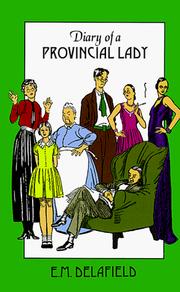
作品年表(1 本)
本站书库里署名E. M. Delafield的书(Open Library 上至少 10 人加过书架的才收),按首版年份排(有本站书页的用 Wikidata 记的首版年,其余用 Open Library 的);年份偶尔记成后来的版本或译本,以原书为准。全部作品见 Open Library。
- 1930Diary of a provincial lady书架 47