 书单
生平与创作
这个词条暂时没有中文维基百科条目,下面是英文维基百科的内容(英文原文):
Édouard Glissant (French: [ɡlisɑ̃]; 21 September 1928 – 3 February 2011) was a French writer, poet, philosopher, and literary critic from Martinique. He remains an influential and celebrated figure in Caribbean thought and cultural commentary as well as within multiple Francophone literary canons. His Poetics of Relation has been used by scholars to understand the rapid transformation of a multicultural world.
Early life and education
Édouard Glissant was born in Sainte-Marie, Martinique, and moved to Lamentin, Martinique, for primary school. He and other students were forbidden from speaking Creole.
Glissant's father worked as an agricultural manager as a Géreur d’Habitation, a former slavery plantation converted into a colonial habitation. He learned traditional stories from sugar cane laborers when he accompanied his father during summer breaks from school.
Glissant studied at the Lycée Schœlcher, named after the abolitionist Victor Schœlcher, after being awarded a scholarship in 1938. The poet and politician Aimé Césaire was a teacher at Lycée Schœlcher. There, Césaire met Léon Damas, and they would later join with Léopold Senghor to formulate and promote the concept of negritude.
Glissant left Martinique in 1946 for Paris, where he received his PhD, having studied ethnography at the Musée de l'Homme and history and philosophy at the Sorbonne.
Writing career
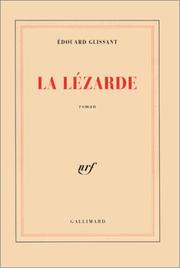
In 1958, Glissant published his debut novel La Lézarde. This novel won the Prix Renaudot.
In 1959, Glissant established, with Paul Niger, the separatist Front Antillo-Guyanais pour l'Autonomie party. Charles de Gaulle barred Glissant from leaving France between 1961 and 1965. In 1965, Glissant returned to Martinique. Two years later, he founded the Institut Martiniquais D'études in 1967. Glissant also founded Acoma, a social sciences publication.
In 1981, Glissant wrote "Caribbean Discourse". Glissant was appointed Director and Editor-in-Chief of the UNESCO Courier.
From 1988 to 1993, Glissant was a professor at Louisiana State University in the Department of French and Francophone Studies. From 1995, Glissant was Distinguished Professor of French at the CUNY Graduate Center.
Glissant's 2003 novel Ormerod is a fictional retelling of the life of Flore Bois Gaillard, an 18th-century enslaved St. Lucian woman who joined revel slaves and fought agains the British. In his novel, Glissant imagines that Gaillard was motivated by her sexual assault from her slaveowner, Master Bellec, and that she was publicly executed at the end of the St. Lucian Brigand Wars. In reality, it is unknown what happened to Gaillard after the wars ended.
In January 2006 Glissant was asked by Jacques Chirac to take on the presidency of a new cultural centre devoted to the history of the slave trade. This followed the publication of a letter written to the French Minister of the Interior following riots in Paris. In the letter Glissant and Patrick Chamoiseau criticized a law passed in February 2005 requiring schools to teach the "positive role of the French presence overseas".
Writing style
Glissant as a writer employs a hybrid literary style.
Glissant's development of the notion of Antillanité seeks to root Caribbean identity firmly within "the Other America" and springs from a critique of identity in previous schools of writing, specifically the work of Aimé Césaire, which looked to Africa for its principal source of identification.
Glissant traced parallels between the history and culture of the Creole Caribbean and those of Latin America and the plantation culture of the American South, most obviously in his study of William Faulkner.
Glissant was the pre-eminent critic of the Négritude school of Caribbean writing, composed of the generation of literary contributors prior to him. He is regarded as a father-figure for the subsequent Créolité group of writers that includes Patrick Chamoiseau and Raphaël Confiant.
Theories
Glissant was close with Félix Guattari and Gilles Deleuze and was influenced by their theory of the rhizome and Poetics of Relation expands upon the theory of the rhizome.
The right to opacity
In Poetics of Relation, Glissant explores opacity. This refers to something not being able to be translated or known. Glissant argues that the oppressed should be allowed to be opaque, to not be completely understood, and to simply exist as different.
Glissant calls for understanding and accepting difference without measuring that difference to an "ideal scale" and comparing and making judgements. The Right to Opacity has been applied by scholars in Early Childhood Education and towards the development of Decolonial Ethics.
"The Open Boat"
In Poetics of Relation, "The Open Boat" introduces Glissant's major theory. The Open Boat is a poem reflecting the slave ship experience.
Death and legacy
Glissant died in Paris, France, on 3 February 2011, at the age of 82. Glissant published more than 20 books during his life.
以上文字摘自英文维基百科「Édouard Glissant」(去掉了参考文献等尾部小节),按 CC BY-SA 4.0 使用,作者为维基百科的各位编者。
资料卡
- 母语名
- Édouard Glissant
- 本名
- Mathieu Édouard Glissant
- 出生
- 1928 年 9 月 21 日
- 出生地
- 圣玛丽
- 逝世
- 2011 年 2 月 3 日
- 逝世地
- 巴黎十五区
- 职业
- 作家、诗人、小说家、大学教师、文学评论家、哲学家
- 使用语言
- 法语
- 就读学校
- 巴黎文学院
- 获奖
- 勒诺多文学奖(1958)、Charles Veillon prize in the French language(1965)、Prize of the Magazine Études françaises(1995)
资料卡来自 Wikidata Q274319(CC0),众包数据,个别字段可能不全。
本站收录的作品(1)
同时代的法国作家
前后几届的勒诺多文学奖得主
全部得主 ›Open Library 上的全部作品
正在读取…