 书单
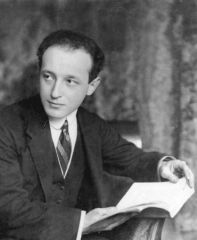
卡尔·曼海姆
- 生卒
- 1893 – 1947
- 国籍
- 英国、德国
- 外文名
- Karl Mannheim
照片:作者不详,公有领域,来自维基共享资源「Mannheim Károly.jpg」(经缩小)。
生平与创作
卡尔·曼海姆(Karl Mannheim,1893年3月27日—1947年1月9日)是一位犹太裔社会学家,生于匈牙利。他影响了二十世纪上半叶的社会学领域,是经典社会学和知识社会学的创始人之一。
生平
他出生于匈牙利首都布达佩斯的一个纯犹太人的中产阶级家庭,父亲为匈牙利籍,母亲是德国籍。从1912年起,他先后就读于布达佩斯和柏林的几所大学,曾师从德国著名哲学家、社会学家格奥尔格·齐美尔。此后他辗转求学于弗莱堡、海德堡和巴黎。
他参加“社会科学会”后,从中受到具有实证主义精神的社会科学学术环境的熏陶,1915年后,他开始积极投身于以捷尔吉·卢卡奇为中心的“人文科学自由研究学派”的活动,并于1918年以一篇《对认识论的结构分析》的论文获得博士学位。
1920年,他因政治原因逃亡到海德堡,并得到德国著名文化-历史社会学家阿尔弗雷德·韦伯的支持,开始以知识和知识分子在社会变革中的作用和意义作为研究的重心。1922年他以德文出版了博士学位论文《对认识论的结构分析》,随即又先后撰写发表了一批专门论述社会学和知识社会学方面的著述:《知识社会学问题》(1925)、《保守主义思想》(1927)、《竞争在精神领域之中的意义》(1928)、《意识形态与乌托邦》(1929)。同年他离开海德堡去法兰克福大学,接替弗兰茨·奥本海默任该校社会学和经济学的教授。
1933年纳粹党执政后,他被革去大学教席,被迫流亡英国,在伦敦政治经济学院担任社会学讲师。他于1947年在英国伦敦逝世。
以上文字摘自维基百科「卡爾·曼海姆」(去掉了参考文献等尾部小节),按 CC BY-SA 4.0 使用,作者为维基百科的各位编者。
中文维基百科的条目比较短,下面附上英文维基百科的内容(英文原文):
Karl Mannheim (born Károly Manheim, 27 March 1893 – 9 January 1947) was a Hungarian sociologist and a key figure in classical sociology as well as one of the founders of the sociology of knowledge. Mannheim is best known for his book Ideology and Utopia (1929/1936), in which he distinguishes between partial and total ideologies, the latter representing comprehensive worldviews distinctive to particular social groups, and also between ideologies that provide support for existing social arrangements, and utopias, which look to the future and propose a transformation of society.
Biography
Childhood and education
Karl Mannheim was born 27 March 1893 in Budapest, to a Hungarian father, a textile merchant, and German mother, both of Jewish descent. His early education was in that city, he studied philosophy and literature at the University of Budapest, though he also went to Berlin (where he studied with Georg Simmel) and Paris to further his education, returning to Hungary around the start of the First World War. He obtained a PhD from the University of Budapest, and further qualifications from the University of Heidelberg.
Academic career
During the War he was involved in a number of influential intellectual circles: the Galileo Circle founded by Karl Polanyi in which Michael Polanyi also participated, the Social Science Association organised by Oscar Jászi, and the Sonntagskreis or 'Sunday Circle' led by György Lukács. In the brief period of the Hungarian Soviet Republic, in 1919, Mannheim taught in the Pedagogical Institute of the University of Budapest thanks to the patronage of his friend and mentor Lukács, whose political conversion to communism he did not share. Both Mannheim and Lukács were forced into exile after the rise of Horthy as Regent of Hungary. Mannheim chose exile in Germany and was there from 1920 to 1933.
In 1921, he married psychologist Juliska Károlyné Lang, better known as Julia Lang. Though she is often unacknowledged, Lang collaborated with Mannheim on many of his works, and along with a number of Mannheim's students, put together many of his works to be published posthumously.
After an unsuccessful attempt to gain a sponsor to teach philosophy in Heidelberg, Mannheim began work in 1924 under the German sociologist Alfred Weber, the brother of well-known sociologist Max Weber, and Emil Lederer. In 1926, Mannheim had his habilitation accepted by the faculty of social sciences, thus satisfying the requirements to teach classes in sociology at Heidelberg. Mannheim was chosen over other competitors for the post, one of whom was Walter Benjamin. From 1929 to 1933, he served as a professor of sociology and political economy at the Goethe University Frankfurt. Norbert Elias and Hans Gerth worked as his assistants from spring 1930 until spring 1933, with Elias as the senior partner. Greta Kuckhoff, who later became a prominent figure in the DDR, was his administrative assistant in Frankfurt, leaving early in 1933 to study at the London School of Economics (LSE) and prepare for Mannheim's emigration there.
In 1933, Mannheim was ousted from his professorship under the terms of the anti-Semitic law to purge the civil service and was forced into exile. After fleeing the Nazi regime and settling in Britain, Mannheim became a lecturer in sociology at the London School of Economics, under a program to assist academic exiles.
以上文字摘自英文维基百科「Karl Mannheim」(有删节,去掉了参考文献等尾部小节),按 CC BY-SA 4.0 使用,作者为维基百科的各位编者。
资料卡
- 母语名
- Karl Mannheim
- 出生
- 1893 年 3 月 27 日
- 出生地
- 布达佩斯
- 逝世
- 1947 年 1 月 9 日
- 逝世地
- 伦敦
- 职业
- 社会学家、大学教师、作家、哲学家
- 使用语言
- 英语、德语、匈牙利语
- 写作语言
- 英语、匈牙利语
- 就读学校
- 海德堡大学、罗兰大学(1911)
- 领域
- 哲学
- 所属团体
- 沙龙
- 配偶
- Juliska Mannheim(1921)
- 代表作
- 意识形态与乌托邦
资料卡来自 Wikidata Q76823(CC0),众包数据,个别字段可能不全。
本站收录的作品(1)

作品年表(1 本)
本站书库里署名卡尔·曼海姆的书(Open Library 上至少 10 人加过书架的才收),按首版年份排(有本站书页的用 Wikidata 记的首版年,其余用 Open Library 的);年份偶尔记成后来的版本或译本,以原书为准。全部作品见 Open Library。
- 1929意识形态与乌托邦Ideologie und Utopie书架 14