 书单
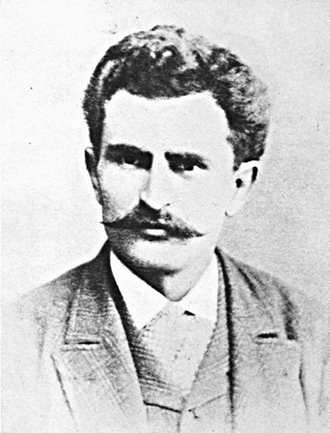
埃里科·马拉泰斯塔
- 生卒
- 1853 – 1932
- 国籍
- 意大利王国
- 外文名
- Errico Malatesta
照片:作者不详,公有领域,来自维基共享资源「Malatesta.png」(经缩小)。
生平与创作
埃里科·马拉泰斯塔(意大利语:Errico Malatesta,1853年12月14日—1932年7月22日)是一名意大利无政府主义、革命社会主义者。生于两西西里王国圣玛丽亚-卡普阿韦泰雷,一生中大部分时间都流亡国外,总共被判入狱超过十年。马拉泰斯塔撰写和编辑了许多激进报纸,同时也是米哈伊尔·巴枯宁的朋友。
生平
早年生活
埃里科·马拉泰斯塔于1853年12月14日出生于两西西里王国卡塞塔省圣玛丽亚-卡普阿韦泰雷的一个中产地主家庭中。他的祖上可以追溯到曾统治里米尼的马拉泰斯塔家族。十四岁时,马拉泰斯塔因给国王维托里奥·埃马努埃莱二世写了一封“无礼且咄咄逼人”的信而被逮捕,这也是他人生中第一次被捕入狱。
1877年4月,马拉泰斯塔、卡洛·卡菲罗和谢尔盖·斯捷普尼亚克-克拉夫钦斯基在贝内文托省召集了大概30人举事,之后轻松占领了莱蒂诺和加洛马泰塞。革命军烧毁了当地的税单并宣布王政结束,这些举措得到了当地人民的支持。在离开加洛马泰塞后,他们立刻被政府军逮捕,在关押了16个月后被无罪释放。1878年,乔凡尼·帕萨南特暗杀国王翁贝托一世失败,警方随即开始对激进派多加关注。尽管无政府主义者称他们与帕萨南特没有关系,但马拉泰斯塔因倡导社会革命亦被警方纳入了监视范围。回到那不勒斯后不久,他于1878年秋因为持续受监视而被迫离开意大利,开始了他的流亡生涯。
以上文字摘自维基百科「埃里科·马拉泰斯塔」(去掉了参考文献等尾部小节),按 CC BY-SA 4.0 使用,作者为维基百科的各位编者。
中文维基百科的条目比较短,下面附上英文维基百科的内容(英文原文):
Errico Gaetano Maria Pasquale Malatesta (4 December 1853 – 22 July 1932) was an Italian anarchist, theorist and revolutionary socialist. He edited several radical newspapers and spent much of his life exiled and imprisoned, having been jailed and expelled from Italy, Britain, France, and Switzerland. Originally a supporter of insurrectionary propaganda of the deed, Malatesta later advocated for syndicalism. His exiles included five years in Europe and 12 years in Argentina. Throughout his life, Malatesta participated in various insurrections, including an 1895 Spanish revolt and a Belgian general strike. He toured the United States, giving lectures and founding the influential anarchist journal La Questione Sociale. After World War I, he returned to Italy where his newspaper Umanità Nova garnered some popularity before its closure following the rise of Mussolini.
Biography
Early years
Errico Malatesta was born on 4 December 1853 to a family of middle-class landowners in Santa Maria Maggiore, at the time part of the city of Capua (currently an autonomous municipality renamed Santa Maria Capua Vetere, in the province of Caserta), at the time part of the Kingdom of the Two Sicilies. More distantly, his ancestors ruled Rimini as the House of Malatesta. The first of a long series of arrests came at age fourteen, when he was apprehended for writing an "insolent and threatening" letter to King Victor Emmanuel II.
In April 1877, Malatesta, Carlo Cafiero, Sergey Stepnyak-Kravchinsky and about thirty others started an insurrection in the province of Benevento, taking the villages of Letino and Gallo without a struggle. The revolutionaries burnt tax registers and declared the end of the King's reign and were met with enthusiasm. After leaving Gallo, however, they were arrested by government troops and held for sixteen months before being acquitted. After Giovanni Passannante's murder attempt on the king Umberto I, the radicals were kept under constant surveillance by the police. Even though the anarchists claimed to have no connection to Passannante, Malatesta, being an advocate of social revolution, was included in this surveillance. After returning to Naples, he was forced to leave Italy altogether in the fall of 1878 because of the intense surveillance, beginning his life in exile.
Years of exile
He went to Egypt briefly, visiting some Italian friends but was soon expelled by the Italian Consul. After working his passage on a French ship and being refused entry to Syria, Turkey and Italy, he landed in Marseille where he made his way to Geneva, Switzerland – then something of an anarchist centre. It was there that he befriended Élisée Reclus and Peter Kropotkin, helping the latter to produce La Révolte. The Swiss respite was brief, however, and after a few months he was expelled from Switzerland, travelling first to Romania before reaching Paris, where he worked briefly as a mechanic.
In 1881, he set out for a new home in London. He would come and go from that city for the next 40 years. There, Malatesta worked as a mechanic. Emilia Tronzio, Malatesta's mistress in the 1870s, was the step-sister of the internationalist Tito Zanardelli.
With Malatesta's consent and support she married Giovanni Defendi, who came to stay with Malatesta in London in 1881 after being released from jail.
Malatesta attended the July 1881 Anarchist Congress in London. Other delegates included Peter Kropotkin, Francesco Saverio Merlino, Marie Le Compte, Louise Michel and Émile Gautier. While respecting "complete autonomy of local groups" the congress defined propaganda actions that all could follow and agreed that "propaganda by the deed" was the path to social revolution.
以上文字摘自英文维基百科「Errico Malatesta」(有删节,去掉了参考文献等尾部小节),按 CC BY-SA 4.0 使用,作者为维基百科的各位编者。
资料卡
- 母语名
- Errico Malatesta
- 出生
- 1853 年 12 月 4 日
- 出生地
- 圣玛丽亚-卡普阿韦泰雷
- 逝世
- 1932 年 7 月 22 日
- 逝世地
- 罗马
- 职业
- 社运人士、作家、革命家、新闻工作者、工会会员、无政府主义者、编辑
- 使用语言
- 意大利语
- 就读学校
- 那不勒斯费德里科二世大学
- 所属团体
- 第一国际
- 代表作
- L’Anarchia、An Anarchist Program、Between Peasants
资料卡来自 Wikidata Q215673(CC0),众包数据,个别字段可能不全。
本站收录的作品(1)
作品年表(1 本)
本站书库里署名埃里科·马拉泰斯塔的书(Open Library 上至少 10 人加过书架的才收),按首版年份排(有本站书页的用 Wikidata 记的首版年,其余用 Open Library 的);年份偶尔记成后来的版本或译本,以原书为准。全部作品见 Open Library。
- 1891Anarchia书架 16