 书单
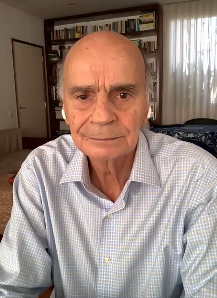
Drauzio Varella
- 生卒
- 1943 –
- 国籍
- 巴西
照片:TSE - Tribunal Superior Eleitoral,公有领域,来自维基共享资源「Drauzio Varella.jpg」(经缩小)。
生平与创作
这个词条暂时没有中文维基百科条目,下面是英文维基百科的内容(英文原文):
Antônio Drauzio Varella (Portuguese: [ˈdɾawzju vaˈɾɛlɐ]; born May 3, 1943, in São Paulo, Brazil) is a Brazilian physician, scientist, writer, and medical science communicator. Varella has often commented publicly on issues such as prison conditions, social welfare, government, literature, medicine, and skepticism, and has frequently debunked pseudoscientific medical claims. Varella received the 2000 Prêmio Jabuti for his book Estação Carandiru.
Early life and education
Varella was born in the Brás district of São Paulo to a family of Portuguese and Spanish descent and studied medicine at the University of São Paulo. While an undergraduate, he co-founded test preparation school Sistema Objetivo, where he taught chemistry for several years. The institution was later expanded into Universidade Paulista.
Career
After his 1967 graduation, Varella specialized in infectious disease, studying under Vicente Amato Neto at the University of São Paulo and at the Hospital do Servidor Público de São Paulo. This work led him to develop an interest in immunology. Varella interned at MD Anderson in 1978, and has worked at Hospital do Câncer, specializing in oncology.
He is a professor at Universidade Paulista and has taught at other institutions in Brazil and abroad, such as the Memorial Sloan Kettering Cancer Center, Cleveland Clinic, Karolinska Institute, Hiroshima University and the National Cancer Center of Japan. Varella has often studied AIDS, specifically the treatment of Kaposi's sarcoma.
Varella has had an active role in prevention and educational campaigns about AIDS, and was the first one to host a radio program on the subject. From 1989 to 2001, he worked as an unpaid volunteer physician in Carandiru Penitentiary, working to alleviate an AIDS epidemic among inmates. He wrote the best-seller book Estação Carandiru chronicling this experience; it was later adapted into the film Carandiru, by Hector Babenco. The book has been described as a quasi-ethnographical study of the prison.
As the chairman of a cancer research institute at Universidade Paulista, Varella has headed a research program on the utility of medicinal plants native to the Amazon rainforest in the treatment neoplasm and antibiotic-resistant bacteria. This research is supported by the São Paulo Research Support Foundation.
Writing
Varella is active in furthering the public understanding of science, particularly regarding medical topics. He has been a columnist for Brazilian newspapers such as Folha de S. Paulo and Zero Hora and was invited by the Globo TV Network to host a series of programs on the human body, the brain, first aid, smoking,pregnancy, obesity and others, which were exhibited at the Fantástico show on Sundays. He is also the producer and host of a TV talk show on medicine and health, which is broadcast on several TV channels.
For his work as a writer, Varella received several prizes and awards, among them the Prêmio Jabuti from the Brazilian Book Chamber, the International Book Fair of Bologna, Bologna, Italy, and The International Book Biennal of Rio de Janeiro (2001).
He has also written fiction for adults and children and has often been a vocal supporter of scientific skepticism.
Controversy
In 2020, Varella was criticized after being featured in a documentary aired on Fantástico reporting on the life of trans women incarcerated in male prisons, in which he hugged an inmate who been convicted for the rape and murder of a 9-year-old child. He later apologized, stating that he did not know what crime she had committed, and that he avoids learning this information to prevent bias when treating patients.
Personal life
Varella has been married to actress Regina Braga since 1981, and has fathered two daughters. He is an atheist.
Works
Carcereiros (2012)
Prisioneiras
AIDS Hoje. In 3 volumes, in collaboration with Antonio Fernando Varella and Narciso Escaleira.
Estação Carandiru (1999), Companhia das Letras.
Macacos, Publifolha ("Folha Explica" series)
Nas ruas do Brás. Companhia das Letrinhas (children's book)
De braços para o alto. Companhia das Letrinhas (children's book)
Florestas do Rio Negro. With Alexandre Adalardo de Oliveira and Douglas C. Daly
Maré - Vida na Favela
Casa das Palavras, with Paola Berenstein, Ivaldo Bertazzo and Pedro Seiblitz (images).
Por um fio. Companhia das Letras, 2004.
以上文字摘自英文维基百科「Drauzio Varella」(去掉了参考文献等尾部小节),按 CC BY-SA 4.0 使用,作者为维基百科的各位编者。
资料卡
- 母语名
- Antônio Drauzio Varella
- 出生
- 1943 年 5 月 3 日
- 出生地
- 圣保罗
- 职业
- 新闻工作者、作家、肿瘤科医师、科学传播者、YouTuber、医生
- 使用语言
- 葡萄牙语、巴西葡萄牙语、加利西亚语
- 就读学校
- 圣保罗大学
资料卡来自 Wikidata Q1255930(CC0),众包数据,个别字段可能不全。
本站收录的作品(1)
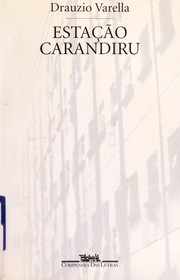
作品年表(1 本)
本站书库里署名Drauzio Varella的书(Open Library 上至少 10 人加过书架的才收),按首版年份排(有本站书页的用 Wikidata 记的首版年,其余用 Open Library 的);年份偶尔记成后来的版本或译本,以原书为准。全部作品见 Open Library。
- 1999Estação Carandiru书架 37