 书单
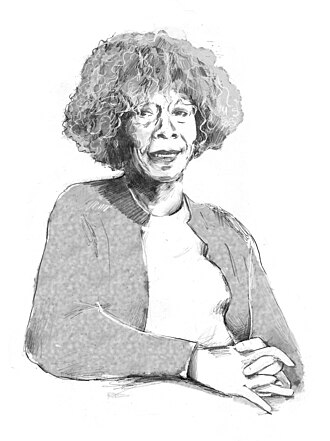
Simone Schwarz-Bart
- 生卒
- 1938 –
- 国籍
- 法国
照片:Claire Gaudriot,CC BY-SA 4.0,来自维基共享资源「Simone Schwarz-Bart - Claire Gaudriot.jpg」(经缩小)。
生平与创作
这个词条暂时没有中文维基百科条目,下面是英文维基百科的内容(英文原文):
Simone Schwarz-Bart (born Simone Brumant, 1938) is a French novelist and playwright of Guadeloupean origin. She is a recipient of the Grand prix des lectrices de Elle.
Life
Simone Brumant was born in 1938 at Saintes in the Charente-Maritime department of France. Her place of birth is not clear, however, as she has also stated that she was born in Pointe-à-Pitre, Guadeloupe.
Her parents were originally from Guadeloupe. Her father was a soldier while her mother was a teacher. When the Second World War broke out, her father stayed in France to fight, while she and her mother returned to Guadeloupe.
She lived in a rather dilapidated school group with her mother.
She studied at Pointe-à-Pitre, followed by Paris and Dakar.
At the age of 18, while studying in Paris, she met her future husband, André Schwarz-Bart, who encouraged her to take up writing as a career. They married in 1960, and lived at various times in Senegal, Switzerland, Paris, and Guadeloupe.
Schwarz-Bart at one time ran a Creole furniture business as well as a restaurant.
Her husband died in 2006. They have two sons, Jacques Schwarz-Bart, a noted jazz saxophonist, and Bernard Schwarz-Bart.
She currently lives in Goyave, a small town in Guadeloupe.
Career
In 1967, together with her husband, André Schwarz-Bart, she wrote Un plat de porc aux bananes vertes, a historical novel exploring the parallels in the exiles of Caribbeans and Jews. In 1972, they published La Mulâtresse Solitude. In 1989, they wrote a six-volume encyclopaedia Hommage à la femme noire (In Praise of Black Women), to honour the black heroines who were missing in the official historiography.
Despite being mentioned as her husband's collaborator in their works, critics have often attributed full authorship to André Schwarz-Bart, and only his name appears in the French edition of La Mulâtresse Solitude. Her authorship is acknowledged, however, in the English translation of the book.
In 1972, Schwarz-Bart wrote Pluie et vent sur Télumée Miracle, which is considered one of the masterpieces of Caribbean literature. She wrote the book after the loss of a dear friend named Stéphanie whom she considered to be "her grandmother, her sister ..."
For her "it was the country that went away with this person"
In 1979, she published Ti jean l'horizon.
Schwarz-Bart has also written for the theatre: Ton beau capitaine was a well-received play in one act.
Themes
Schwarz-Bart, along with her husband, is deeply committed to political issues, and the issues faced by people, especially women, of colour. She has explored the languages and locations of her ancestry in her works, and examines male domination over women in the Caribbean, as well as themes of alienation in exile.
Simone Schwarz-Bart and feminism
In her novel Pluie et vent sur Télumée Miracle, the aim is indeed to identify the process by which women become women. The famous sentence of Simone de Beauvoir, "we are not born a woman, we become it" will not have escaped you, but much more than a conceptual formula.
Schwartz-Bart highlights this statement in her production by mentioning the genealogy of its literary staff. This evocation will constitute a database, understood like historical, in which is given to have elements characteristic of the West Indian woman.
Schwarz-Bart attempts to rehabilitate female figures in the West Indian discourse by giving them a decisive place. She links to the heritage of feminism which is part of the West Indies reflection discourse which it projects as a social and historical reality which would legitimize the latter.
The reintegration of women into the general historicity of the West Indies will enable the reader of Simone Schwarz-Bart to reposition women in the social relations of power, both subject to the colonial system and to that of compulsory "herocentrism". In this positioning, the woman shows herself to be humble, modest and courageous.
Awards and recognition
In 1973, Schwarz-Bart's Pluie et vent sur Télumée Miracle was awarded the Grand prix des lectrices de Elle. In 2006, Schwarz-Bart was awarded the rank of a Commander in the Ordre des Arts et des Lettres. In 2008, she received the Prix Carbet de la Caraïbe et du Tout-Monde (together with her husband, posthumously) for her lifetime of literary works.
Relevant literature
Mimko Bestman, Ajoke (August 31, 2017). ""A Woman is a Chestnut, a Man is a Breadfruit": Proverbs and Female Resilience in Simone Schwarz-Bart's The Bridge of Beyond". Proverbium: Yearbook of International Proverb Scholarship. 34 (1): 21–40.
以上文字摘自英文维基百科「Simone Schwarz-Bart」(去掉了参考文献等尾部小节),按 CC BY-SA 4.0 使用,作者为维基百科的各位编者。
资料卡
- 母语名
- Simone Schwarz-Bart
- 本名
- Simone Brumant
- 出生
- 1938 年 8 月 1 日
- 出生地
- 桑特
- 职业
- 作家、小说家
- 使用语言
- 法语
- 写作语言
- 法语
- 创作体裁
- 文类
- 配偶
- 安德烈·施瓦兹·巴尔
- 代表作
- Pluie et vent sur Télumée Miracle
- 获奖
- 艺术与文学勋章司令勋位(2006)、加勒比海文学奖(2017);另有 3 项只有外文名
资料卡来自 Wikidata Q3100348(CC0),众包数据,个别字段可能不全。
本站收录的作品(1)
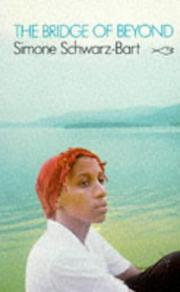
作品年表(1 本)
本站书库里署名Simone Schwarz-Bart的书(Open Library 上至少 10 人加过书架的才收),按首版年份排(有本站书页的用 Wikidata 记的首版年,其余用 Open Library 的);年份偶尔记成后来的版本或译本,以原书为准。全部作品见 Open Library。
- 1972Pluie et vent sur Télumée Miracle书架 29