书单
罗萨里奥·卡斯特利亚诺斯
- 生卒
- 1924 – 1974
- 国籍
- 墨西哥
- 外文名
- Rosario Castellanos
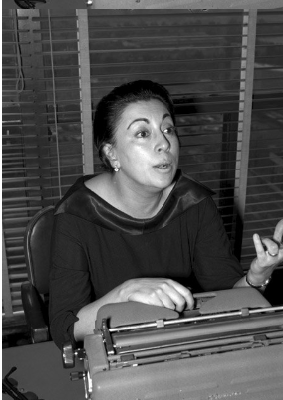
照片:Instituto Nacional de Antropología e Historia,CC BY 4.0,来自维基共享资源「Rosario Castellanos conversa sentada tras un escritorio, retrato.png」(经缩小)。
生平与创作
这个词条暂时没有中文维基百科条目,下面是英文维基百科的内容(英文原文):
Rosario Castellanos Figueroa (Spanish pronunciation: [roˈsaɾjo kasteˈʝanos]; 25 May 1925 – 7 August 1974) was a Mexican poet and author. She wrote both fiction, often set in her home state of Chiapas, and nonfiction addressing issues of cultural and gender oppression. Her writing influenced Mexican feminist theory and cultural studies. Castellanos was appointed ambassador to Israel in 1971. She died by electrocution in Tel Aviv while reaching for a lamp.
Career
Born in Mexico City, Castellanos was raised in Comitán near her family's ranch in the southern state of Chiapas. She was an introverted young girl, who took notice of the plight of the indigenous Maya who worked for her family. According to her own account, she felt estranged from her family after a soothsayer predicted that one of her mother's two children would die shortly, and her mother screamed out, "Not the boy!"
The family's fortunes changed suddenly when President Lázaro Cárdenas enacted a land reform and peasant emancipation policy that stripped the family of much of its land holdings. At fifteen, Castellanos and her parents moved to Mexico City. In 1948 both of her parents died in an accident, leaving her orphaned at 23 years of age.
Although she remained introverted, Castellanos read extensively and began to write. She studied philosophy and literature at the National Autonomous University of Mexico (UNAM), where she published poetry in the student newspaper. She was part of a group of intellectuals called the Generation of '50 for the year its members completed their studies. The group met regularly on Saturdays to discuss their literary work and Castellanos defended her master's thesis, Sobre cultura femenina (On Feminine Culture), in 1950. It rejected gender essentialism and addressed women's marginalization three years before Mexican women were granted the right to vote.
After graduating UNAM, Castellanos began a year of postgraduate study in aesthetics and stylistics in Madrid. In 1952, she was directing cultural programs in Tuxtla Gutiérrez when she contracted tuberculosis. She spent a year recovering. A Rockefeller Foundation fellowship supported the development of her first novel, Balún Canán, in 1957. She subsequently joined the National Indigenist Institute (INI) in 1956 as director of El Teatro Petul, a traveling puppet theater. In this role she wrote scripts to teach literacy, hygiene, and civic conduct to Indigenous communities. She would later recall that script writing was not her forte, though the experience informed her writing of The Eternal Feminine in 1970.
Castellanos married Ricardo Guerra Tejada, a professor of philosophy, in 1958. The birth in 1961 of their son Gabriel Guerra Castellanos was an important moment in Castellanos' life; prior to his birth, she suffered from depression after several miscarriages. However, she and Guerra divorced after thirteen years of marriage, Guerra having been unfaithful to Castellanos. Her personal life was marked by her difficult marriage and continuous depression, but she dedicated a large part of her work and energy to defending women's rights.
Castellanos established herself as a public intellectual in the 1960s. She served as press and information director for UNAM from 1960-66 and wrote columns in publications like Siempre! and Excélsior. She resigned in April 1966 after a colleague was taken hostage during a period of political unrest. She spent the next year in the United States, teaching at the Universities of Wisconsin, Indiana, and Colorado, where she taught courses on the Mexican novel. Her stay coincided with the height of the U.S. women's liberation movement, and her observations of independent demonstrations influenced her own thinking. On returning to Mexico, she held a Chair of Comparative Literature at UNAM before being appointed the Mexican Ambassador to Israel in 1971. In Tel Aviv, she found fulfillment while holding a lectureship at the Hebrew University of Jerusalem.
Death
On 7 August 1974, Castellanos died in Tel Aviv after being electrocuted by a lamp while answering the telephone. She had suffered from depression and drug addiction in life, leading to questions about the circumstances of her death. Her fellow writer, Elena Poniatowska, called it "highly unlikely" that Castellanos could have died by suicide in the way she did.
Work and influences
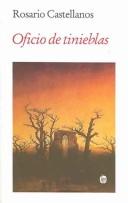
Throughout her career, Castellanos wrote poetry, essays, one major play, and three novels: the semi-autobiographical Balún Canán (translated into English as The Nine Guardians ), Oficio de tinieblas (translated into English as The Book of Lamentations ), and Rito de iniciación. Oficio de tinieblas depicts a Tzotzil indigenous uprising in Chiapas, based on one that had occurred in the 19th century. Rito de iniciación is a bildungsroman about a young woman who discovers her vocation of a writer. Despite being a ladino – not indigenous descent – Castellanos in her works shows considerable concern and understanding for the plight of indigenous peoples.
以上文字摘自英文维基百科「Rosario Castellanos」(有删节,去掉了参考文献等尾部小节),按 CC BY-SA 4.0 使用,作者为维基百科的各位编者。
资料卡
- 出生
- 1924 年
- 出生地
- 墨西哥城
- 逝世
- 1974 年 8 月 7 日
- 逝世地
- 特拉维夫
- 职业
- 诗人、外交官、作家、编剧、大学教师、剧作家、新闻工作者、文学学者
- 使用语言
- 西班牙语、英语
- 就读学校
- Faculty of Philosophy and Letters, UNAM
- 领域
- 诗歌、文学批评、外交官、大学教师
- 配偶
- Ricardo Guerra Tejada
- 代表作
- The Nine Guardians、Oficio de tinieblas、City of Kings、Rito de iniciación、El eterno femenino
资料卡来自 Wikidata Q260862(CC0),众包数据,个别字段可能不全。